Why this canyon is famous
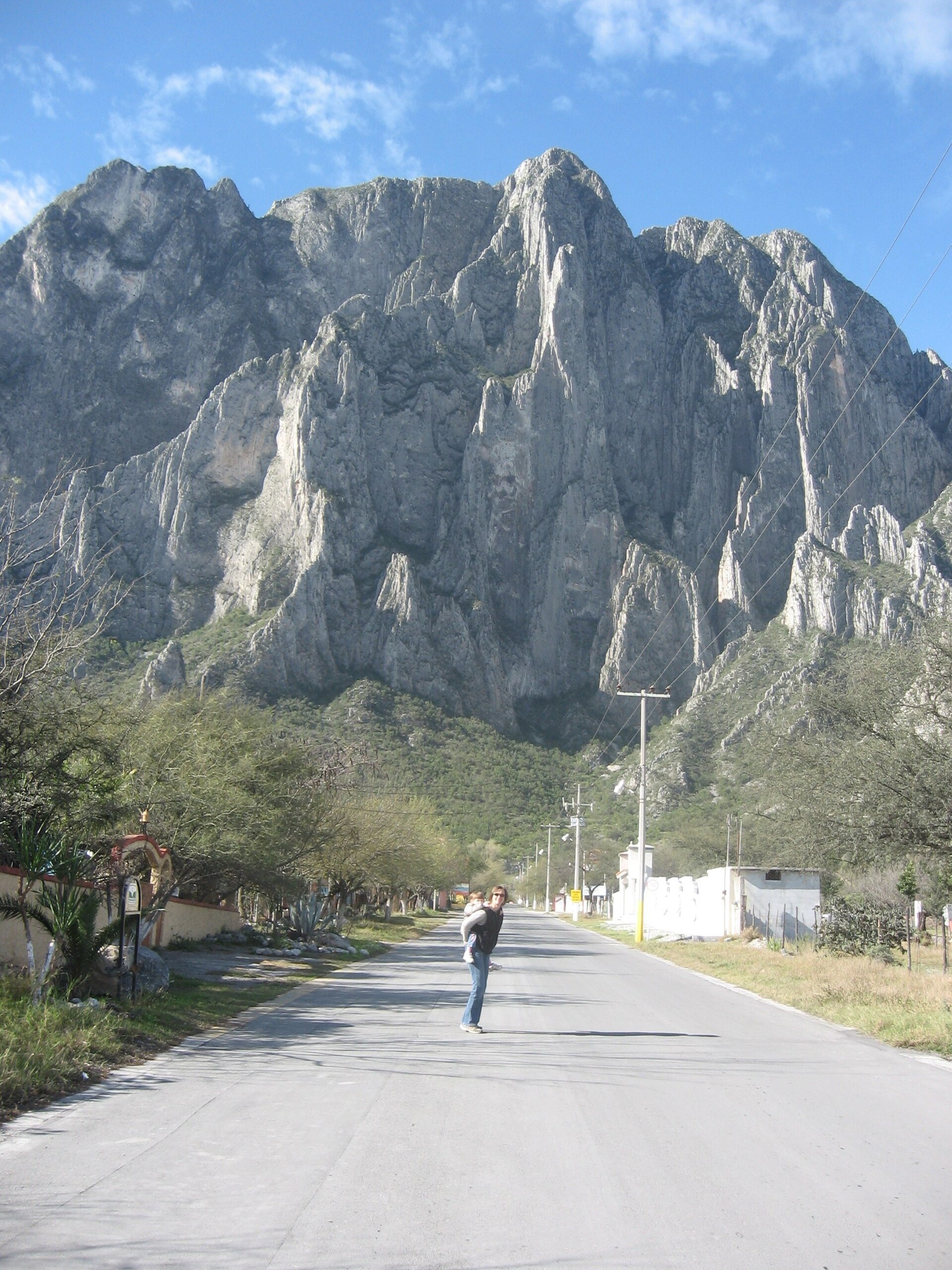
El Potrero Chico — "the little corral" — is a narrow gap in the Sierra Madre Oriental where the limestone tilts vertical and keeps going. The walls top out around 610 meters (roughly 2,000 feet), and the canyon holds more than 600 bolted sport routes ranging from a friendly 5.7 to a savage 5.13-plus. That combination is what makes the place rare. Most big walls in the world demand a rack of cams, nuts, and a hard apprenticeship in placing your own protection. Here the protection is already in the rock: stainless bolts drilled by the route developers, clipped with quickdraws as you climb. You can find yourself fifteen pitches up an enormous face having done nothing more technical than sport climbing, which is exactly why beginners and gym climbers fly here from all over.
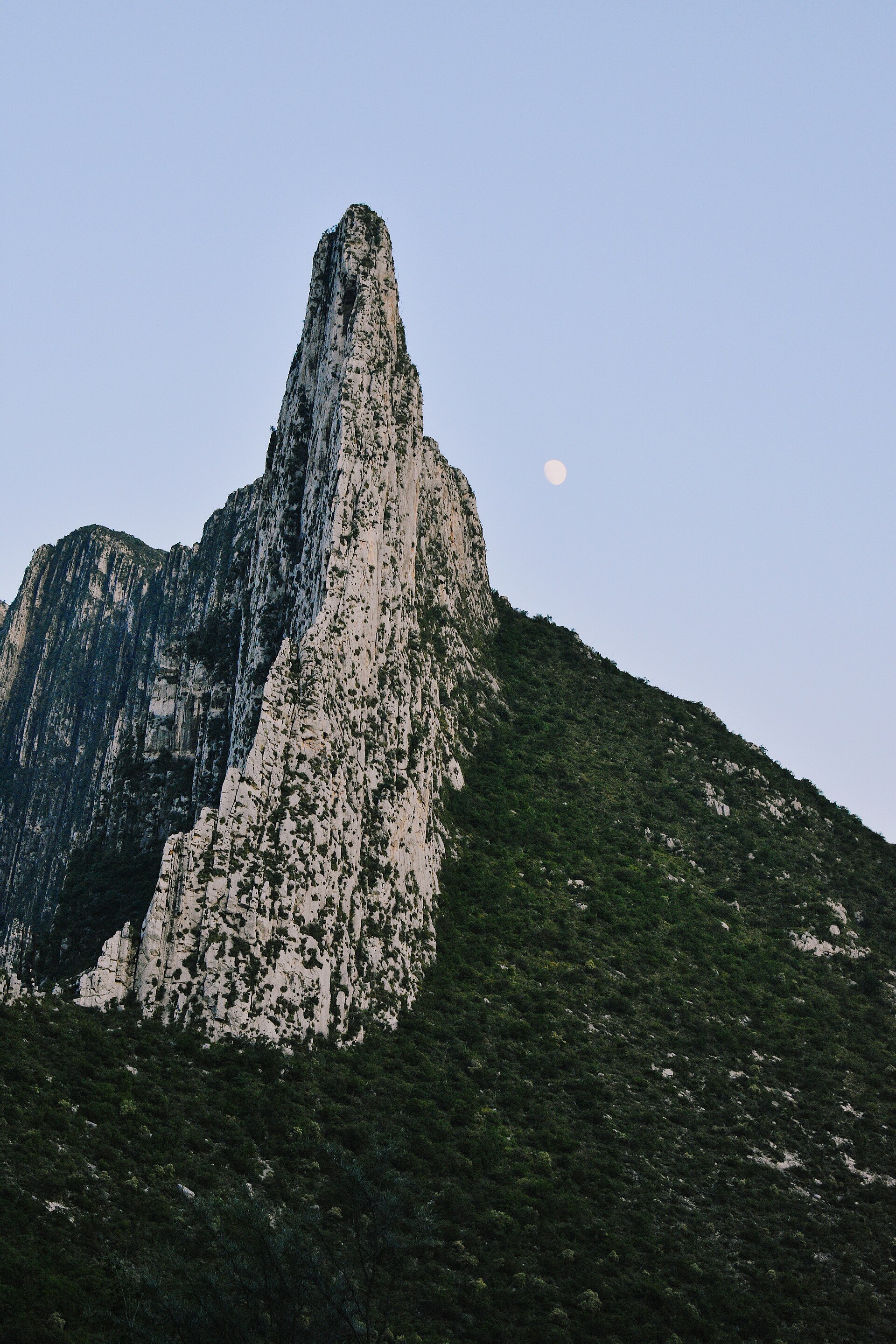
The rock itself is the draw. Potrero limestone is pale gray and gold, sculpted into pockets, edges, and the occasional jug, and it has a grippy, weathered texture that flatters footwork. It is not perfect — there's loose rock on some lines and polish on the popular ones — but the best routes climb beautifully, and the sheer scale of the moderate multi-pitch terrain has no real equal in North America. People talk about Potrero the way they talk about a handful of places on earth: as somewhere a climber should go at least once.
It is also absurdly convenient. The canyon sits about three kilometers outside the town of Hidalgo, Nuevo León, and roughly forty-five minutes from Monterrey's airport. You can land in the afternoon and be roped up the next morning. That accessibility, more than any single route, is what turned a dusty Mexican canyon into a global destination.
The legendary lines
Two routes carry Potrero's reputation. The first is El Sendero Luminoso — "the shining path" — a fifteen-pitch line of about 500 meters up the northeast buttress of El Toro, the wall that looms over the whole canyon. Eleven of its fifteen pitches climb in the 5.12 range, which puts it well beyond most visitors. It became world-famous on January 14, 2014, when Alex Honnold free soloed it: no rope, no partner, just over three hours from the ground to the summit. Renan Ozturk and the Camp4 Collective filmed it for The North Face, and the resulting short film introduced a lot of people to the canyon's name. It remains, by most accounts, one of the most committing big-wall free solos ever done.
The second is El Toro's gentler neighbor, Time Wave Zero, established by the late Ed Wright — "Magic Ed," the canyon's most prolific developer. At twenty-three pitches and roughly 2,000 feet, it is one of the longest sport climbs on the planet, and crucially it is mostly moderate: only two pitches of 5.11 and a single 5.12 section, much of it climbing in the 5.10 range or easier. Strong, fit parties do it in a long single day; many split it over two with a bivy partway up. It is the line most ambitious Potrero visitors set their sights on, and reaching the summit is a genuine rite of passage.
Neither of these is a beginner objective, and that's worth saying plainly. But they're useful to understand, because the moderate pitches buried inside routes like Time Wave Zero are exactly the kind of climbing a competent first-timer with a guide can experience — the same rock, the same exposure, the same view of the desert falling away below your heels.
Grades, gear, and what "sport climbing" really means here
Potrero uses the American Yosemite Decimal System: a route's difficulty is written as 5.7, 5.10a, 5.12b, and so on, with letters subdividing the harder grades. A confident gym climber comfortable on 5.9 and 5.10 will find plenty of single- and multi-pitch terrain at their level. Many of the famous multi-pitch routes are graded between 5.10a and 5.10d, which is why the canyon punches so far above its difficulty: the climbing is accessible, but the walls are immense.
Because it's sport climbing, the gear list is short by big-wall standards — but it is not nothing, and this is where the canyon earns its reputation as deceptively serious. For multi-pitch you want a 70-meter rope (some long pitches and rappels demand it), a dozen-plus quickdraws, a helmet for the loose-rock and rope-drag realities of long routes, a belay device suited to rappelling, and the knowledge to build anchors, manage two ropes, and get yourself down. The bolts spare you a trad rack; they do not spare you the skills of moving efficiently and descending safely from 600 meters up.
If you don't own gear, La Posada — the main climbers' compound in the canyon — runs a small shop with rentals and basics, and guide services supply everything for clients. Don't count on buying a rope or shoes locally in a pinch; bring what you can, and treat the on-site shops as backup rather than a full outfitter.
Guided vs. going on your own
For a true beginner, the honest answer is: hire a guide, at least for your first days. Potrero is forgiving in its grades and unforgiving in its scale. The skills that keep you alive on a long route — anchor building, rappelling with two ropes, route-finding, retreating when weather or fatigue turns — are precisely the ones a gym background doesn't teach. A guide compresses that learning curve and lets you climb terrain you couldn't yet safely reach alone. El Potrero Chico Guides, run with AMGA-trained guides, offers everything from single-day intro sessions to multi-day introduction-to-multipitch courses, and several outside outfitters run week-long trips into the canyon each winter.
If you already lead sport routes outdoors, place your own anchors, and rappel confidently, Potrero is a magnificent place to climb independently. The approaches are short — most crags are a ten-to-fifteen-minute walk from lodging — the community is friendly, and Mountain Project and the printed guidebooks document the routes thoroughly. The middle ground, common here, is to take a guide for a day or two to learn the descent systems and a few classic lines, then climb the rest of your trip on your own. That's the approach I'd point most first-time visitors toward.
What I'd steer you away from is the gym-to-2,000-foot-wall leap with no instruction. People do it, and most get away with it. The accidents at Potrero, when they happen, tend to come not from hard climbing but from rappelling errors and underestimating how committing a long, hot, multi-pitch day can be.
When to go — and why summer is brutal
Winter is prime, full stop. The season runs roughly from mid-November through March, with December, January, and February the busiest and, for many, the best. Daytime temperatures in those months typically sit in a pleasant 15–24°C (60–75°F) range — cool, dry, and ideal for long days on the rock. Nights get genuinely chilly, so pack a warm layer and a real sleeping bag if you're camping.
Summer is the opposite, and it's not a minor inconvenience. Potrero sits in a semi-arid pocket that bakes: highs routinely hit 35°C (95°F) and can climb past 42°C (107°F) for weeks at a stretch. The walls turn into ovens, and serious climbing collapses into a dawn-and-dusk affair, if you climb at all. September and October bring the rainy season's heaviest weather. Spring and fall shoulder seasons can be pleasant in the mornings but warm by midday.
The practical upshot: come in winter if you possibly can. You'll also land in peak community season, when the camps fill with climbers from a dozen countries and the canyon has a festival-like energy that's a real part of the experience.
Getting there from Monterrey
The trip is short and straightforward. From Monterrey or its airport, you're aiming for the town of Hidalgo, about forty-five minutes to an hour north, then another few kilometers to the canyon mouth. The simplest option is a taxi or rideshare from the airport, which typically runs somewhere in the range of 50–60 USD; many of the camps will also arrange a pickup, often with a stop in Hidalgo to buy groceries for your stay.
Budget travelers can take a bus from Monterrey toward Hidalgo and grab a local taxi for the last leg into the canyon — cheaper, slower, and perfectly doable. Once you're at your lodging, you likely won't need a vehicle at all: the crags, restaurants, and small tiendas are all within an easy walk, which is part of what makes a Potrero trip so low-friction. If you're combining it with time in the city, renting a car gives you flexibility, but it's not required for a climbing-focused trip.
Stock up in Hidalgo on the way in. The canyon has small shops and a couple of restaurants at the camps, but selection is limited and prices reflect the captive market. A grocery run before you arrive saves money and hassle.
Where climbers stay
Lodging in Potrero clusters into a handful of climber-run camps and posadas at the canyon mouth, and the choice between them is mostly about budget and vibe. La Posada is the largest and best-known: sprawling grounds, private rooms and houses, a pool, a communal kitchen, a restaurant, and the small gear shop. It's the social hub and the most expensive of the options — the default for first-timers who want amenities and easy company.
Homero's Ranch is the old guard, a climbers' hangout since 1989, with budget camping, a big shared kitchen, and a more laid-back, lived-in feel; it tends to draw people staying a while. La Pagoda and El Rancho Cerro Gordo round out the cluster with their own camping, rooms, and pools, slightly removed from the busiest grounds. Across all of them, expect simple accommodations: this is a climbing area, not a resort town, and the appeal is precisely that you can roll out of your tent and be at the base of a wall in fifteen minutes.
Book ahead for the December-through-February peak — the good rooms fill, and the camps get crowded. If you're after quiet, the shoulder weeks of November and March give you the same rock with a fraction of the people.
La Huasteca: the in-town alternative
If Potrero is the destination, La Huasteca is the local's backyard. This dramatic limestone canyon sits inside Cumbres de Monterrey National Park in the Santa Catarina municipality, squarely within the metro area — close enough to climb after work and be home for dinner. It holds something on the order of 500 bolted routes spanning 5.4 to 5.14, on pale gray-to-white limestone, much of it technical slab climbing that demands precise footwork.
For beginners, the sector to know is La Extremita, a cluster of small canyons with routes mostly at 5.10b and below — friendly terrain for someone moving from the gym to real rock, or climbing outdoors for the first time. The harder, more famous walls like Cazuelas hold a dense concentration of 5.12 and 5.13 testpieces for when you progress. Because it's a national park within the city, La Huasteca also serves as a hiking, scrambling, and mountaineering hub, with the bonus that you don't need to leave Monterrey to use it.
My honest take: do both. Use La Huasteca to find your feet on local limestone, test your outdoor systems close to home, and decide how much you love this kind of climbing. Then point the car north and give Potrero the dedicated days its big walls deserve. The two together make Monterrey one of the best urban bases for sport climbing anywhere in the Americas.