Two clubs, one city, no neutral ground
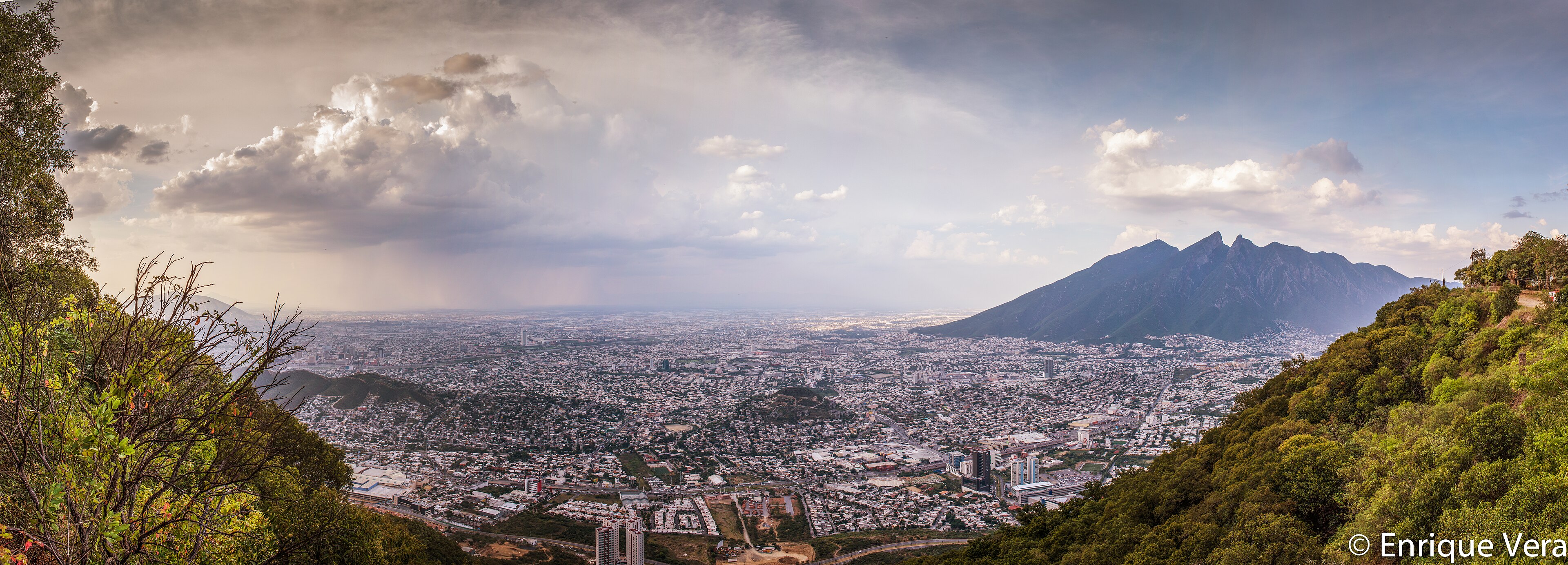
Monterrey is one of the only metropolitan areas in Mexico with two top-flight clubs that genuinely belong to the same city, and that is the whole reason the Clásico Regiomontano runs as hot as it does. On one side are the Rayados of Club de Fútbol Monterrey, in blue and white, playing out east in Guadalupe at Estadio BBVA. On the other are Tigres UANL, in golden yellow, playing north in San Nicolás at the Estadio Universitario. Both are perennial Liga MX title contenders, both draw enormous crowds, and neither side will concede a single inch of the metro to the other. There is no third team to dilute the argument, so the entire city is split into two camps and you will be asked, usually within a day of arriving, which one you are in.
The split gets told in social shorthand, and like most shorthand it is half true. Tigres are bound to the public Universidad Autónoma de Nuevo León, lean into a populist university identity, and draw deeply from San Nicolás and the working-class municipalities to the north. Rayados have long carried the more private-sector, corporate image — they were founded inside the brewery that became FEMSA and were owned within that orbit for generations. Regios will tell you the rivalry is class-coded, and there is something to it, but the cleaner truth is that both fan bases are massive and the all-time series has stayed close to even across six decades. The first Clásico was played all the way back in March 1960, when both clubs were still in the second division and Rayados won it 2-0. That evenness is exactly why nobody ever backs down.
What this means for a visitor is simple. A regular-season Clásico is the loudest, fullest, most argued-over week of the city's year, and a good one is one of the great nights in world club football. But it is also the toughest entry of the calendar, and getting in clean takes a little planning and a little discipline. The rest of this guide is about both.
How heated it really gets
Heated, and it is not theater. The all-time head-to-head sits at roughly 131 official meetings with Tigres holding a slight edge — somewhere around 47 wins to Rayados' 43, with about 40 draws — and that near-deadlock is the engine of the whole thing. The highest-scoring Clásico on record was a 6-2 Tigres win at the Volcán in the Apertura 2004, a result Rayados fans will pretend they have forgotten and have not. Because the series is so close, every fixture genuinely could swing the bragging rights for half a year, and the city treats it accordingly.
The temperature is set in large part by the two ultra groups. The Rayados side is La Adicción, born on the night of 24 October 1998 in the stands of the old Estadio Tecnológico, when a group of fans reorganized themselves into something new during a bad game. The Tigres side is Libres y Lokos, which emerged in mid-1998 during the tigremanía that followed the club's rise back into the first division. Both are famous travelers, both build enormous tifos and banners, and both treat a rival 'trapo' — a captured flag — as the ultimate trophy; the two have actually stolen banners off each other over the years, which tells you the register. On a Clásico, authorities run heavy filters and segregation specifically to keep the two groups from making contact, and that is not for show.
For a visiting fan the takeaway is reassuring rather than scary. The overwhelming majority of the violence-as-spectacle stays between the organized groups, who are kept apart by design, and the family sections at both grounds are calm and welcoming. The intensity you will actually feel is acoustic and emotional — a wall of noise, ninety minutes of nonstop chanting, and a goal celebration that physically moves the lower tier. You just have to not walk yourself into the one place the trouble lives, which is covered below.
Rayados and the Gigante de Acero
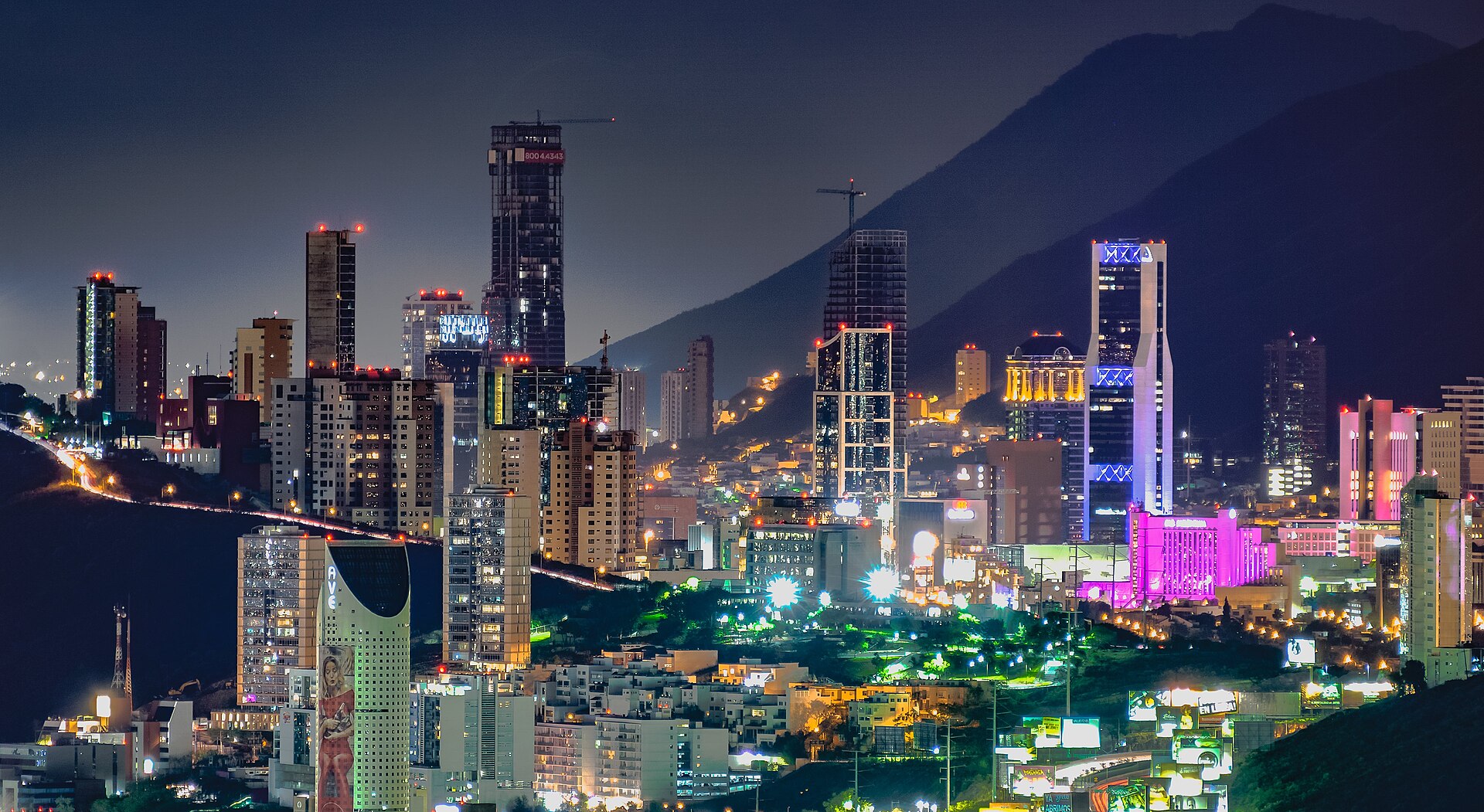
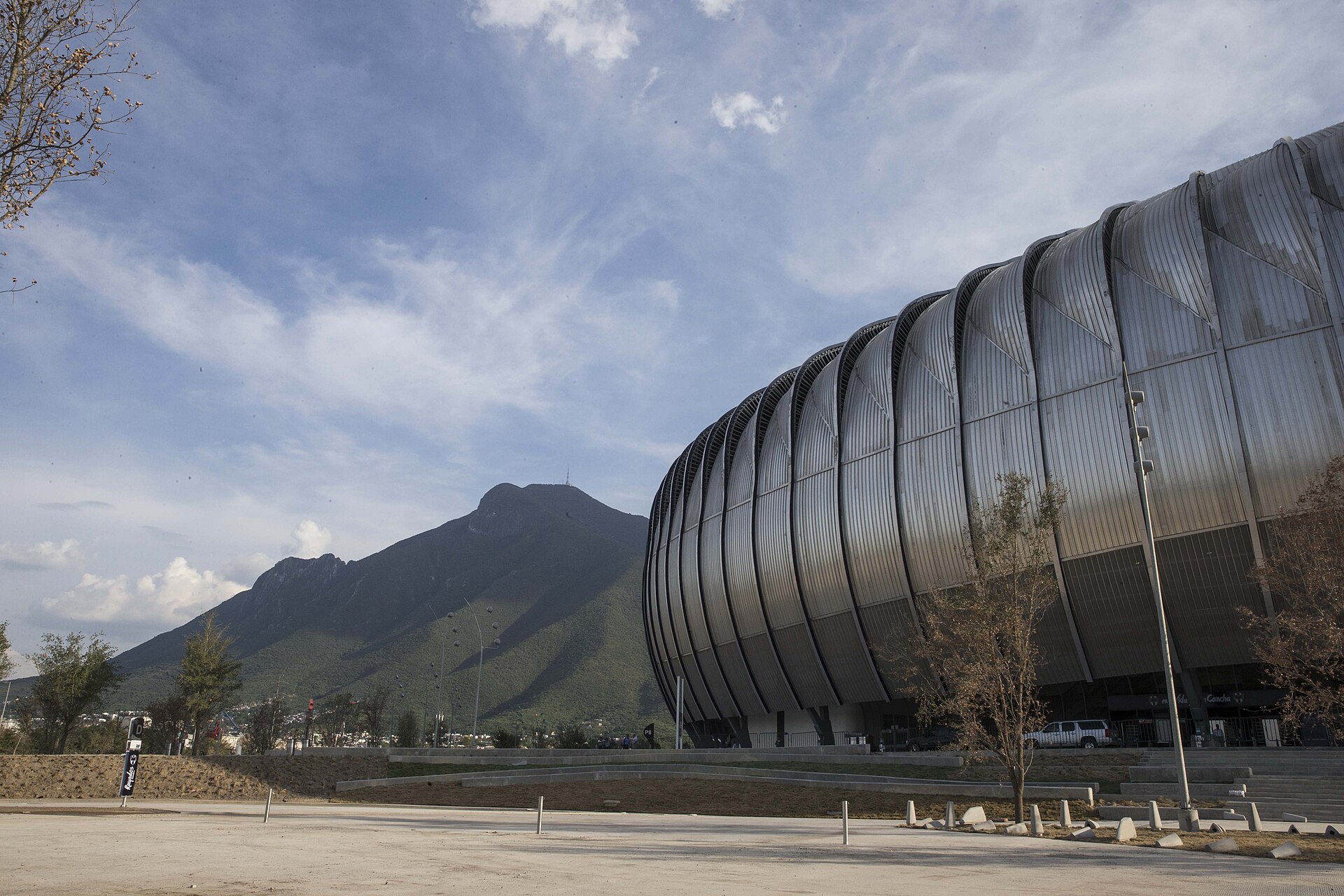
CF Monterrey play at Estadio BBVA, which opened in 2015 out in Guadalupe on the eastern edge of the metro and replaced the beloved old Tec. It seats roughly 53,500 and is, flatly, one of the most beautiful grounds in the Americas. The Populous design wraps the bowl in a jagged steel exoskeleton that rhymes with the peaks of the Sierra Madre, and from a large share of seats the silhouette of Cerro de la Silla sits framed dead behind one goal. The steel earned it the nickname El Gigante de Acero — the Steel Giant — which lands twice in a city that built its fortune on steel and cement.
It is worth your time even with no match on. The club runs the Tour Experiencia Rayada through the dressing room, tunnel, pitch level, and museum, and on a clear afternoon the mountain backdrop makes it one of the most photographed stadiums in the country. For atmosphere, the loud end is behind the goal where La Adicción sets up; sit there if you want the full sensory assault and a lot of standing, and sit in the sides or the family sections if you have kids or want to actually watch the tactics. Note that the lower bowl on the sunny side is brutal for an afternoon kickoff in warm months — pay for shade or the right side if you can.
The one honest knock on BBVA is location. It sits a real distance from San Pedro and the Centro, the access roads around Guadalupe choke badly before kickoff, and getting out afterward is a slog. None of that diminishes the place once you are inside; it just means you build your matchday around the commute rather than the other way around.
Tigres and El Volcán
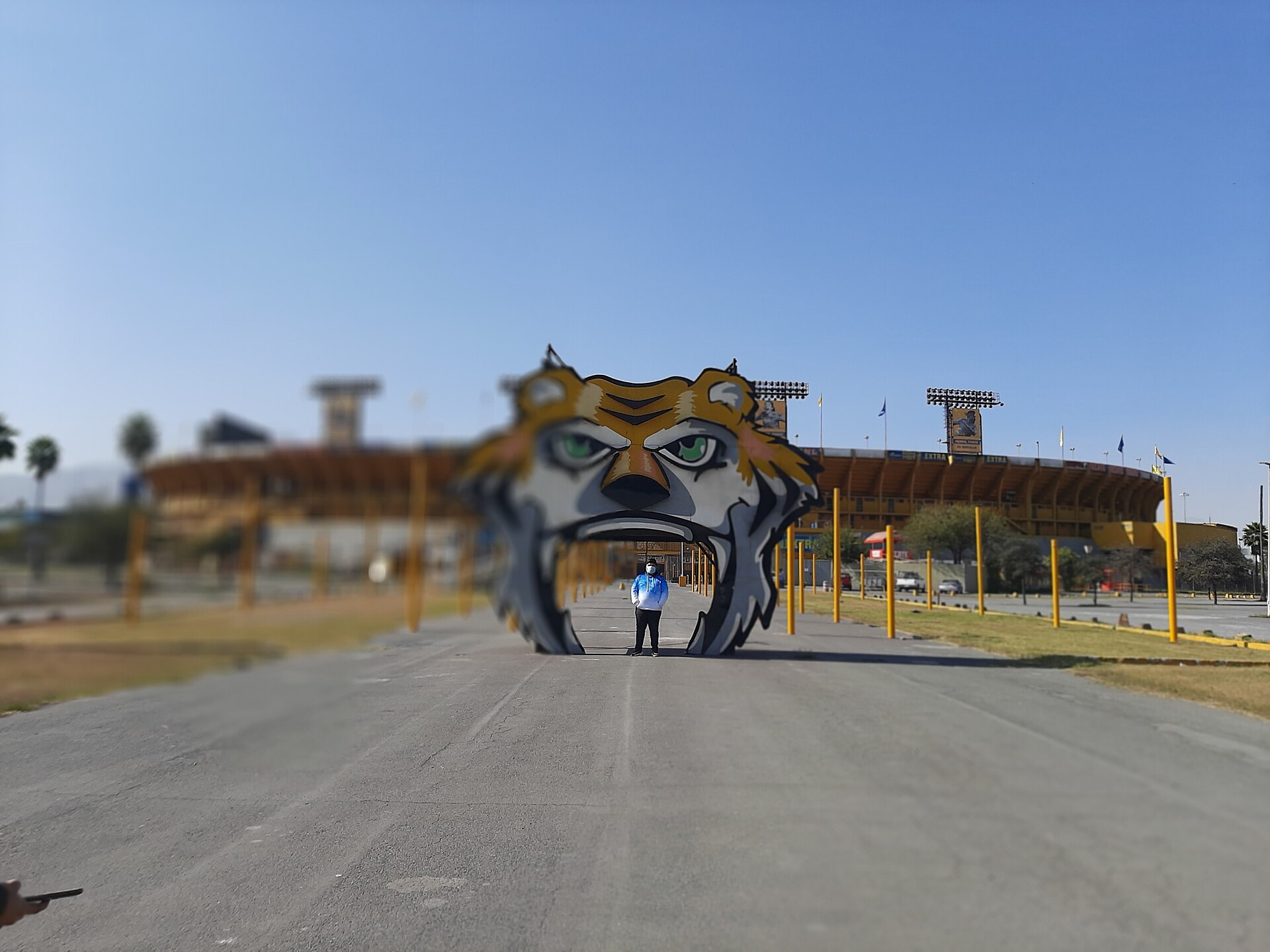
Tigres play at the Estadio Universitario on the UANL campus in San Nicolás de los Garza, just north of central Monterrey. It opened in 1967, seats around 42,000, and everyone calls it El Volcán — the Volcano — for the way the noise erupts when the steep, circular bowl fills and the lower tiers start to move. Of the two grounds it is the older, the tighter, and the harder to visit. The crowd sits right on top of the pitch, and on a big night communication on the field becomes nearly impossible. It hosted matches at the 1986 World Cup and has been a genuine fortress for decades.
Tigres supporters call themselves the Incomparables, and Libres y Lokos anchor the loud, jumping end behind one goal. They are famous for traveling in absurd numbers, for selling the Volcán out regardless of form, and for the kind of relentless, song-driven support that makes the place feel smaller and meaner than its capacity. If your only window for a game is a Tigres home match — Clásico or not — take it. On its day the Volcán is the best atmosphere in Mexican club football, and the tiger-head gate out front makes the obligatory photo easy.
My honest comparison: BBVA is the more beautiful building and the better all-around experience, but the Volcán is the more intense football night. If you want the postcard, go to the Gigante. If you want your chest to vibrate, go to the Volcano. For a first-timer who can only do one and does not care which club, I would steer you to a sold-out Tigres night for the noise.
How to actually buy a ticket
Start with the only rule that matters: buy through official channels, and buy early. For both clubs that means the club's own site (rayados.com or tigres.com.mx) and Ticketmaster México (ticketmaster.com.mx), plus the physical stadium box offices. For an ordinary mid-table league fixture you can often walk up or buy a day or two out with no drama. For a Clásico, that window does not exist.
A Clásico sale runs in phases. Season-ticket holders — abonados — get an exclusive presale first, with a code emailed to them, and they soak up a large share of the inventory before the public ever sees it. Whatever is left goes to general sale (venta libre) through Ticketmaster and the box offices, and it moves fast. The practical consequence is that for the derby you are realistically buying in the general-sale window the moment it opens, or you are buying resale. There is no gate option on a Clásico; do not plan to show up and figure it out.
On resale: it is real, it is everywhere, and it runs two to three times face value for a Clásico, more for a good seat. If you must, use a platform that guarantees the ticket rather than a stranger on Facebook Marketplace, and assume anyone selling a screenshot of a PDF is selling you nothing. One modern wrinkle to know — Liga MX now requires a registered Fan ID linked to your ticket, with a QR code you present at the turnstile alongside your entry, so a ticket bought in someone else's name can be a problem at the gate. Buy in your own name through a channel that handles the Fan ID transfer properly, and confirm the current requirement on the club site before match week, because the system keeps tightening.
Getting to each stadium
Both grounds sit well outside the walkable core, and on a matchday traffic is the entire ballgame, so the smart move at either stadium is the Metro. For Estadio BBVA, Metrorrey Line 1 (the yellow line) runs out to Exposición, its eastern terminus, and from there a dedicated pedestrian walkway takes you to the gates in roughly ten to fifteen minutes. From the Centro you would ride Line 2 (green) and transfer to Line 1 at Cuauhtémoc, heading toward Exposición. It is crowded on a big night but it skips the road chaos entirely, which on a Clásico is worth a great deal.
For the Volcán, Metro Line 2 runs to Universidad station on the UANL campus, a short walk from the stadium — genuinely one of the easier big-stadium metro arrivals in the country. Driving to either ground on a Clásico is a mistake I would not repeat; parking around BBVA is informal and cash-only along the Avenida Pablo Livas corridor, opens early afternoon, and getting out afterward can take an hour. A ride-hail (Uber or DiDi) is fine for off-peak fixtures and will run you well under 300 pesos from the Centro on a normal day, but on a Clásico expect heavy surge and gridlock on the approach roads.
Whichever you take, leave early. Arriving with time means you clear the entry filters and Fan ID check without panic, you catch the ultras setting their banners and the pregame build, and you are not the person sprinting through a packed concourse as the teams come out. For a Clásico or a World Cup date, give yourself a wide margin — the metro packs out and the roads seize, and there is no graceful way to be late to either of these stadiums.
Etiquette and safety for a visiting fan
The single rule that keeps tourists out of trouble is simple and not negotiable: your colors match your section. Wear the home side's shirt only if you are sitting in a home block, keep your jersey in your bag until you are in the right seat, and never — ever — drift into the rival's end in the rival's colors. Visiting supporters are segregated for a reason and the filters that separate the ultra groups are there to be respected. If you are in a neutral or mixed seat, stay neutral. Get cute about this and you turn a great night into a bad one; respect it and you will be completely fine.
Beyond that it is ordinary big-event sense. Carry cash for vendors even where cards work, keep your phone and wallet zipped on a packed concourse, hydrate hard if it is a warm-month afternoon kickoff, and stay sober enough to read the room — the family sections are friendly and the beer is part of the fun, but a Clásico is not the night to be the loudest drunk in a stranger's section. Eat at the stadium or the stalls outside rather than counting on a quick exit, because there is no quick exit.
Do all of that and the derby rewards you enormously. Regios are proud of this fixture and proud of their city, and a respectful visitor wearing the local colors in the right place gets adopted fast. The steel and the mountain at BBVA, or the wall of sound in the Volcán — handled right, a Clásico Regio is the thing you will remember longest about Monterrey.
The 2026 World Cup at the Gigante
Monterrey is one of three Mexican host cities for the 2026 World Cup, the first edition shared by Mexico, the United States, and Canada, and Estadio BBVA will stage four matches: three in the group stage on June 14, 20, and 24, and one Round of 32 knockout on June 29. Because FIFA scrubs commercial naming, for the tournament the ground is officially Estadio Monterrey, and its tournament capacity is listed a touch lower than league configuration at around 50,000 — so do not be thrown when the signage and tickets drop the bank's name and the seat count looks off.
If you are building a trip around it, the advice is blunt. Lock lodging and transport months out, because June in Monterrey is already hot and the city will be slammed. Heat is the real story — an afternoon match in a Nuevo León summer is genuinely punishing, so hydrate, shade up, and respect the sun the way you would at a desert festival. Buy only through FIFA's official ticketing platform and treat every other seller as a scam until proven otherwise; the resale and counterfeit problem around a World Cup is an order of magnitude worse than around a Clásico.
On the day, do exactly what you would do for a derby: take Metro Line 1 to Exposición and the walkway, leave a wide margin, and skip driving. A knockout date in particular will pack the system and seize the roads, so the earlier you are moving the better. It is the same beautiful steel bowl under the same mountain — just with the whole world watching instead of half a city.