Cabrito: The Dish Monterrey Is Built On
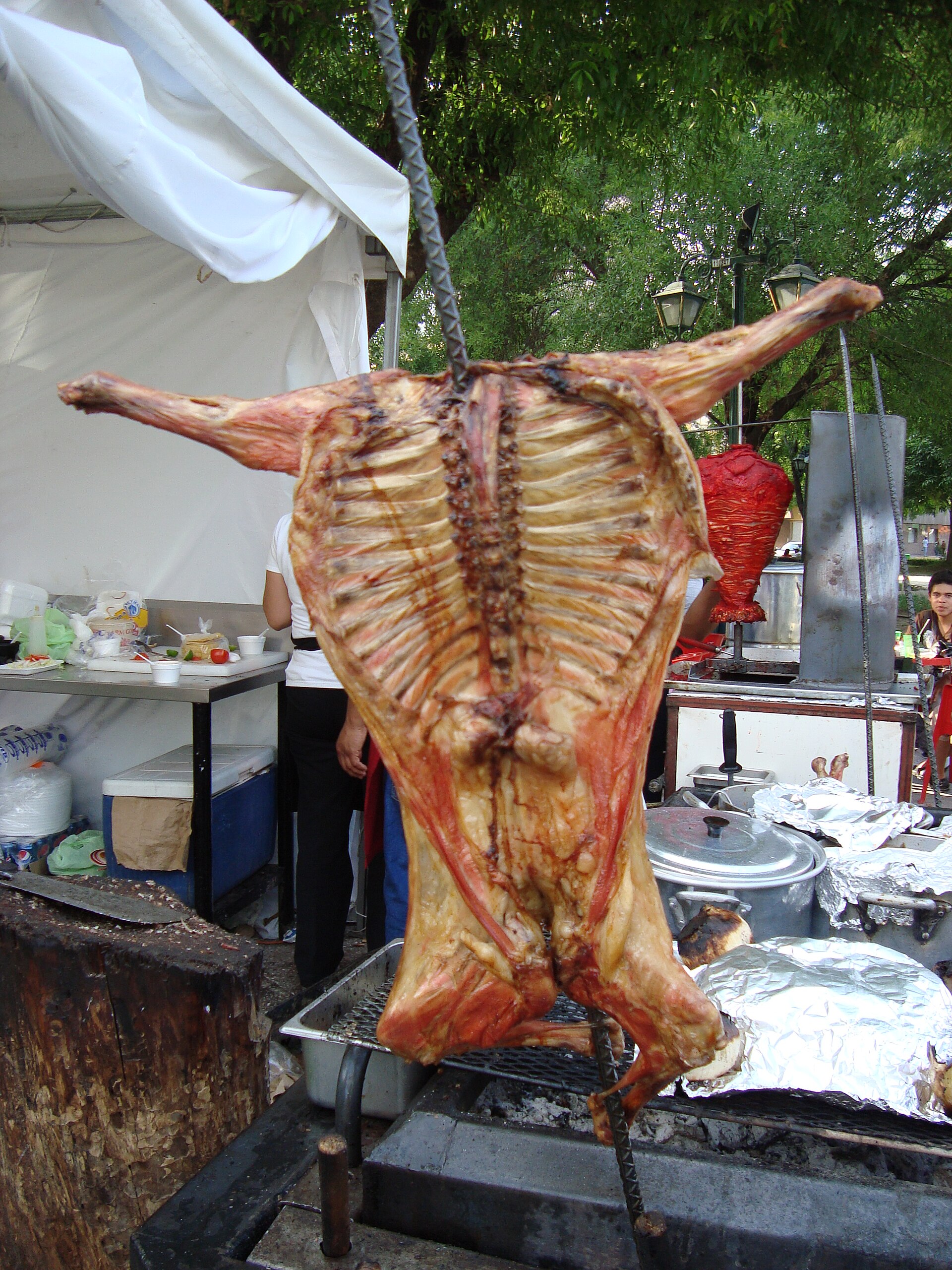
If you eat one thing in Monterrey, make it cabrito — milk-fed kid goat, slaughtered young, before it has ever grazed, which is why the meat stays pale and faintly sweet instead of gamey. The real version is cabrito al pastor, and the name is literal: the animal is split down the middle, stretched flat, and impaled lengthwise on an iron stake (an espada) that gets driven into the ground at an angle beside a bed of mesquite coals. It cooks slowly for an hour and a half to two hours, the cook rotating the stake to render the fat and crisp the skin. There is no marinade and no sauce on the meat itself. Salt, fire, and patience. That austerity is the point.
Ordering cabrito is its own small literacy, because a single kid yields very different things. The riñonada — the fatty stretch around the kidneys — is the prized cut, the one regios fight over, rich and almost buttery. The pierna (leg) and paleta (shoulder) are leaner and what most first-timers are served. Then come the offal preparations that separate tourists from locals: machitos are the liver, lung, and heart wrapped in the caul membrane and tripe, then grilled into something between a sausage and a braid; fritada, also called cabrito en su sangre, is the viscera stewed in the animal's own blood with ancho chile, roasted tomato, and spices into a dark, iron-rich stew. Order it once even if you think you won't like it. You'll understand the cuisine better for it.
A practical truth nobody puts on the menu: cabrito is expensive, it is heavy, and it is best at lunch, not a late dinner. It's a midday, weekend, celebration food — Sunday after church, a closed business deal, a christening. Plan it that way and budget for it. A full cabrito feeds a table; a media (half) or a quarter is plenty for two or three. Pair it with frijoles charros, fresh flour tortillas, and grilled spring onions, and skip the appetizers.
Where the Cabrito Institutions Are
There is a hierarchy, and locals know it. El Rey del Cabrito on Avenida Constitución 817 in the Centro is the famous one — founded in 1986 by Jesús Alberto Martínez, the man who earned the nickname that became the restaurant's name. It's three floors, walls papered with photos of every politician and ranchera star who ever passed through, and it is unapologetically a tourist landmark. That doesn't make the cabrito bad; it makes it pricey and reliable. Go for the spectacle and the central location, not for a hidden-gem feeling.
El Gran Pastor on Avenida Gonzalitos Sur is where a lot of regios actually take out-of-town guests. More than half a century of sourcing the region's best kids, less of a circus than El Rey, and the offal preparations — machitos, fritada — are taken seriously. It opens early (it's a 7 a.m.-to-midnight kind of place) because cabrito is genuinely a lunch food here, and the room fills with families, not tour groups.
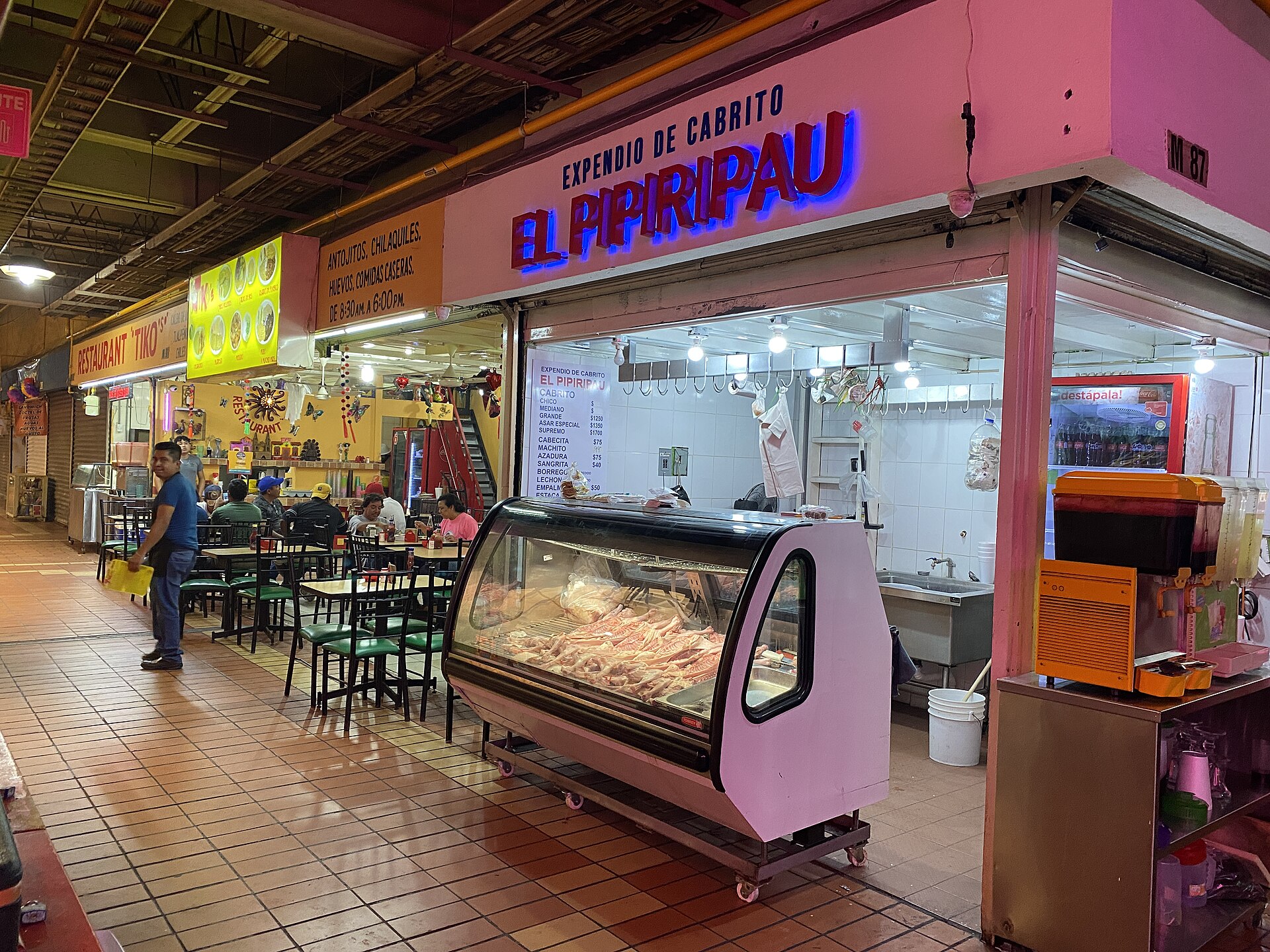
But the move most worth making is the least polished one: the cabrito stands inside Mercado Juárez, the downtown market that opened in 1912. Among the fondas and family stalls — El Pipiripao is the long-running goat counter people name — you eat cabrito and machitos elbow-to-elbow with market workers for a fraction of the white-tablecloth price. It is loud, it is plastic-stool seating, and it is as close to the original idea of the dish as a visitor will get. Come hungry, come at lunch, and bring cash.
Carne Asada Is a Verb, Not a Dish
Nothing reveals more about regio culture than the carne asada, which is less a meal than a recurring social institution. The phrase that launches it — '¿Se va a hacer o no se va a hacer?' (are we doing it or not?) — is practically a regional motto. It happens on weekends, in backyards, for birthdays, after a Tigres or Rayados match, or for no reason at all. Nuevo León even informally marks April 27 as the Día de la Carne Asada. The food is almost beside the point; the gathering is the thing. Historians trace the grilling habit to the city's founding Spanish and Sephardic settlers, and that deep northern cattle-ranch DNA is why beef, not pork or corn, anchors the regio plate.
The technique is non-negotiable and it is mesquite — not charcoal briquettes, not gas. Mesquite (mezquite) grows wild across the northern scrub and burns hot with a distinct smoke that regios can taste in an instant. The classic cuts are arrachera (skirt/flank, sliced against the grain for tenderness), rib eye, and aguja norteña — the northern chuck/short-rib cut that's a regional signature and rarely seen by that name elsewhere. Sausage (chorizo or longaniza) goes on the grill too, along with whole spring onions and chiles toreados.
There's an etiquette outsiders miss. One person runs the grill — the asador — and the role carries quiet authority; you do not reach over and flip someone's meat. The meat comes off in stages and is eaten in rounds as tacos on flour tortillas, not plated all at once. Frijoles charros simmer alongside, guacamole and salsa get passed, and beer or a michelada is in everyone's hand. If a regio invites you to a carne asada, understand you've been let into something more intimate than a dinner reservation.
Machaca, Trompo Tacos, and the Street Canon
Breakfast in Monterrey often means machacado con huevo — dried, shredded, pounded beef (machaca, or carne seca) rehydrated and scrambled with egg, tomato, onion, and serrano. It is a desert-preservation food turned regional comfort dish, with roots traced to Ciénega de Flores, where in the 1920s a cook known as Tía Lencha fed it to the crews building the Monterrey–Laredo highway. Order it at an old-school cenaduría or fonda with refried beans and a stack of flour tortillas — flour, always, in the north — and you've eaten like a regio before 9 a.m.
At night, the city belongs to the trompo. Monterrey's signature street taco is the taco de trompo: pork shaved off a vertical spit (the trompo, or 'spinning top') seasoned with paprika and chile, leaner and less sweet than Mexico City's pineapple-topped al pastor. The other northern essentials live at the same stand. The gringa is the regio move — trompo meat and melted cheese pressed inside a flour tortilla, named for the pale tortilla. Ask for it con todo. The volcán and the costra (a crisped-cheese 'tortilla') are cheese-forward cousins, and a good taquero will also run agujas — that same northern chuck cut, grilled and chopped.
Two honest notes. First, trompo is a late-night food; the best stands hit their stride after 9 or 10 p.m. and the meat off a busy, fast-turning trompo is always better than off a slow one. Second, you don't need a famous name. A neighborhood taquería with a crowd and a glistening spit beats a hyped one with a line of tourists. Watch where the taxi drivers stop.
Glorias, Semitas, and the Northern Sweet Tooth
The defining sweet of Nuevo León comes from Linares, a town south of the city: the gloria, a chewy round of cajeta — caramel made from goat's milk, not cow's — studded with pecans and twisted into red cellophane. It's said to be the only commercially produced goat's-milk caramel in the Americas. The candy dates to 1932, when Natalia Medina Núñez began making them; the name supposedly came from a customer who said the first bite tasted 'like glory.' You'll find glorias and the related marqueta (a larger goat's-milk-candy slab) at the dulces regionales stands in Mercado Juárez and at shops all over the Centro. Buy them to take home; they keep, and they're the most regional souvenir there is.
On the bread side, the north has its own pan dulce vocabulary distinct from central Mexico's conchas-and-orejas canon. The semita — crisp outside, soft inside, scented with anise and sweetened with piloncillo, often with raisins and walnuts — traces to Bustamante, Nuevo León, a town whose bakers are regionally legendary. The same tradition gives you hojarascas (crumbly cinnamon-sugar shortbread cookies) and empanadas de calabaza (pumpkin) and de nuez (walnut). There's a Sephardic and Tlaxcalteca thread running through all of it, a reminder that the regio table is an immigrant table underneath.
If you're driving day-trips, the sweets follow geography: glorias and cajeta in Linares to the south, semitas and empanadas in Bustamante to the north. In the city, the Centro panaderías and Mercado Juárez consolidate both. It's a low-stakes, high-reward way to taste the region without a reservation.
Topo Chico, Micheladas, and What's in the Glass
The drink that conquered the world started here. Topo Chico has been bottled in Monterrey since 1895, drawn from a spring at the foot of Cerro del Topo Chico — the 'little molehill' that gave the brand its name and its Aztec-chieftain logo. To a regio it isn't a hipster import; it's the default sparkling water, the mixer of choice, and the base of a proper michelada. That cocktail — beer built up with lime, salt, chile, and savory sauces over ice in a chile-rimmed glass — is everywhere here, and ordering one 'preparada' at a carne asada or a Tigres game is simply how the day is hydrated.
Beyond the michelada, the regio default is cold lager, drunk in rounds, paired with whatever's coming off the grill. The fine-dining scene (next section) has built serious wine and agave-spirit programs, but in everyday Monterrey the through-line is simple and cold. If you want the most local order in the city, it's a michelada made with Topo Chico's lineage somewhere in the glass and a plate of tacos within reach.
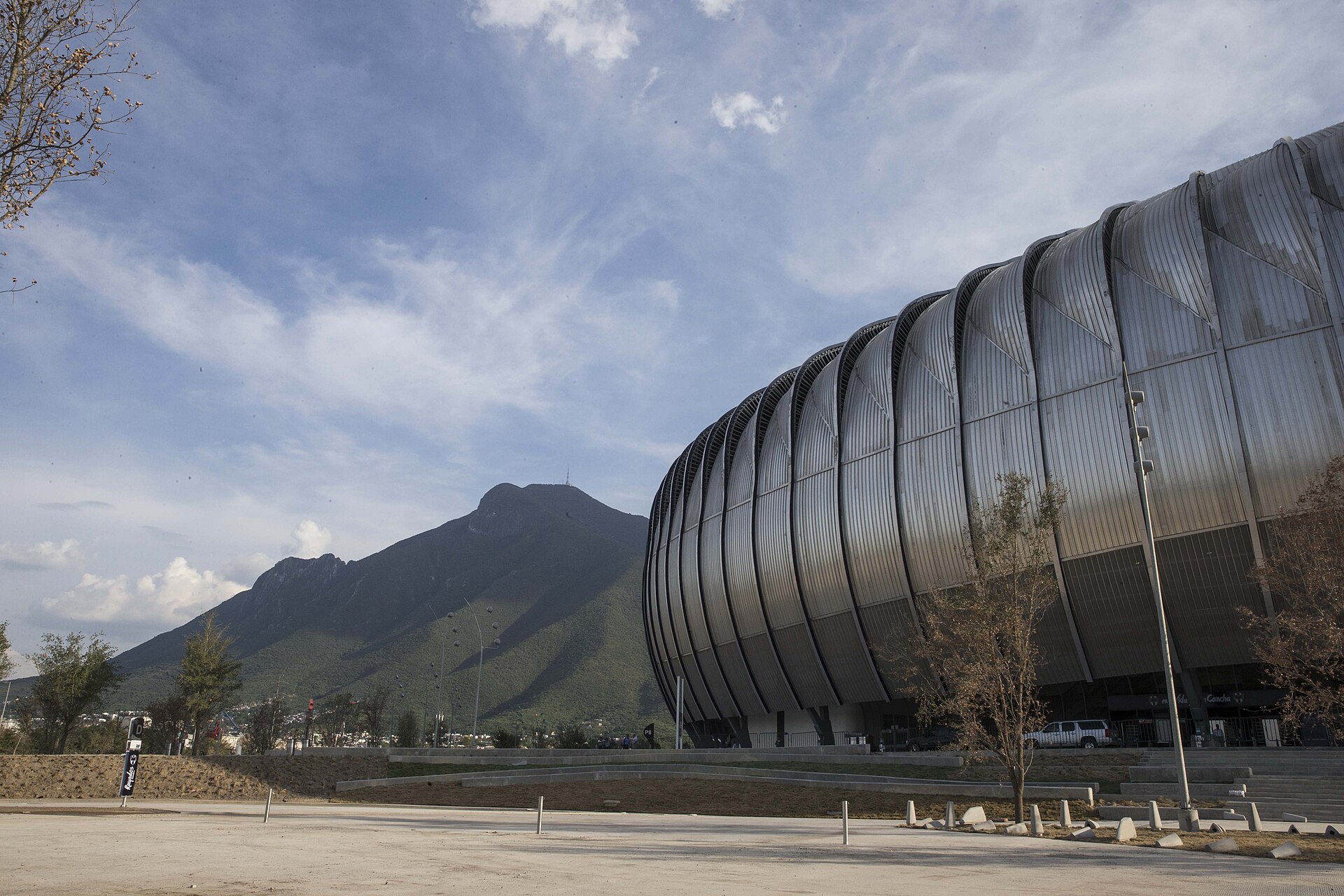
San Pedro's Fine-Dining Surge — and Two Michelin Stars
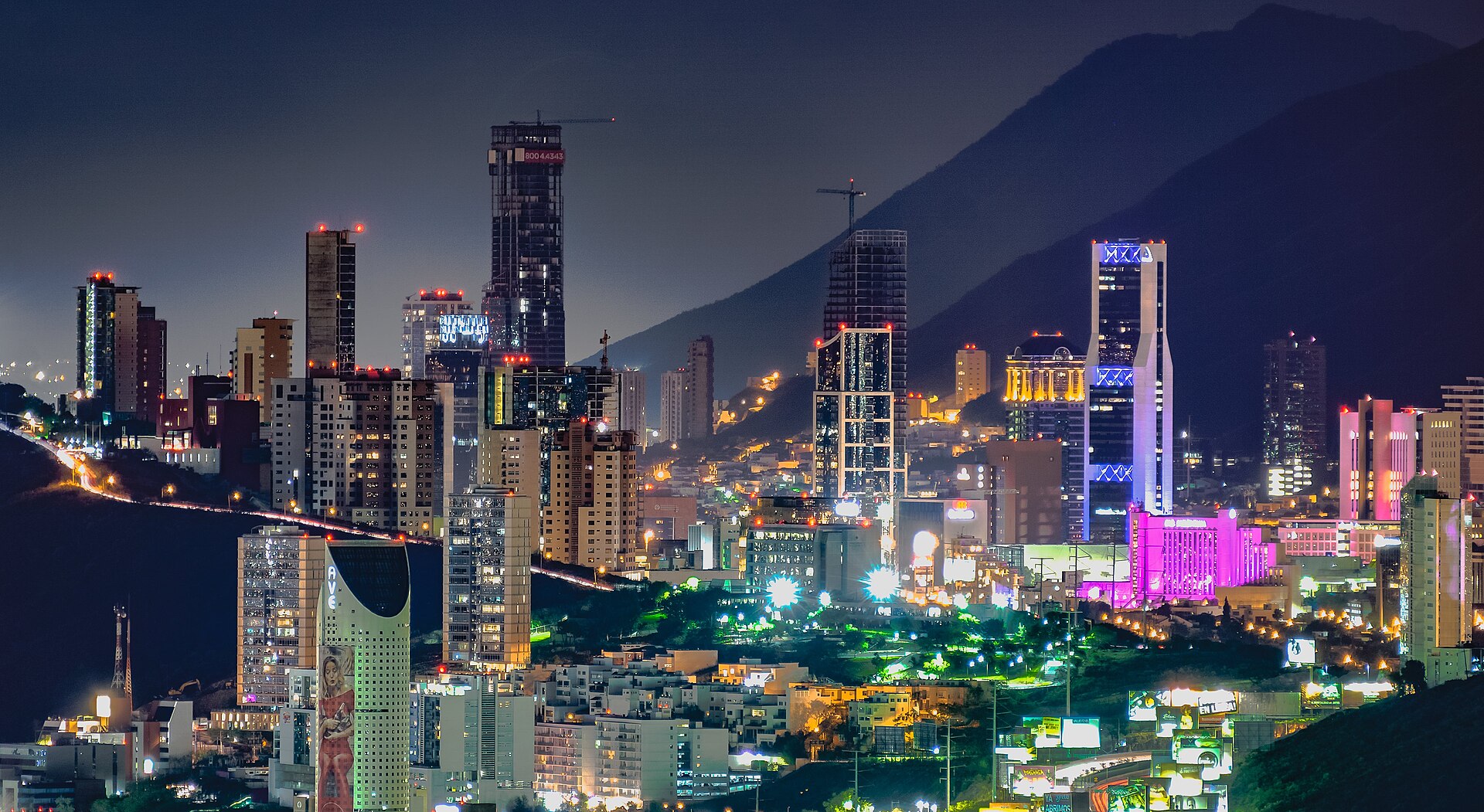
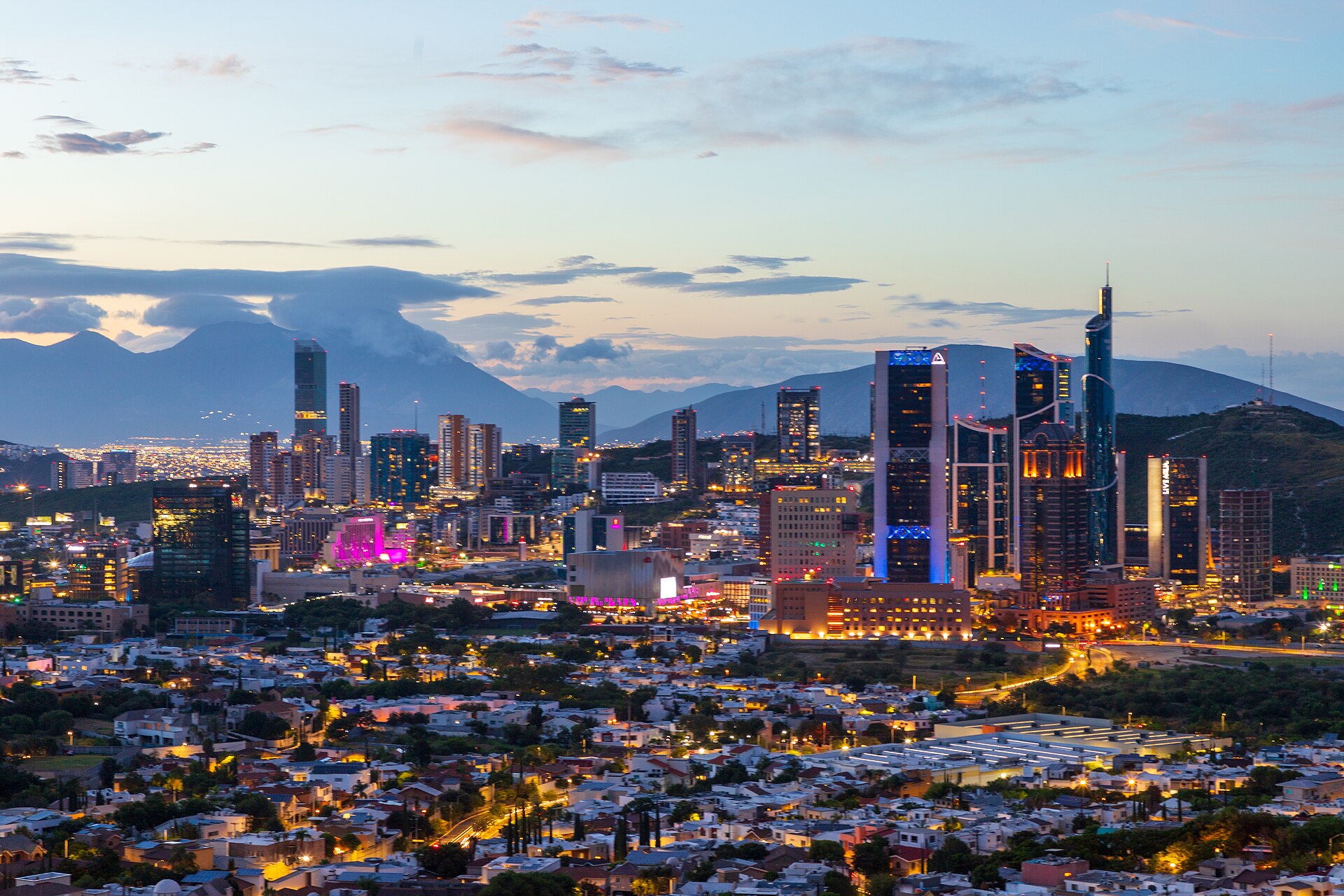
Monterrey's wealth concentrates in San Pedro Garza García, the richest municipality in Latin America, and so does its fine dining. The standard-bearer for a quarter-century is Pangea, chef Guillermo González Beristáin's restaurant, which fuses rigorous French technique with northeastern Mexican produce and has sat on Latin America's 50 Best list for a decade. Its kid goat — cabrito reimagined for a tasting menu — is a statement of intent: this is regio food taken seriously at the highest level. It earned a Michelin star when the guide arrived in Mexico.
The other star belongs to KOLI Cocina de Origen, the project of the Rivera-Río brothers — Daniel on the savory kitchen, Patricio on pastry, Rodrigo on wine and the room. The name means 'grandfather' in Nahuatl, and the concept is exactly that: a contemporary, playful reinterpretation of norteño cooking rooted in family and local ingredient. Served as a 9- or 13-course tasting menu, it's the most ambitious argument anyone is making that northern Mexican cuisine belongs in the fine-dining conversation. Both KOLI and Pangea retained their stars in the 2026 guide; together they are Monterrey's only two starred restaurants, and both require booking well ahead.
A caveat worth stating plainly: San Pedro pricing is Mexico-City-or-higher, and the neighborhood can feel sealed off from the gritty Centro where the soul food lives. The smart visitor does both — a tasting menu in San Pedro one night, a plastic stool at Mercado Juárez the next — and lets the contrast teach them what the city actually is.
The New Café Wave and Where to Eat Day-to-Day
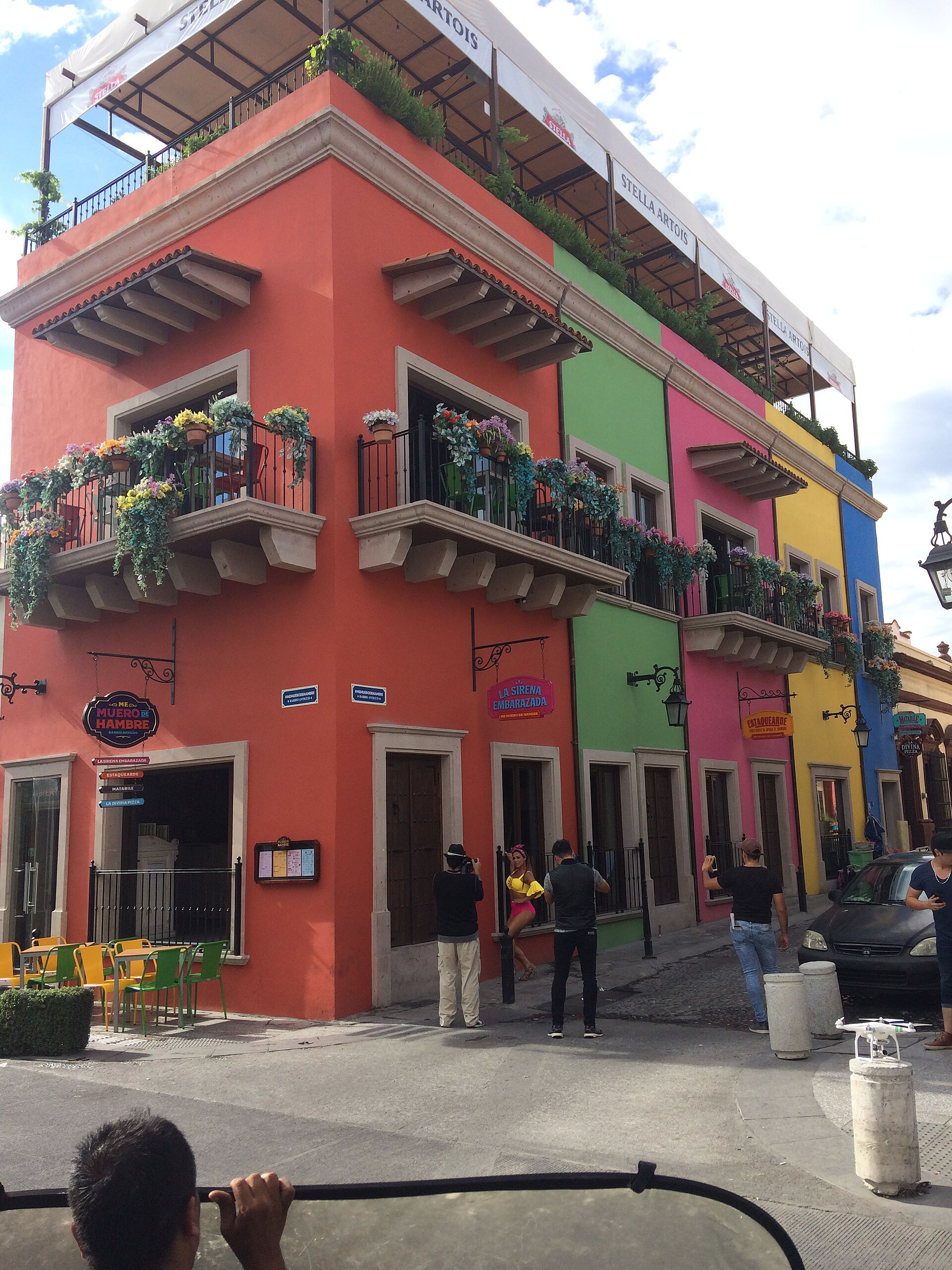
Monterrey has caught the specialty-coffee wave hard over the last few years, and the scene splits along neighborhood lines. Barrio Antiguo — the colonial-grid heart of downtown, all cantera-stone facades and night-life energy — has the bohemian end of it: café-record-store hybrids and small roasters tucked into old houses, best in the daytime before the bars take over. San Pedro and the Del Valle corridor hold the polished, design-forward cafés and artisan bakeries where the city's professional class works through laptops over single-origin pour-overs. The quality ceiling has risen fast; you no longer have to settle for hotel-lobby coffee anywhere central.
For day-to-day eating beyond the headliners, anchor yourself by district. The Centro and Barrio Antiguo are for markets, cenadurías, cheap excellent tacos, and walking off lunch on the Macroplaza and along the Paseo Santa Lucía. San Pedro and the leafy Contry area on the east side hold the upscale and the reliable family restaurants. Wherever you are, the rules hold: flour tortillas, beef over everything, mesquite if there's a grill, and the best meal is usually the least decorated one.
One last local instinct: eat on the city's own clock. Cabrito and carne asada are weekend-and-lunch affairs, machacado is breakfast, trompo is a midnight craving, and the tasting menus want a planned evening. Match your appetite to the hour Monterrey keeps and the city feeds you better than any guide can promise.