First, understand the shape of the place
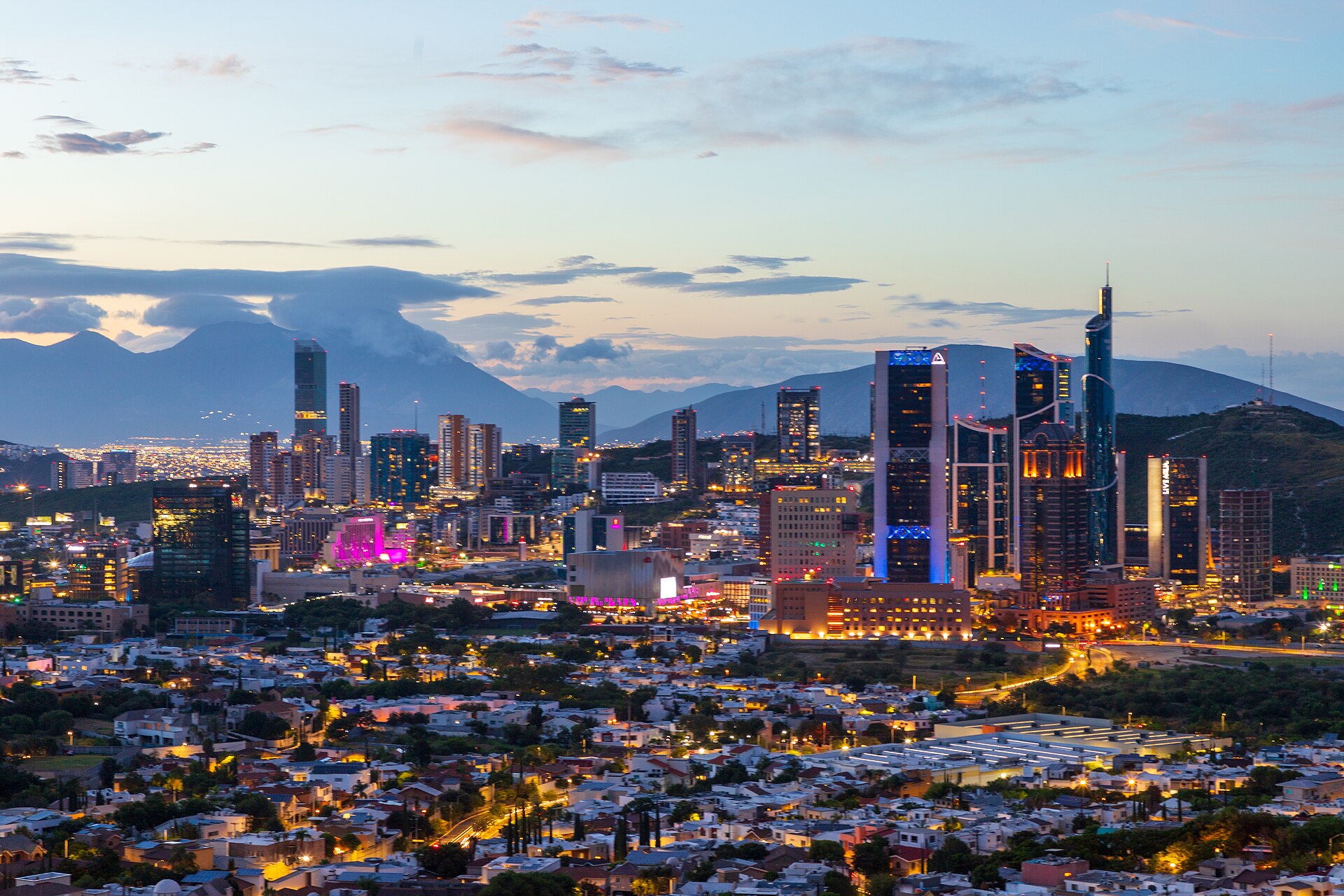
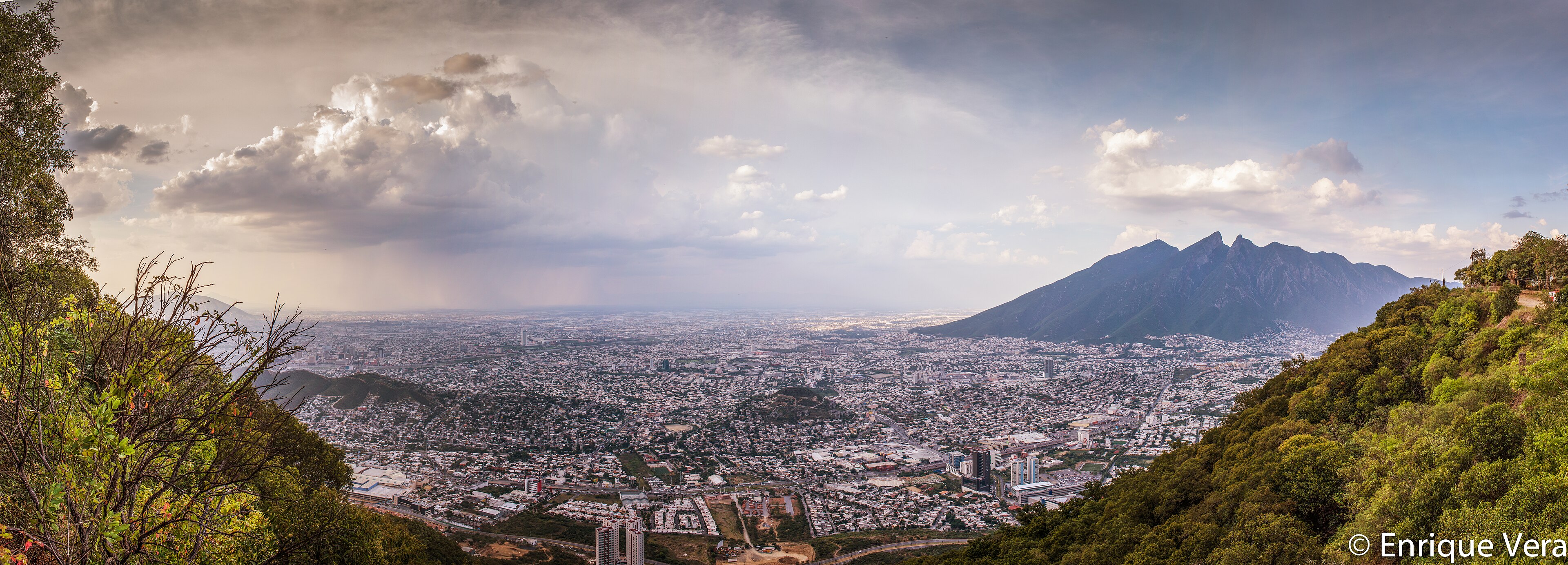
Greater Monterrey is a metropolitan area stitched together from several adjoining municipalities rather than a single downtown with suburbs around it. Monterrey proper anchors the center; San Pedro Garza García sits to the south and west; and Guadalupe, San Nicolás de los Garza, Apodaca, Escobedo and Santa Catarina fill out the ring. Two pieces of geography decide nearly everything about how a neighborhood feels: the dry, wide channel of the Río Santa Catarina cutting east-west through the middle, and the wall of the Sierra Madre Oriental hemming the city in to the south and west.
That geography is why Monterrey's extremes live so close together. The richest municipality in the country and one of its oldest working-class hillsides are separated mostly by a riverbed and the low Loma Larga ridge. You can stand on the Macroplaza, look south across the river, and see La Indepe climbing the slope; turn the other way and the glass towers of San Pedro catch the last light. For a visitor the useful instinct is to stop thinking 'downtown versus everything else' and instead pick among a handful of genuinely distinct districts, each with its own pace, price level, and reason to be there.
One more practical note: this is a car city. The metro has two functional rail lines and a third newer one, but most regios move by car, and the distances between districts are real. Where you base yourself matters more here than in a compact European old town, because crossing town at rush hour on the Constitución or Morones Prieto arteries is not a casual thing.
San Pedro Garza García: the money, the towers, the comfort
San Pedro Garza García is widely described as the wealthiest municipality in Mexico, and it carries itself accordingly. This is where the corporate headquarters, the embassies-in-spirit, the imported-car dealerships, and the people who can afford all of it cluster. If your priority is feeling safe, eating extraordinarily well, and not thinking too hard about logistics, San Pedro is the default answer — and you will pay for that comfort in every restaurant check.
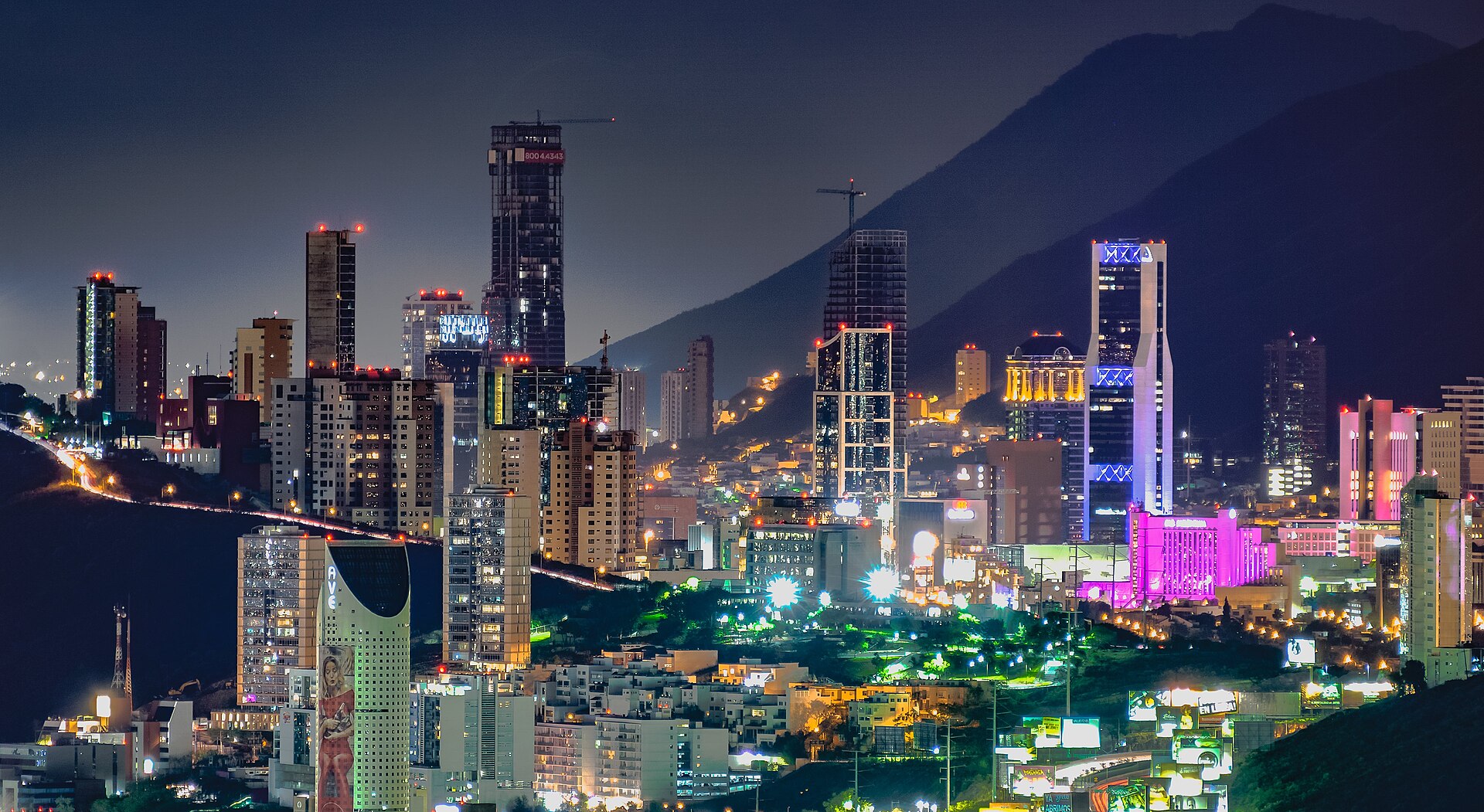
Within San Pedro, the textures differ block to block. Del Valle is the classic old-money residential heart, its first sections laid out in the 1940s by developer Alberto Santos, organized around the Calzada del Valle — a wide, gardened boulevard that doubles as the city's most beloved running and Sunday-stroll promenade, full of joggers and dog-walkers under the trees. Valle Oriente is the modern face: a cluster of high-rises, mixed-use complexes, and shopping plazas that filled in mostly after 2011, anchored by the Rufino Tamayo park and a skyline you will recognize from every postcard of 'new Monterrey.' Avenida Vasconcelos is the spine that ties it together, a long commercial run of restaurants, breweries, and showrooms.
Who it suits: business travelers, families who want zero friction, anyone whose trip is built around dining and shopping rather than history. Who it doesn't: backpackers and culture-first travelers, who will find it expensive, car-dependent, and a little sterile. San Pedro is beautiful and easy, but it can feel like an upscale enclave that happens to be near Monterrey rather than the city itself.
Centro and Barrio Antiguo: the historic core, by day and by night
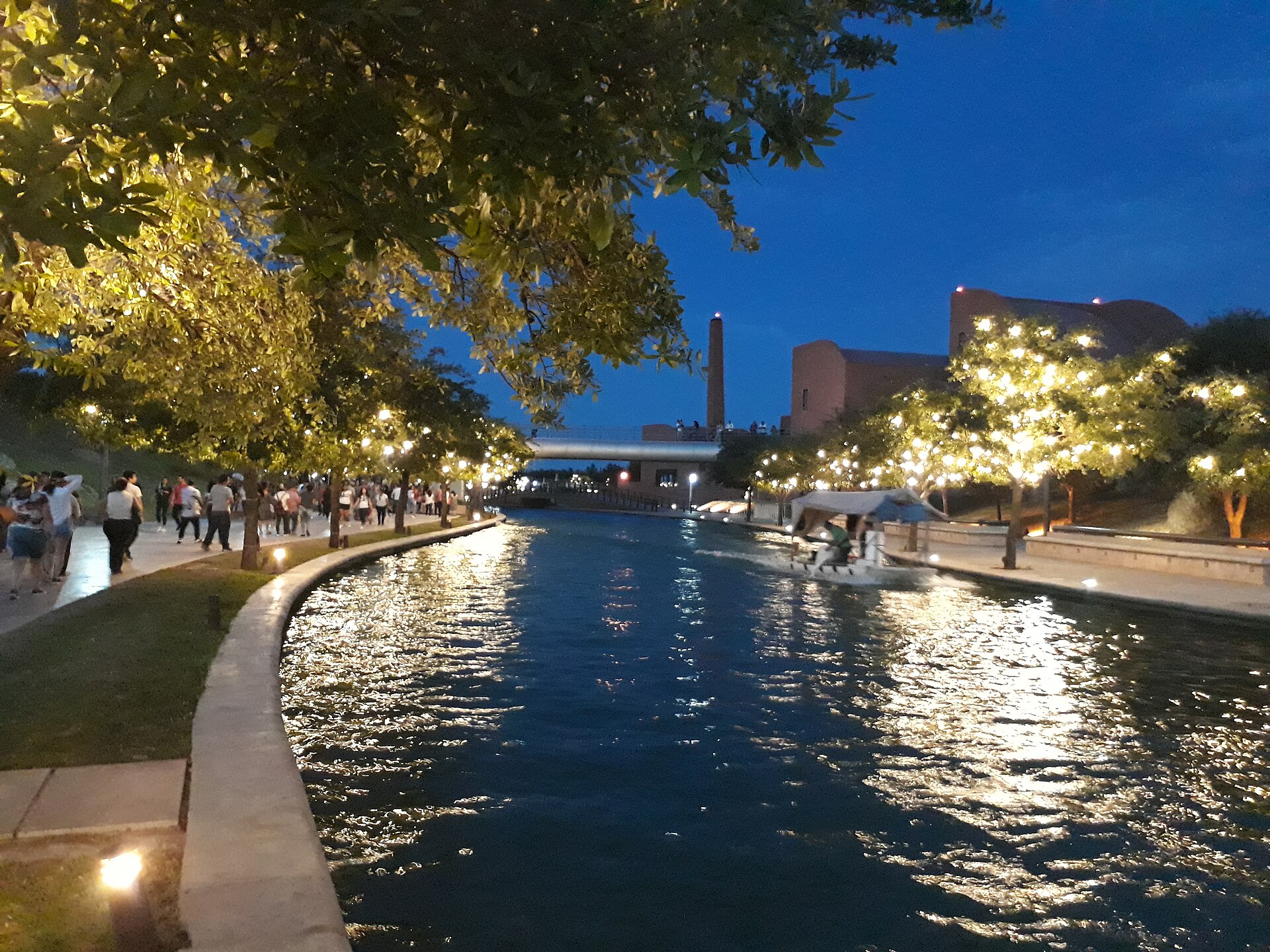
Monterrey's Centro is the civic and historic heart, built around the Macroplaza — one of the largest public squares in the world — and threaded by the Paseo Santa Lucía, a man-made riverwalk that runs from the plaza all the way to Parque Fundidora. The Faro del Comercio, Cathedral, MARCO, and the Palacio de Gobierno all sit within a short walk. This is the most genuinely walkable part of the metro, and the only place where you can do a full day on foot without touching a car.
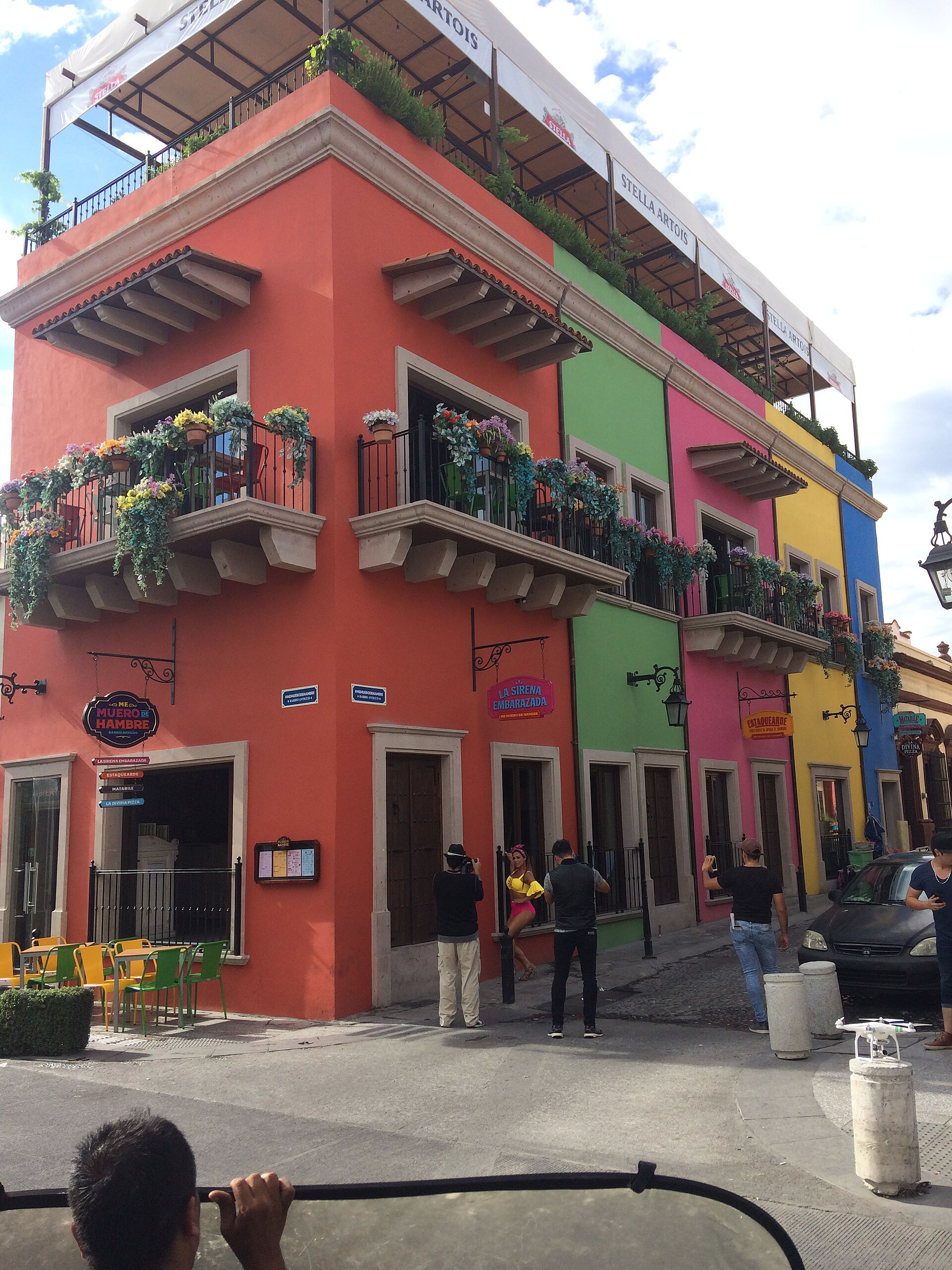
Tucked into the Centro is Barrio Antiguo, the city's oldest quarter: a small grid of cobblestone streets, 19th-century façades, and a couple of centuries of accumulated patina. The neighborhood lives a double life. By day it is quiet — galleries, antique shops, coffee, restored colonial houses, a few good restaurants — and it is a lovely, low-key place to wander. By night, particularly Thursday through Saturday, it flips into the city's main bar-and-live-music district, loud and packed and occasionally chaotic. Café Iguana, running since 1991, is the longtime music landmark and a fair barometer of the scene.
Honest take on safety: Barrio Antiguo is the most-policed nightlife zone in the city and is fine for the usual reasons most nightlife districts are fine — stay in the busy core, keep your wits after 2 a.m., take a registered rideshare home rather than wandering toward the river. By day it's genuinely relaxed. Who it suits: travelers who want to walk, who care about history and culture, who want nightlife within stumbling distance. The trade-off is that the Centro can feel rough around the edges in spots, and weekend nights are not quiet.
Obispado and Mitras: the in-between, with the best view in the city
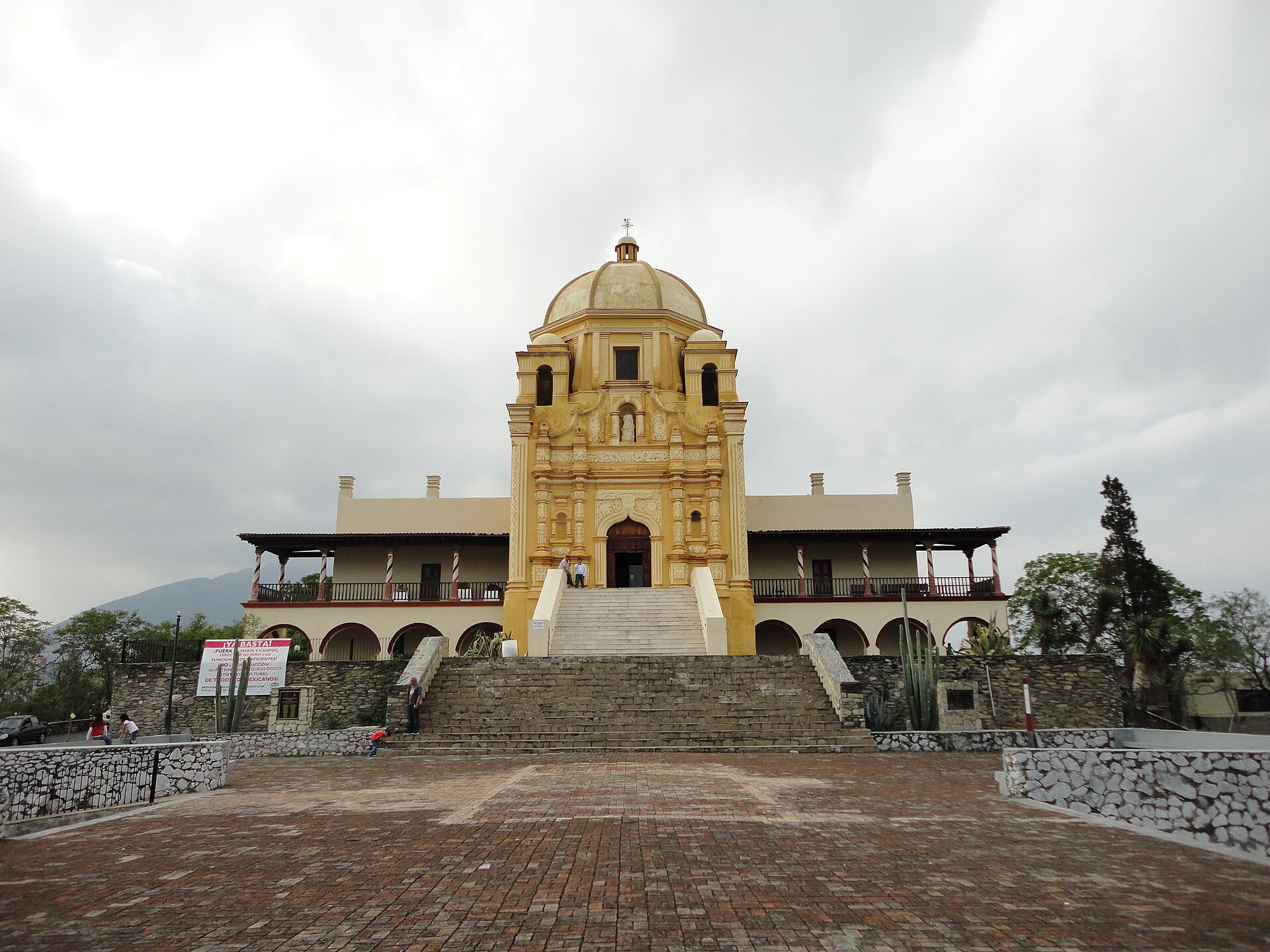
West of the Centro, on and around the Loma de la Chepe Vera, sits the Obispado district, named for the Palacio del Obispado that crowns the hill. The Bishop's Palace was completed in 1787 as a bishop's house of rest, later served as fortress, hospital, and now a regional history museum under INAH — and the Mirador del Obispado just above it gives you the single best panoramic view of the metro, the whole valley laid out with the Cerro de la Silla framing the east. Sunset up there is one of the genuinely worth-it tourist rituals in the city.
The neighborhood below is older, established, middle-to-upper-middle class — a mix of mid-century single-family homes and a growing number of mid-rise buildings, with hospitals, the U.S. consulate nearby, and a quiet residential feel that sits geographically and socially between the polish of San Pedro and the grit of the Centro. Adjacent Mitras (Mitras Centro, Mitras Norte) runs north and west: denser, more workaday, full of clinics, taquerías, and the everyday machinery of a real city neighborhood.
Who it suits: travelers who want a base that feels lived-in and central without Centro's noise or San Pedro's prices, people visiting the hospital corridor, anyone who values that view enough to live near it. It's less of a 'stay here' tourist pick and more the kind of place you'd choose for a longer, quieter visit close to the middle of everything.
Cumbres, Contry, and San Jerónimo: where Monterrey actually lives
These are the residential heartlands — not tourist neighborhoods, but the places that hold most of the metro's families. Cumbres, in western Monterrey, is a vast, sprawling collection of sectors climbing toward the hills, overwhelmingly family-oriented and organized around malls, schools, and arterial avenues rather than sights. It has a reputation as one of the safer, more comfortable middle-and-upper-middle-class expanses in the city, with private, controlled-access fraccionamientos and a long roster of well-known schools.
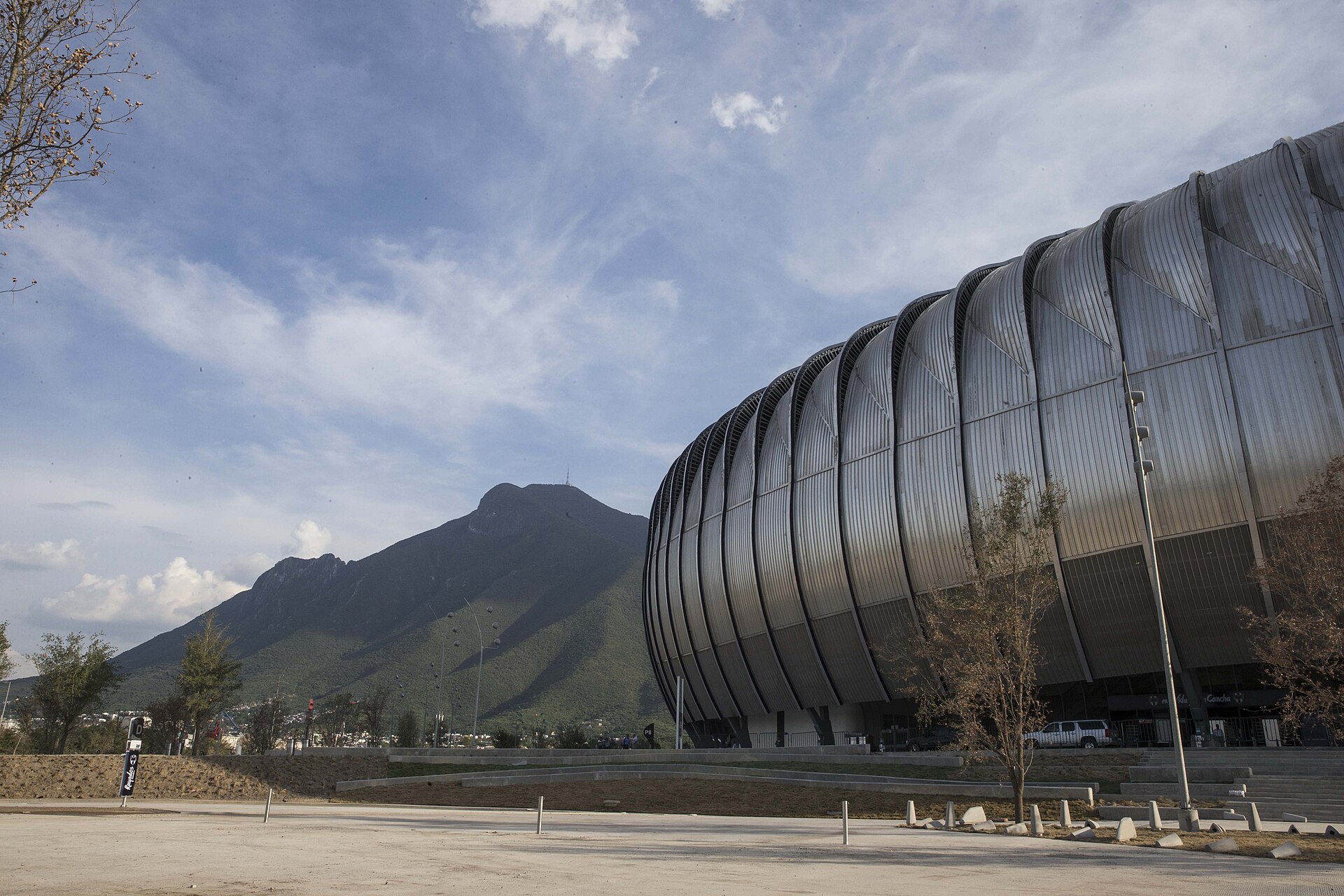
Contry lies to the south, at the very foot of the Cerro de la Silla — its name a relic of a mid-20th-century golf country club that once occupied the land. It's a settled, leafy residential zone with the mountain looming over every backyard. San Jerónimo, on Monterrey's western side near the San Pedro line, is older and well-established, valued for its green areas, hillside views, and quick access to San Pedro's higher-end services without San Pedro's price tag. Colinas de San Jerónimo in particular trades on security and a tranquil, family atmosphere.
Who it suits: almost no short-term visitor, honestly. There's little reason to base a three-day trip out here. But for someone moving to Monterrey, scouting a relocation, or visiting family, this is the real texture of regio domestic life — and understanding that these districts exist, and that they're where the actual city lives, is the difference between seeing Monterrey and seeing only its showroom.
Tecnológico and Distrito Tec: the student belt, slowly reinventing itself
South of the Centro, around the campus of the Tecnológico de Monterrey, sits a ring of older neighborhoods that the university has spent the last decade actively trying to revive. Launched in 2014, DistritoTec is a university-led urban-regeneration effort covering roughly 452 hectares across about two dozen barrios around the campus — some 17,000 residents — with a mandate to repopulate the area, add green space and public space, and make the streets walkable and bikeable under a 'complete streets' model. The initiative was a finalist for the World Resources Institute's Ross Prize for Cities, which tells you it's a serious experiment, not a marketing slogan.
On the ground, the district is a study in contrast: decades-old working-and-middle-class colonias, a heavy student population, and pockets of new cafés, co-working spaces, bike lanes, and renovated houses appearing among the older fabric. It has the slightly scruffy, in-transition energy of a university edge anywhere — cheaper rents, taco stands open late, the constant churn of young people — layered over a deliberate civic project to keep the area from hollowing out the way university surroundings often do.
Who it suits: students, longer-stay visitors and digital nomads who want something more affordable and more authentically neighborhood-y than San Pedro, people who like watching a place change in real time. The caveat is that the transformation is uneven block to block — one street polished, the next still waiting — so it rewards a bit of local knowledge about exactly where you're staying.
Colonia Independencia: La Indepe and the cradle of cumbia
Across the Santa Catarina from the Centro, the slope of the Loma Larga is covered by Colonia Independencia — universally 'La Indepe' — a dense working-class hillside of staircases, narrow alleys, and houses stacked up the grade in an organic, unplanned pattern. It began in the mid-19th century as Barrio San Luisito, settled largely by migrants from San Luis Potosí and Zacatecas who came to work the breweries and the Fundidora foundry, and was renamed Independencia in 1910 for the centennial of Mexican independence. It is one of the very oldest neighborhoods in the metro, and it wears that age in its layout.
La Indepe is also a genuine cultural landmark. In the 1960s it became the 'Cuna de la Cumbia' — the cradle of Monterrey's distinctive cumbia — where sonideros, the local DJ-impresarios who hosted street dances with turntables and stacked loudspeakers, reshaped Colombian cumbia into something of their own, including the slowed-down, deepened style known as cumbia rebajada. That sound seeded the Cholombiano subculture, with its own dress, slang, and gelled hair, and produced the neighborhood's most famous son, Celso Piña, who grew up here and carried regiomontano cumbia onto international stages.
Honest take: La Indepe carries a tough, sometimes feared reputation, and the caution is not entirely manufactured — this is not a casual after-dark wander for a first-time visitor, and some interior sections warrant real local guidance. But the blanket image of menace sells the place short. It is a proud, deeply lived-in barrio, the emotional and historical root of a huge part of Monterrey's identity, and increasingly the subject of cultural tours and documentaries precisely because it's so essential to the city's story. Visit thoughtfully, ideally with someone who knows it, in daylight.
So where should you actually stay?
If this is a short visit and your first time, the honest answer is one of two places. Stay in San Pedro (Del Valle or Valle Oriente) if you want comfort, safety, great food, and easy logistics, and you don't mind that it feels somewhat sealed off from the rest of the city. Stay in the Centro near Barrio Antiguo if you want to walk, want history and nightlife within reach, and are comfortable with a grittier, more urban edge in exchange for being inside the real city rather than beside it.
Obispado or the Distrito Tec belt make sense for longer or repeat stays — more local texture, lower prices, still central — provided you're deliberate about the exact block. Cumbres, Contry, and San Jerónimo are for relocation scouting and family visits, not tourism. And La Indepe is for the curious traveler who wants to understand where Monterrey's soul actually comes from, approached with respect and, ideally, a guide.
The thing most first-time visitors get wrong is treating Monterrey as a single destination with one center. It isn't. Pick your district to match the trip you actually want — boardroom and brunch, or cobblestones and live cumbia — and the city opens up. Pick wrong and you'll spend the whole visit in traffic wondering where everyone went.