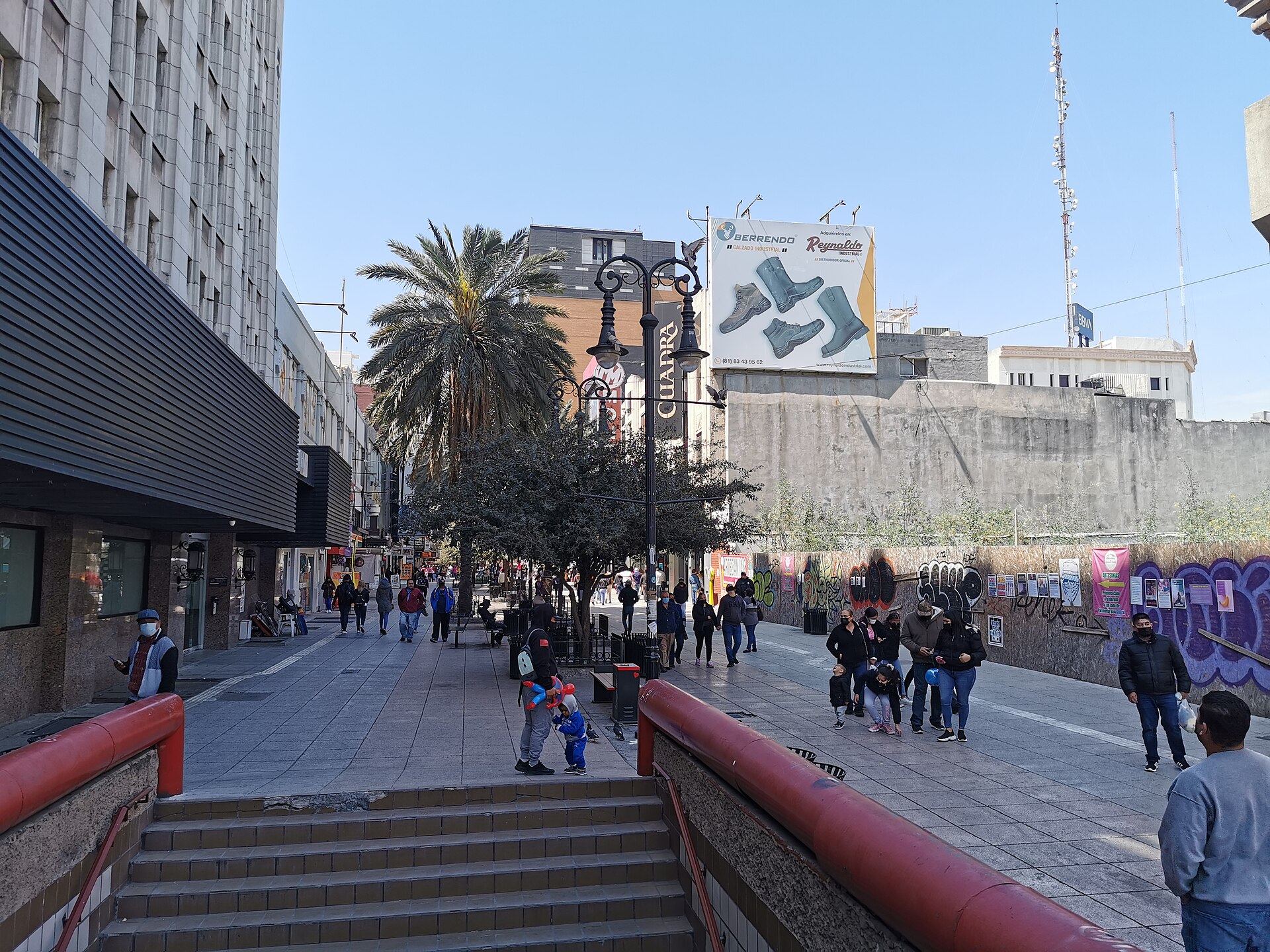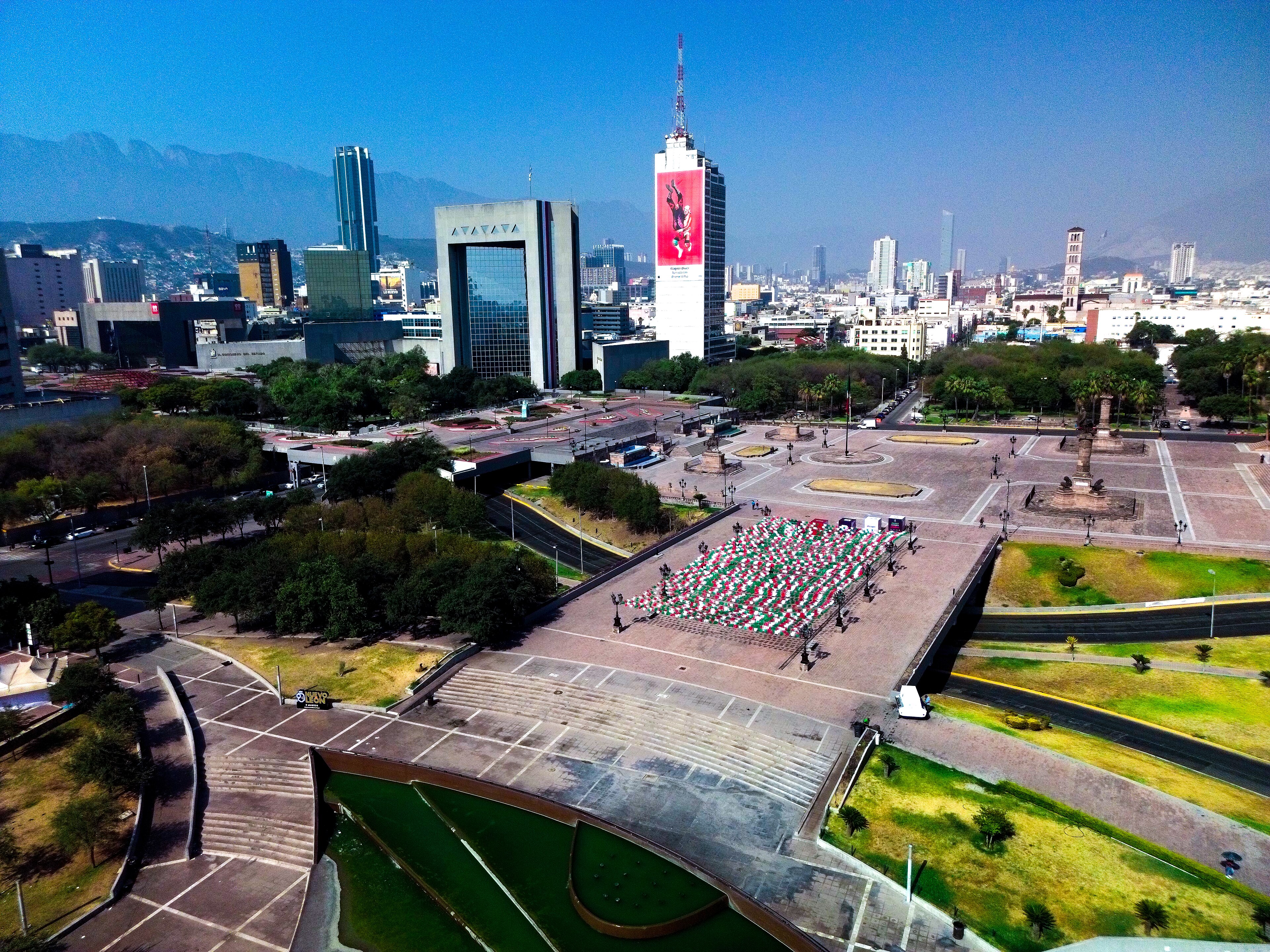
Start at the Macroplaza, and understand what was bulldozed to build it
Every first day in Monterrey starts here, and it should. The Macroplaza is the spine the whole downtown hangs off of: a roughly 400,000-square-meter civic square that ranks among the largest in the world, stitching the cathedral, the Palacio de Gobierno, city hall, the Congreso, fountains, sunken gardens, and open lawn into one continuous run from north to south. What almost no guidebook tells you is the cost of building it. It was carved out in the early 1980s under governor Alfonso Martínez Domínguez — construction ran 1982 to 1984 — by demolishing dozens of city blocks of old downtown, including the beloved Cine Elizondo. Older regios still talk about it with a mix of pride and mourning. You are standing in the negative space of a neighborhood that was erased.
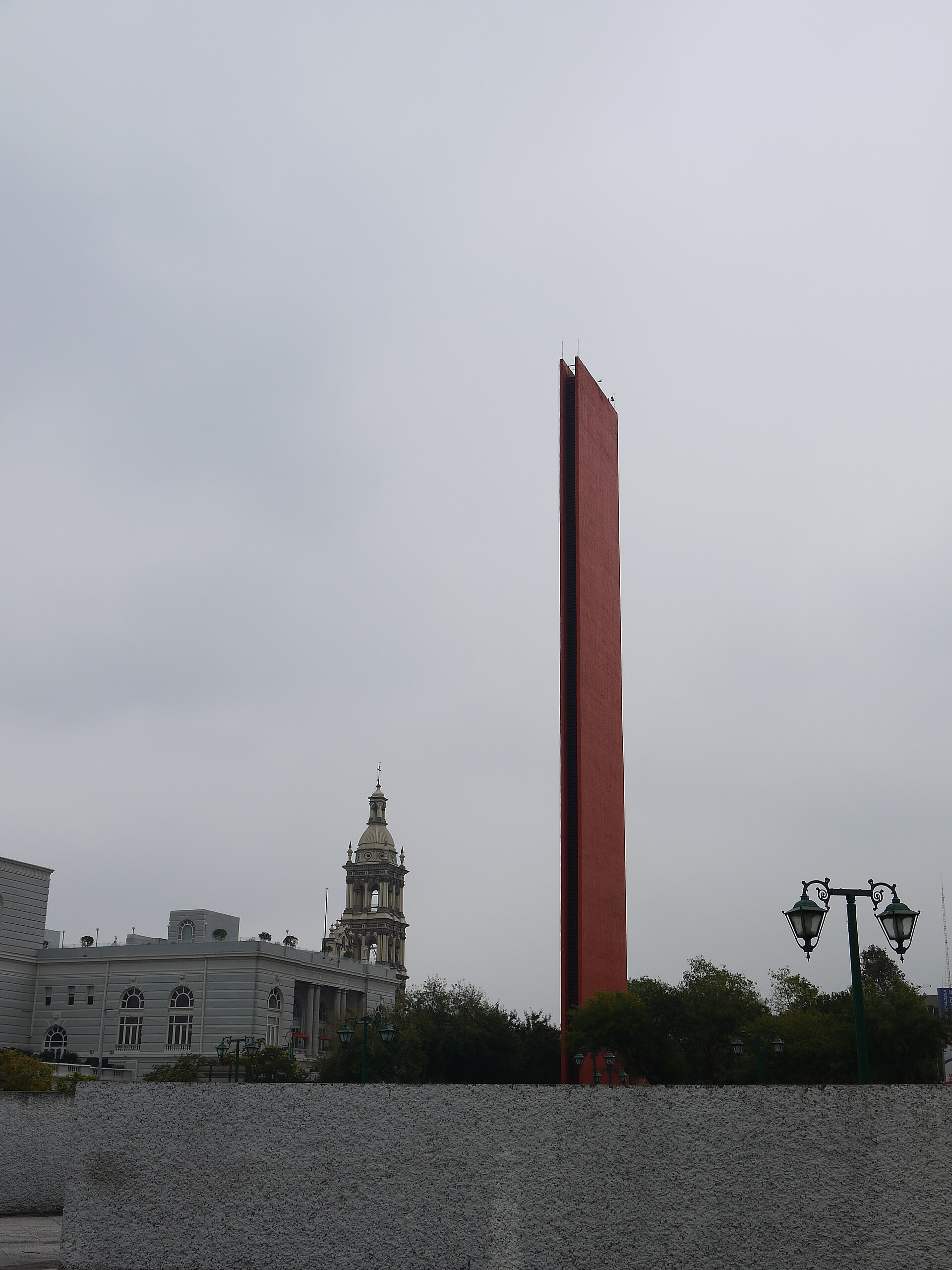
The icon is the Faro del Comercio, the orange concrete slab at the southern end. Luis Barragán designed it; Raúl Ferrera built it; president Miguel de la Madrid inaugurated it on December 7, 1984, for the 100th anniversary of Monterrey's chamber of commerce. It is about 70 meters tall, and at night it fires a green laser across the sky. Insider truth: the laser is intermittent and weather-dependent, so do not plan an evening around it. The square itself is the real reward. Go early morning before the heat, or at dusk when the light hits the orange and families come out.
Practical orientation: the Macroplaza sits directly above the Zaragoza and Padre Mier Metro stations on Line 2, which is how most locals arrive. Nearly everything below is a short walk or one boat ride away, so anchor your day here and radiate out. Bring water and a hat — there is very little shade in the open stretches, and Monterrey summers are brutal.
The Paseo Santa Lucía: walk it, don't necessarily pay for the boat
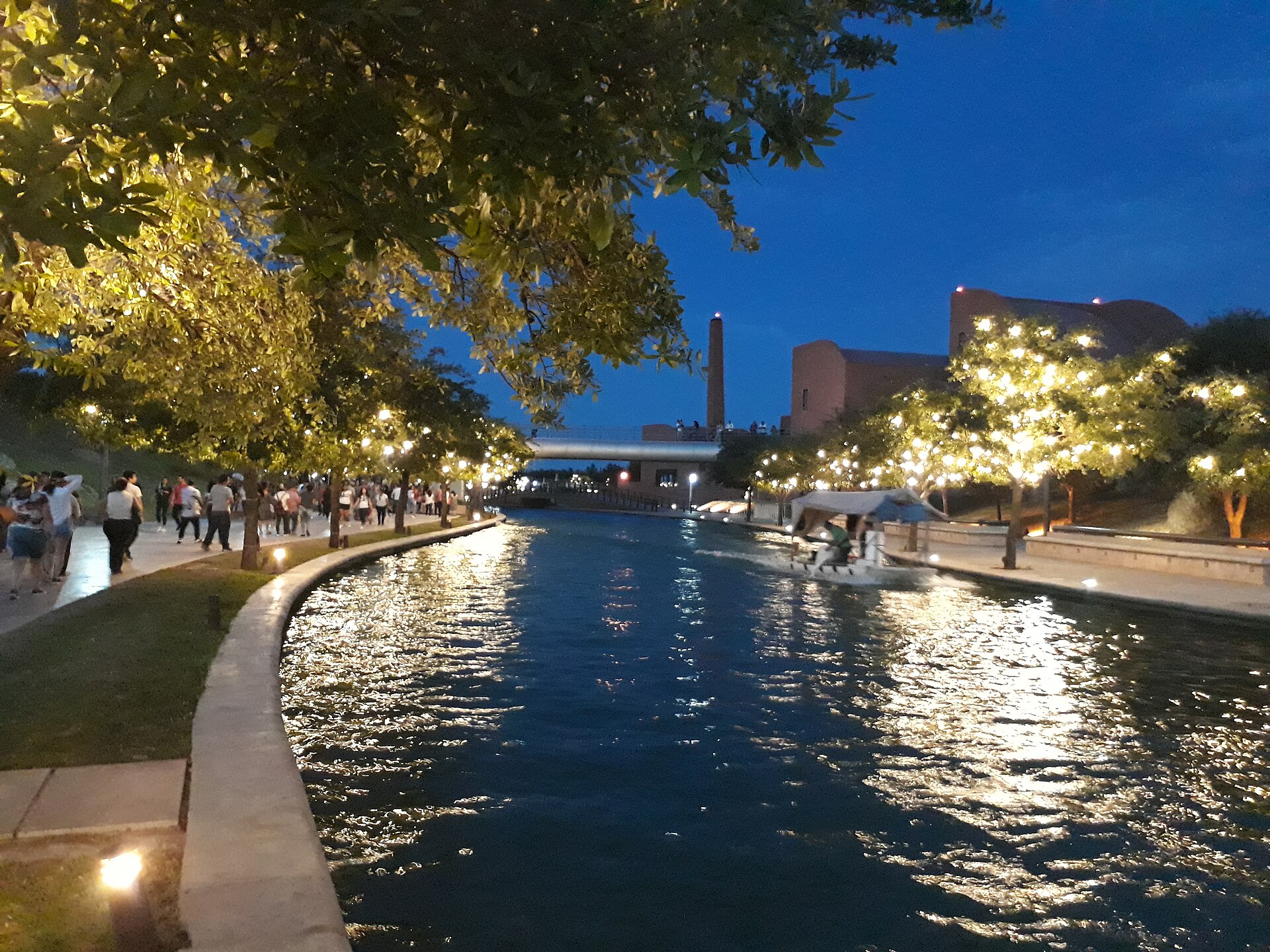
From behind the Museo de Historia Mexicana, the Paseo Santa Lucía cuts roughly 2.5 kilometers east to Parque Fundidora — an artificial canal lined with walkways, fountains, sculpture, and lit bridges. It opened in 2007, partly inspired by San Antonio's River Walk, and it is genuinely the most pleasant way to connect the two ends of a downtown day. The walk is free, flat, and shaded in stretches.
There is a small boat that ferries passengers the length of the canal, with fares in the neighborhood of 120 pesos for adults and around half that for kids and INAPAM-card seniors, running roughly 10am to 9pm on operating days. Honest take: the boat is pleasant but slow and not essential. If you enjoy walking, the path delivers the same views and you control the pace. The boat earns its keep on a hot afternoon, with small kids, or after dark when the canal lighting is at its best. Either way, go in the evening — the Paseo was designed for night, and midday in summer along an exposed canal is a mistake.
One regio detail: the weekend evening crowd here is overwhelmingly local families and couples, not tourists. That is the point. This is where Monterrey goes to walk off dinner, and it is one of the few genuinely safe-feeling, well-lit public spaces downtown after dark.
Parque Fundidora: a dead steel mill turned into the city's best park
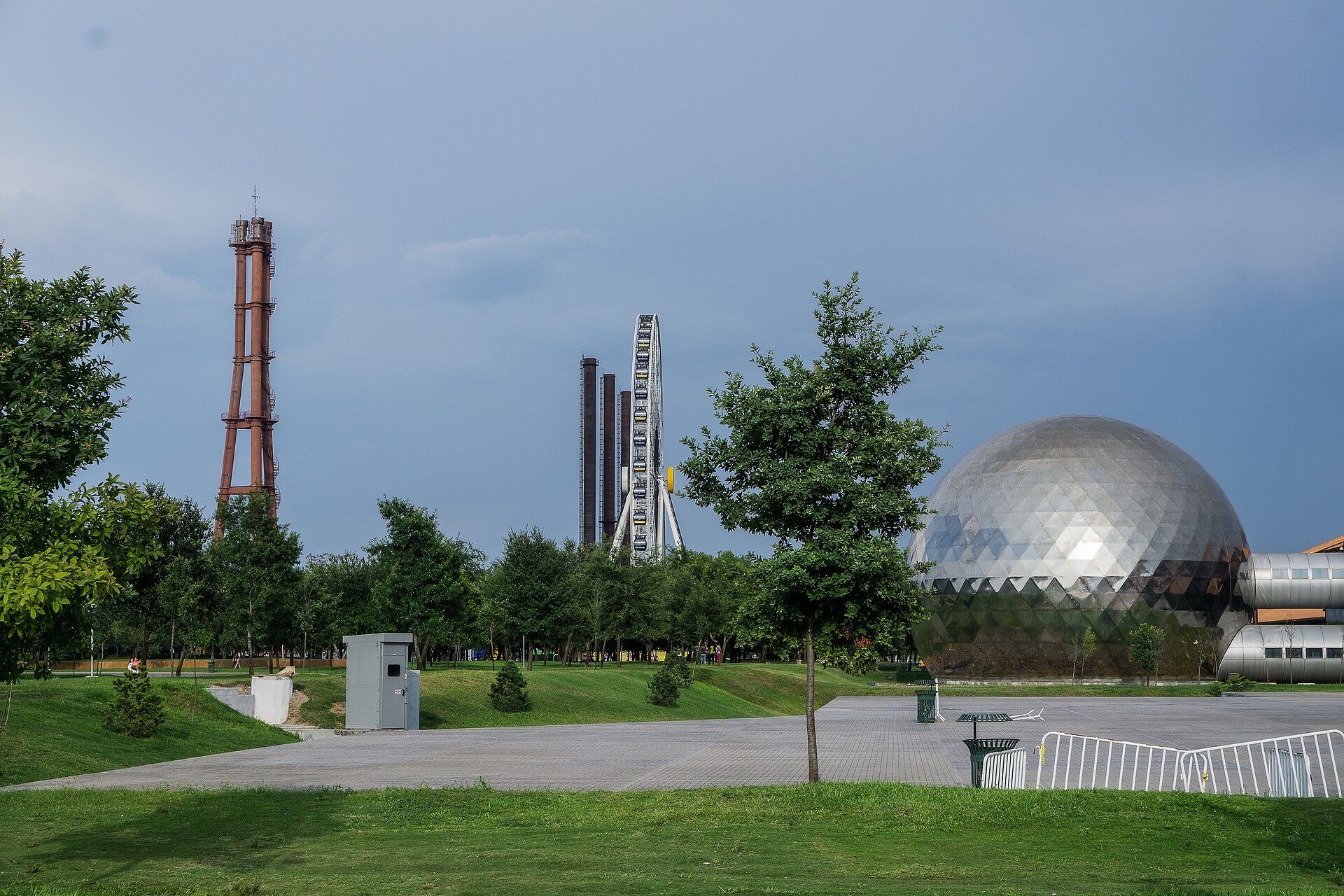
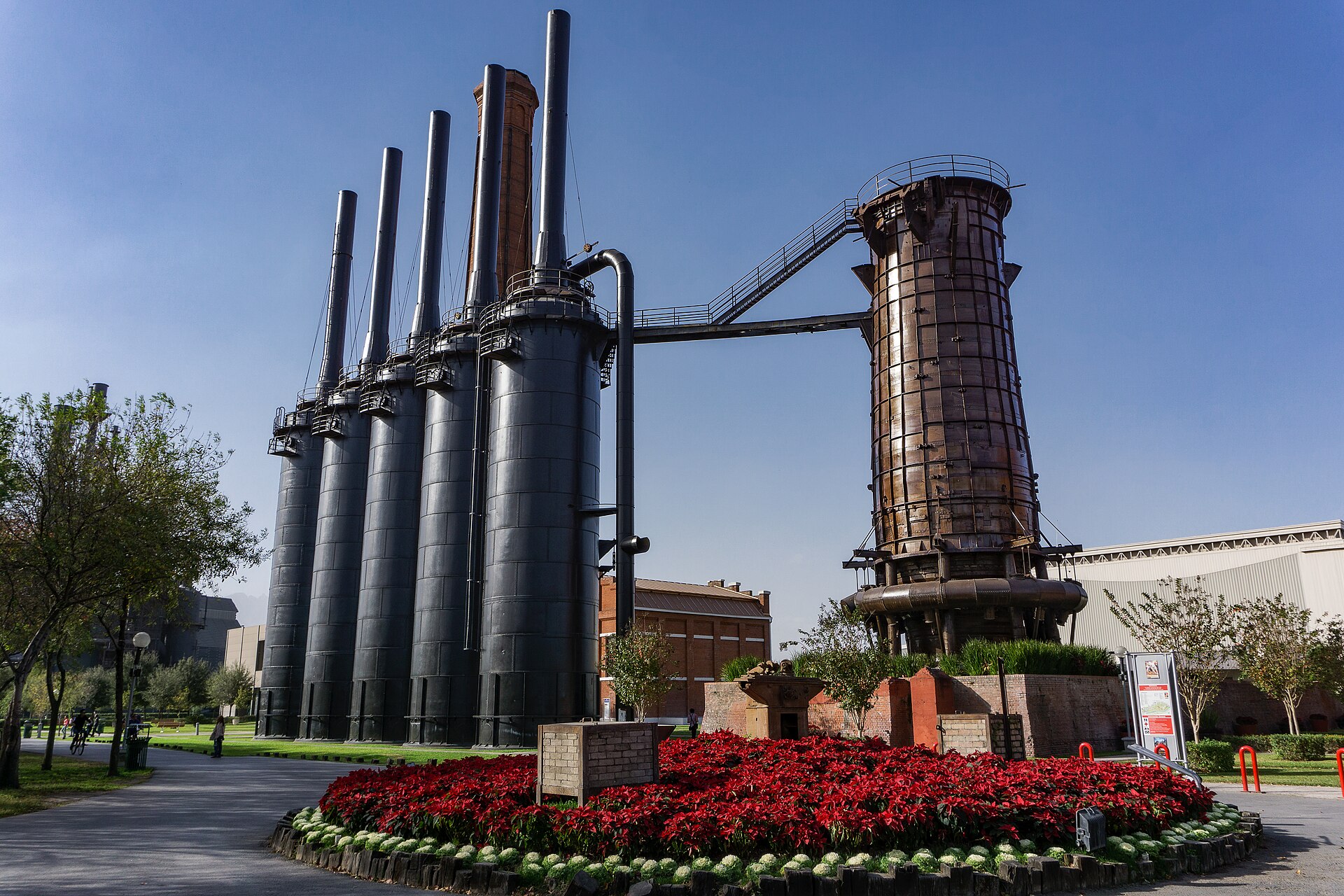
Fundidora is the single most worth-it sight in the city, and entry to the park is free. It sits on the grounds of Compañía Fundidora de Fierro y Acero de Monterrey, once Latin America's first integrated steel mill, which ran from 1900 until it went bankrupt and closed in 1986 — a closure that gutted the working-class east side and still defines the city's industrial memory. Instead of leveling the works, Monterrey kept the rusting blast furnaces, gantries, and brick naves standing as monuments and built a park around them. The result is unlike any other park in Mexico: lakes, gardens, bike paths, a baseball stadium, the Arena Monterrey, and these enormous black industrial cathedrals scattered through the green.
It is huge, so be strategic. Rent a bike or take the little tren at the entrance if you want to cover ground. The most photogenic angles are around the preserved Horno Alto No. 3 and the reflecting water near the old foundry halls. Weekends bring runners, cyclists, families, and the occasional concert or festival — the park doubles as the city's main outdoor event venue.
What is overrated here? The paid kiddie attractions and the rental paddle-boats are fine but skippable. What is underrated? Just wandering the industrial ruins on foot. Nobody charges you to stand under a 1900s blast furnace, and it is more moving than most of the ticketed museums.
Horno3 and the Nave Lewis: steel science and serious art in the old works
Horno3, the Museo del Acero, is the headline museum inside Fundidora, built into and around the preserved No. 3 blast furnace with a glass pavilion by the British firm Grimshaw. It is an interactive science-and-technology museum about steelmaking, with around 140 exhibits across its galleries. The two things to actually do here: the Show del Horno (sometimes billed as the Sleeping Giant show), a pyrotechnic light-and-sound spectacle staged in the base of the real furnace, and the ride up the furnace structure to the mirador for a panorama over the city and the surrounding sierra. General admission runs around 150 pesos, with discounts for kids, students, teachers, and INAPAM, and it is open Tuesday to Sunday. Verify the day's show times when you arrive — the furnace show runs on a fixed hourly schedule, not on demand.
Less obvious, and free, is the cultural complex a short walk away in the old mill halls. The Centro de las Artes CONARTE occupies former naves of the foundry and packs in the Cineteca Nuevo León, the Fototeca, galleries, and rotating contemporary exhibitions. The Nave Lewis — a former Lewis combination mill, over 10,000 square meters split into two cavernous halls — is the city's premier raw industrial exhibition space, where the big traveling photography and art shows land. If there is a major exhibition in town, odds are it is in the Nave Lewis, and the building itself is half the experience.
Stringing it together: ride or walk the Paseo Santa Lucía from downtown to Fundidora, spend the afternoon in the park, do Horno3 and the CONARTE halls, and walk back along the lit canal at night. That single loop is the strongest one-day plan in Monterrey, and most of it costs nothing.
Downtown museums: MARCO, and the Mexican history complex
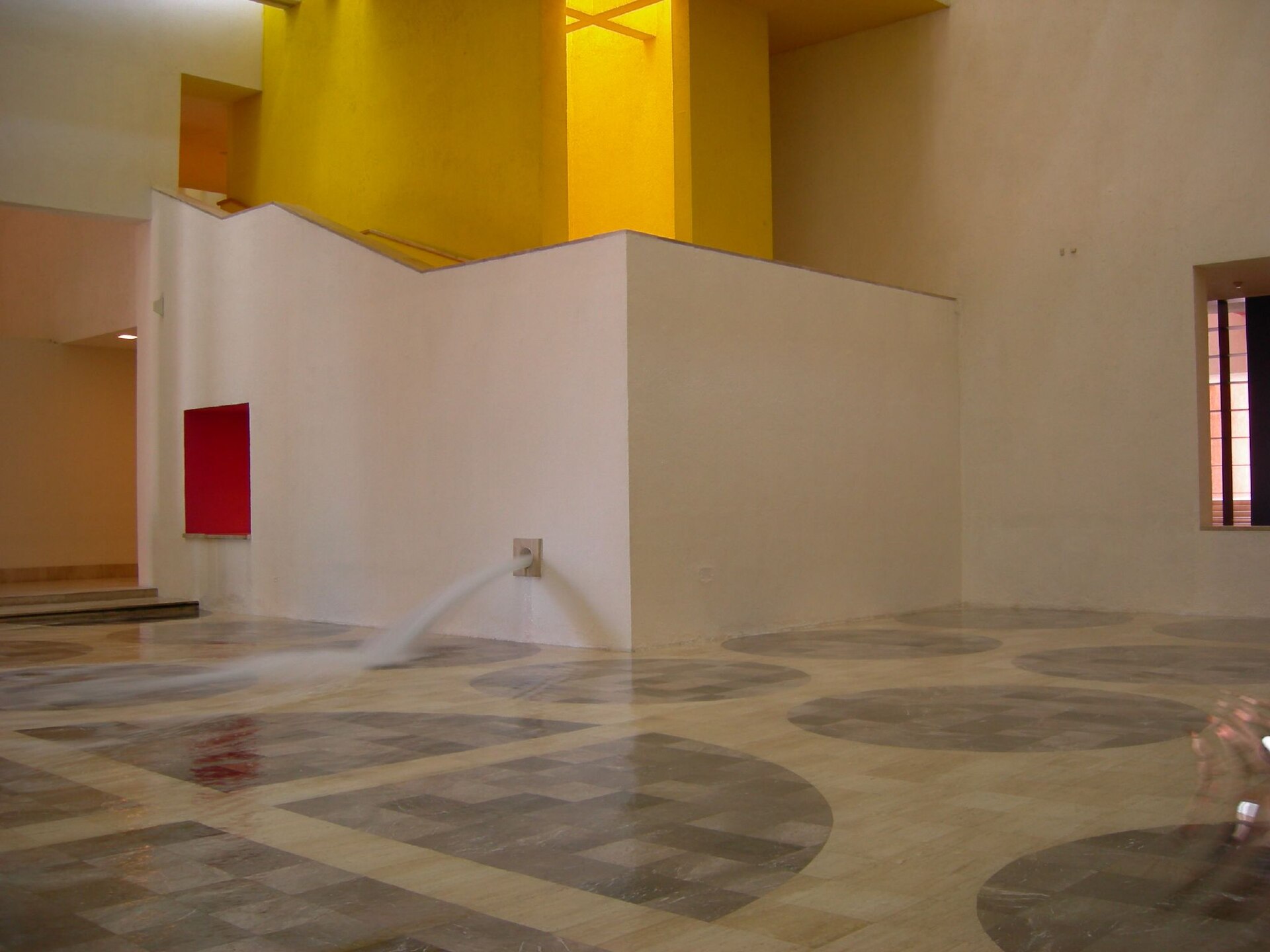
Right on the Macroplaza, beside the cathedral, MARCO — the Museo de Arte Contemporáneo de Monterrey — is the city's signature art museum. Ricardo Legorreta designed it and it opened in 1991, organized around a soaring interior courtyard with a reflecting pool. Out front stands La Paloma, Juan Soriano's monumental bronze dove, roughly six meters tall and four tons, a city landmark in its own right. MARCO runs ambitious rotating shows of Latin American and international contemporary art; quality varies by season, so check what is actually hanging before you commit. When the show is good, it is the best museum in town. Wednesdays have historically been free or discounted — confirm at the door.
A short walk east, near the city's founding site at the head of the Paseo Santa Lucía, sits a cluster of state museums under one roof. The Museo de Historia Mexicana sweeps from pre-Hispanic civilizations to the twentieth century, and it connects internally to the Museo del Noreste, which focuses on the shared history of northeastern Mexico and south Texas. These are well-funded, well-curated, genuinely worth two hours, and free on certain days. They are also blessedly air-conditioned, which matters more than you would think in a Monterrey summer.
What to skip downtown: the smaller one-room museums that pad out tourist lists. Your time is better spent on MARCO, the history complex, and the streets themselves than on minor collections you will forget by dinner.
The Obispado: the best free view in the city, with a history lesson attached
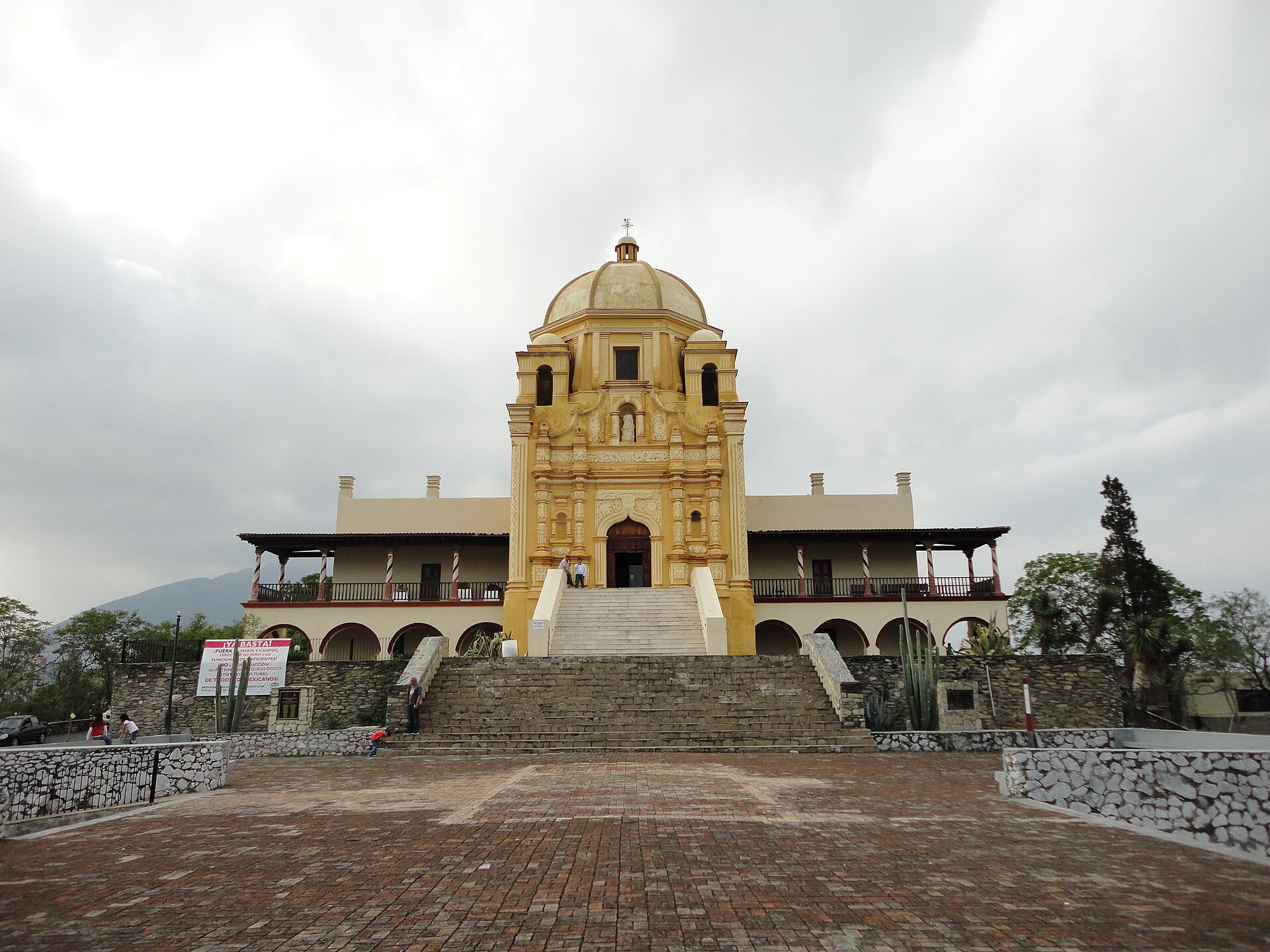
For the view, climb the Obispado, the Bishop's Palace, on Chepe Vera hill west of the center. It was built in 1787–1788 at the initiative of bishop Rafael José Verger, and it is one of the very few surviving pieces of viceregal architecture in northeastern Mexico — most of the region was too poor and too frontier to build in stone. Its history is martial: it was fortified and fought over during the 1846 U.S. invasion of Monterrey and again during the French Intervention, and it served as a stronghold in the Revolution. Since 1956 it has housed the Museo Regional de Nuevo León, with ten rooms tracing the region's identity.
The museum keeps roughly Tuesday-to-Sunday, 9am-to-6pm hours, with free admission on Sundays, while the hilltop site and mirador stay open longer into the evening. Even if you skip the galleries, come up for the Mirador del Obispado: a near-360-degree look over the city ringed by the Cerro de la Silla, the Sierra Madre, and the Loma Larga, with the country's largest Mexican flag — on a roughly 100-meter pole — snapping overhead. It is the city's best free panorama, hands down.
Getting up there: it is a steep walk from the nearest avenues, so most people take a rideshare or taxi to the top and walk down. Go late afternoon for the light, and stay through sunset if the weather is clear.
Barrio Antiguo and the Alameda: the old streets and the city's living room
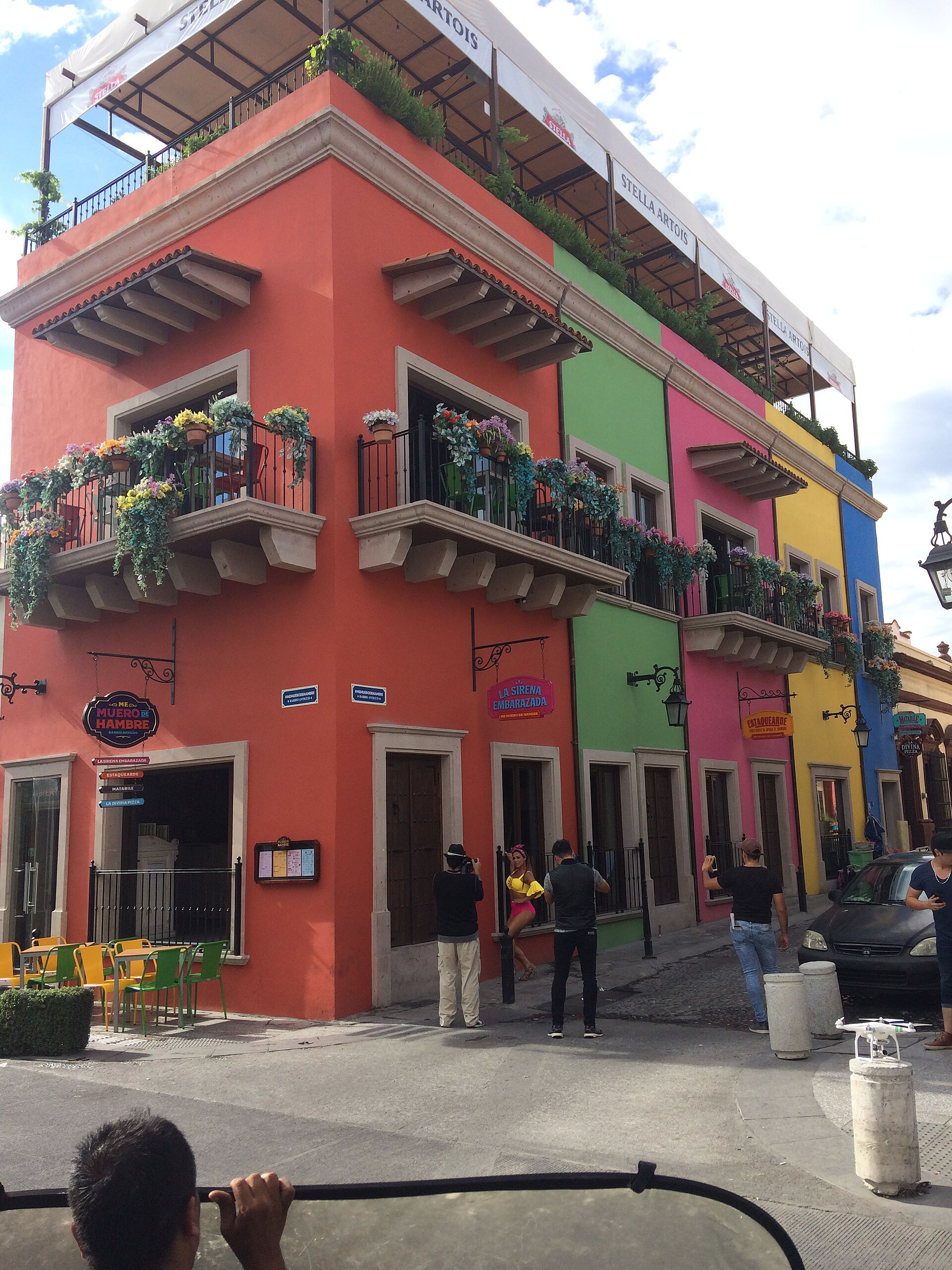
The Barrio Antiguo is Monterrey's oldest surviving quarter, a small grid of cobbled streets and 18th- and 19th-century houses just southeast of the cathedral, around calles Morelos, Padre Mier, and Diego de Montemayor. By night it is the city's main bar-and-music district (covered in the nightlife guide), but by day it is quiet, walkable, and full of galleries, cafés, antique shops, and weekend street markets. Come on a Saturday or Sunday afternoon and you get the architecture and the murals without the crowds and the noise. It is compact — an hour of unhurried wandering covers it.
A few blocks northwest, the Alameda Mariano Escobedo is downtown's green lung and one of its oldest public spaces, dating to the 1860s and named after the Reform-era general. Under its old trees you find the real working downtown: vendors, shoeshines, chess players, families, and on weekends an informal market spilling along the edges. It is not a manicured tourist garden, and that is exactly why it is worth ten minutes — it is the unedited city. It sits right by the Alameda Metro station on Line 1, making it an easy add-on.
One correction worth knowing, because it still appears on outdated lists: the Planetario Alfa, the longtime science-and-IMAX landmark in San Pedro, closed permanently in 2020, and much of its collection went to the Universidad Autónoma de Nuevo León. Do not build a day around it. For a planetarium-style experience now, look to the university's science offerings or to Horno3's interactive galleries instead.
How to string it together: on foot, by Metro, and a one-day plan
The whole downtown canon fits a single well-planned day. The core — Macroplaza, cathedral, MARCO, the history museums, the Alameda, and Barrio Antiguo — is all within a 15-minute walk of itself. The two Metro lines do the heavy lifting for everything else: Line 1 runs east-west above the old Avenida Colón corridor (Alameda, Cuauhtémoc, Central), and Line 2 runs under the Macroplaza itself (Zaragoza, Padre Mier, General Anaya). A ride is a couple of pesos. It is fast, safe in daylight, and it spares you the heat and the parking.
The cleanest one-day loop: start early at the Macroplaza and the cathedral, do MARCO and the Museo de Historia Mexicana before noon while it is cool and the galleries are empty, then walk or boat the Paseo Santa Lucía out to Parque Fundidora for the afternoon and Horno3. Walk back along the lit canal at dusk, drop into Barrio Antiguo for dinner and a drink. If you have a second day, spend a morning up at the Obispado mirador and the rest in the mountains — La Huasteca, Chipinque, or Cola de Caballo are all under an hour out (see the outdoors guide).
Final honest ledger. Worth your time and mostly free: the Macroplaza, the Paseo Santa Lucía walk, Parque Fundidora, the Obispado view, the CONARTE halls. Worth paying for: Horno3, and MARCO when the show is strong. Overrated or skippable: the slow boat if you like walking, the minor padded-out museums, and anything still selling you the closed Planetario Alfa. Build around the first list and you will see the real city, not the brochure.