Four hundred years on the same grid
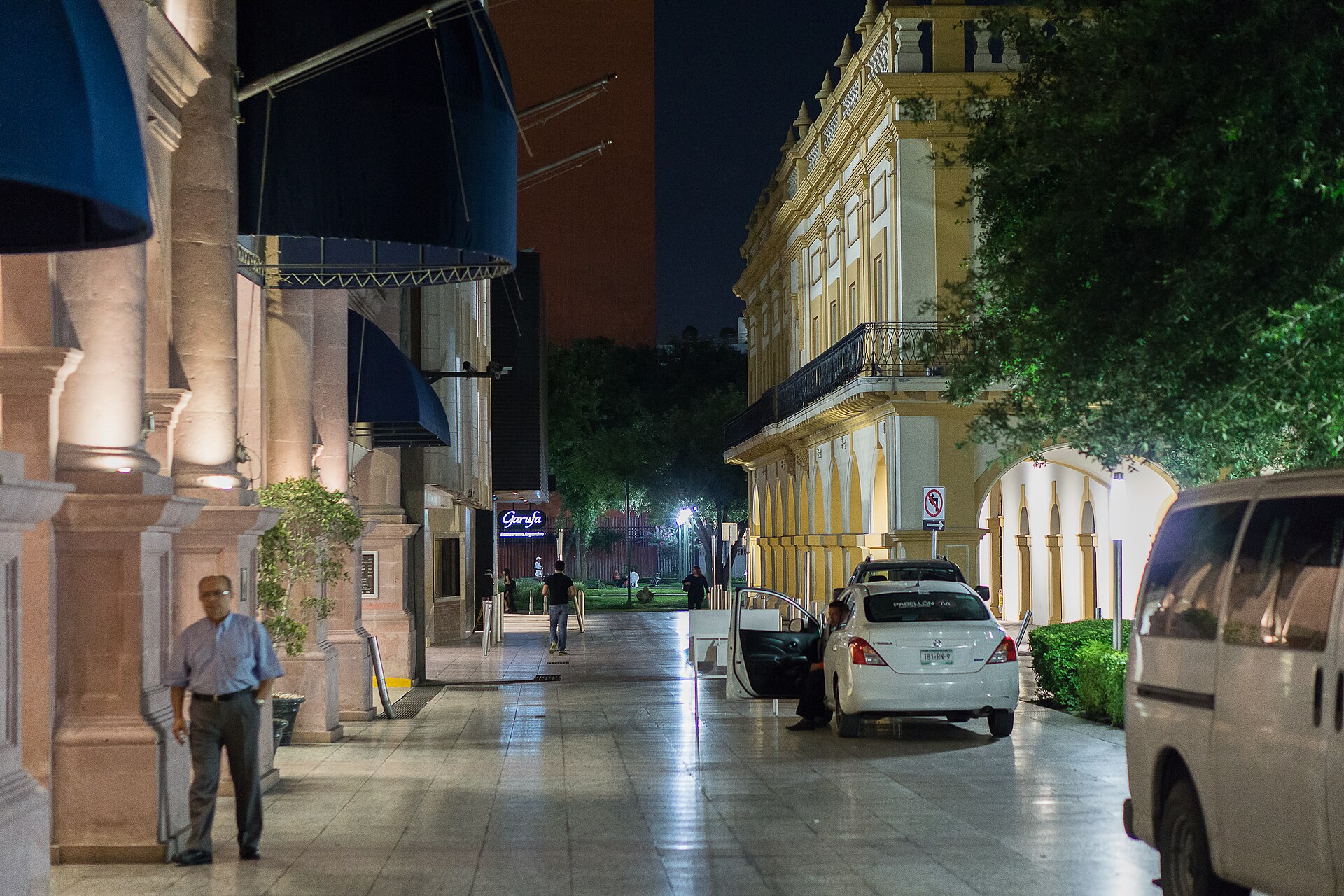
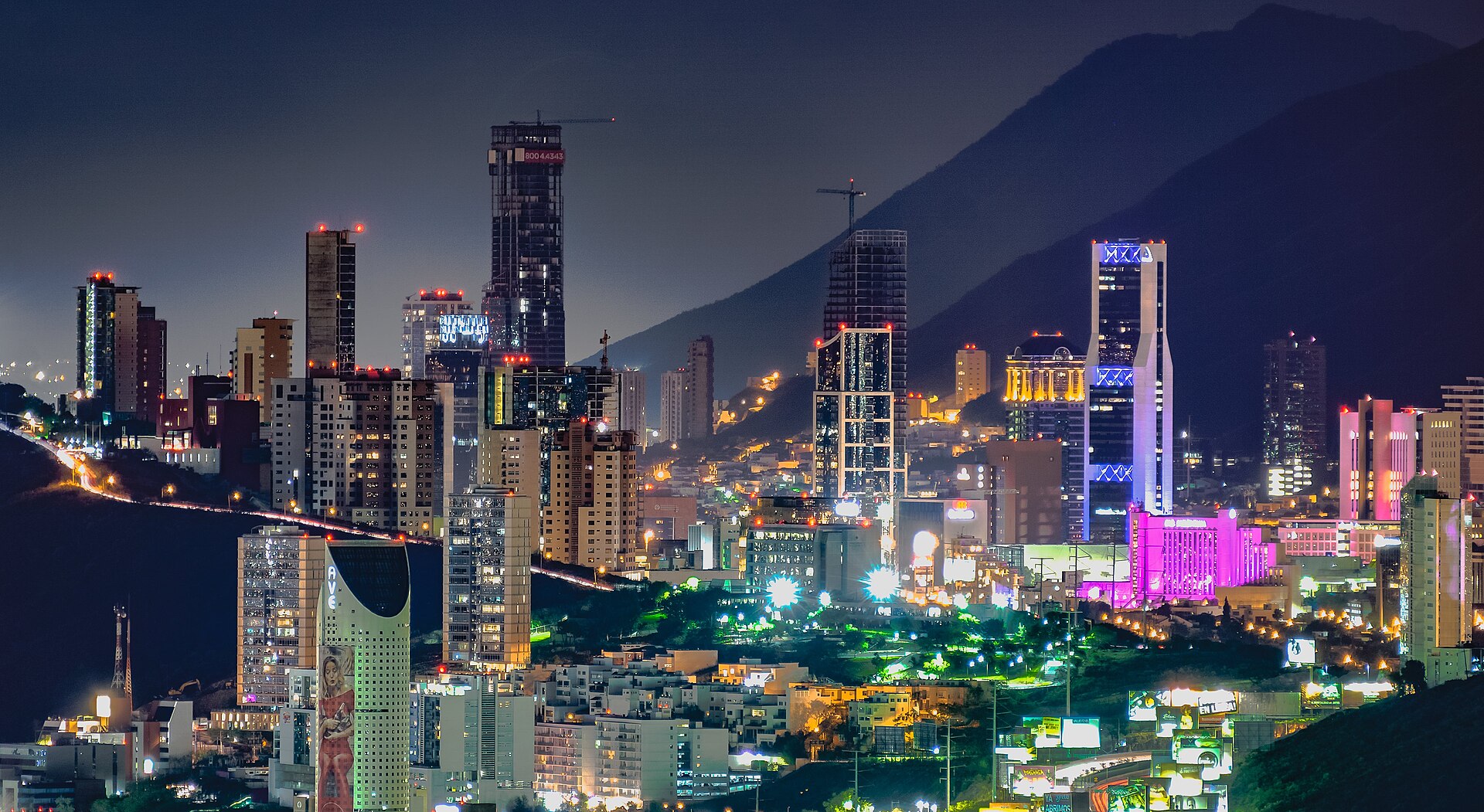
Barrio Antiguo is the oldest piece of Monterrey, the original quarter laid out at the founding of the city at the end of the sixteenth century. The street grid you walk tonight is essentially the one the first settlers drew, even if the buildings standing on it now mostly date from the eighteenth and nineteenth centuries. It sits at the eastern edge of downtown, hard against the Macroplaza and the cathedral, a dense pocket of low colonial and porfiriato facades wedged into a city that otherwise reaches for glass towers. For most of the city's history this was simply the center, where people lived, traded, and worshiped.
The streets to know are short and easy to learn. Diego de Montemayor and Padre Mier run the spine of it; Morelos, Abasolo, and Mina cross them. The whole bar district fits inside a walkable rectangle of maybe six by four blocks, which is the single best thing about it: you can park or cab in once and float between a cantina, a rock bar, and a club without ever needing a car again. On weekend nights the city closes some of these streets to traffic, and the grid turns into one continuous open-air room.
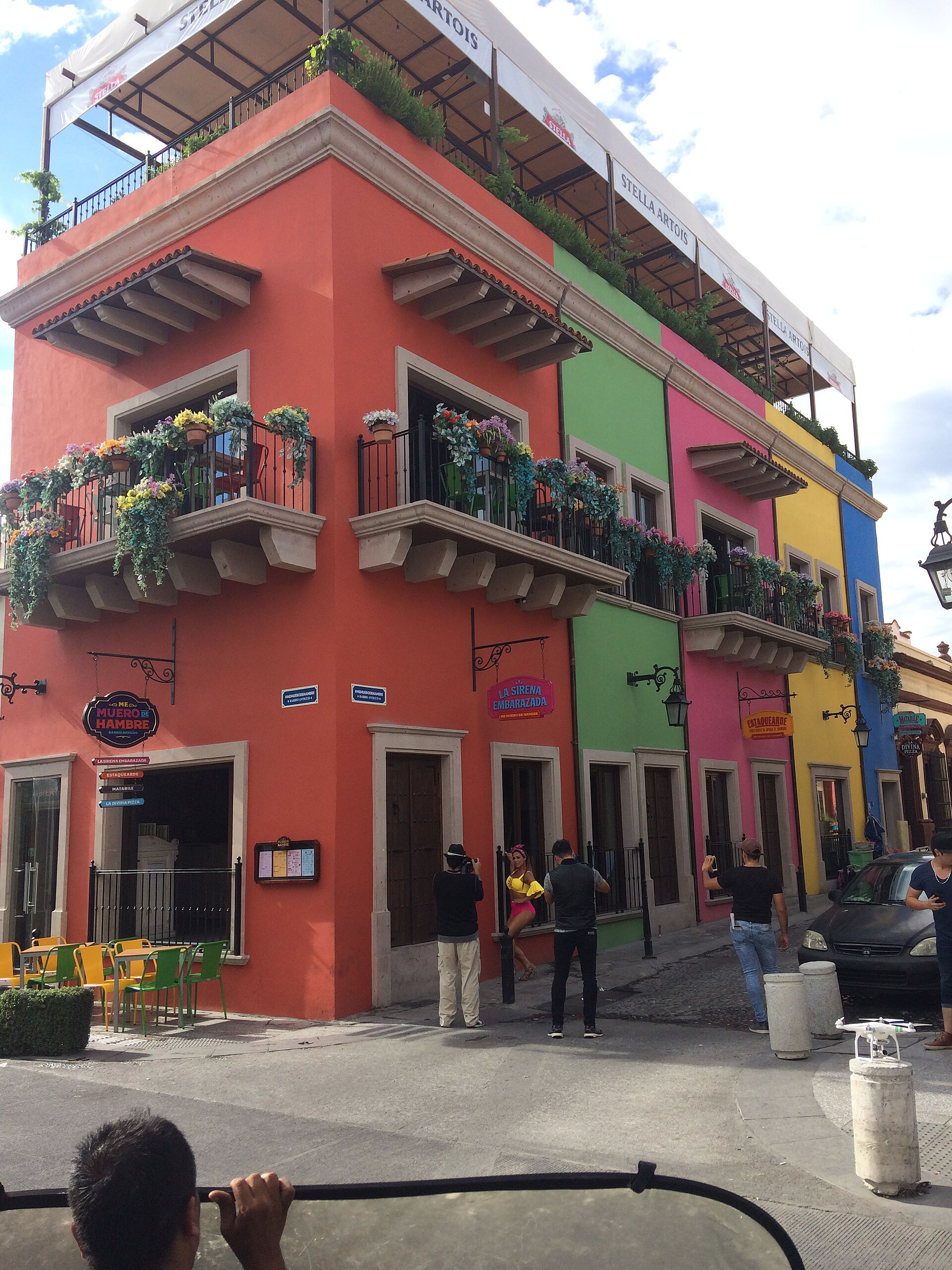
What gives the barrio its texture is that the architecture never got bulldozed. You are drinking inside two-hundred-year-old shells with thick adobe and stone walls, courtyards, and high wood-beam ceilings. That is rarer than it sounds in Monterrey, a place that has historically preferred to tear down and rebuild. The barrio survived mostly because it fell out of fashion, which protected it long enough to come back into fashion.
Rise, collapse, and the slow comeback
The barrio's modern life as a nightlife district took shape in the late twentieth century, when hotels, restaurants, galleries, and the first rock bars moved into the old houses. By the 1990s and early 2000s it was the undisputed heart of going out in Monterrey, and crucially, it was the room where the city's famous rock movement was born. Then it cratered. The cartel violence that gripped Nuevo León around 2010 to 2012 hollowed the place out almost overnight. Two events in 2011 sit at the center of that memory: a shooting at the iconic Café Iguana, and the Casino Royale arson a few kilometers away that killed more than fifty people. Foot traffic collapsed, venues shuttered, and a district that had been packed wall to wall went quiet.
The recovery has been real but uneven, and it is worth being honest about that rather than selling a clean revival story. Security improved across the metro area through the mid-2010s, operators came back, and craft beer, mezcal, and a new generation of bars and clubs refilled the empty shells. Some blocks now feel as alive as they ever did on a Saturday; others still have boarded windows and quiet corners a block off the main run. The barrio is in the middle of a long restoration arc, not at the end of one.
The practical read for a visitor: the core bar blocks on and around Diego de Montemayor and Padre Mier are busy, lit, and fine on weekend nights, especially when the streets are pedestrianized and the crowds are thick. The unglamorous truth is that the energy is real but concentrated. Stay where the people are, and the barrio rewards you; wander several blocks into the dark, empty edges at 3 a.m. and you have left the part that the revival has reached.
Cantina, rock bar, or club: pick your night
The barrio is not one scene, it is three layered on top of each other, and knowing which you want saves the night. The cantina end is the oldest soul of the place: long wood bars, cold caguamas and michelada culture, botanas that keep arriving while you drink, norteña or cumbia on the speakers, and zero pretension. This is where you go to talk, to start slow, to eat while you drink. It is also where the barrio feels most like Monterrey rather than like a nightlife district that could be anywhere.
The rock-bar middle is the barrio's signature and its history. Café Iguana, open on Diego de Montemayor since 1991, is the anchor: a multi-stage live-music room that has hosted national and international acts for more than three decades and is genuinely part of the city's musical lineage rather than a tourist stop pretending to be. Around it sits a constellation of live-music bars, mezcalerias, and craft spots, including Almacén 42, the neighborhood's craft-beer house known for a long wall of Mexican taps. This tier is the reason to come: somewhere within a few blocks, someone is playing live almost every weekend night.
The club end is the loudest and the latest. Electronic and reggaeton-leaning dance rooms, light shows, bottle service, and the hidden speakeasy-style spots behind unmarked doors and laundromat facades that the barrio has developed a taste for. The split matters because the timing and the crowd are different. Cantinas peak early evening, rock bars own roughly 10 p.m. to 1 a.m., and clubs do not really start until midnight and run until 3 or 4 a.m. A good barrio night usually moves through all three in that order.
How to actually time a night, and stay safe
Monterrey runs late, and the barrio runs latest. Showing up at 8 or 9 p.m. on a Friday means walking half-empty streets and wondering what the fuss is about. The room fills after ten, the live music hits its stride near eleven, and the clubs do not peak until well past one. Plan to eat first, ideally somewhere in the cantina tier, then ride the wave up. Weekends are the whole game here. Tuesday through Thursday the barrio is sleepy, with only a handful of venues worth the trip; if you only have a weeknight, San Pedro's bars in Valle Oriente and along Calzada del Valle carry more energy.
On safety, the regio answer is calibrated, not alarmist. The metro area today is one of the safer big cities in Mexico for a visitor, and the barrio's core blocks on a busy weekend night are genuinely fine. The rules are the ordinary big-city ones, sharpened slightly: stay on the populated, lit streets where the crowds are, use a rideshare or a sitio taxi rather than walking out to a dark lot, watch your drink and your phone, and do not drift several blocks into the empty edges late at night. Cartel-era headlines still color the city's reputation abroad, but the lived reality of a Saturday in the barrio is a dense, watched, pedestrianized crowd.
Two more practical notes. First, this is a cash-and-card city, but smaller cantinas and street vendors run on cash, so carry some. Second, the closing pulse is real: when the clubs let out around 3 to 4 a.m., the taco and late-food stands around the barrio do their best business of the night, and that post-club street food is, for many regios, the actual point of the evening.
The Avanzada Regia: how Monterrey rewired Mexican rock
In the mid-1990s Monterrey produced one of the most consequential movements in Mexican music, and it came out of exactly the bars described above. It is called the Avanzada Regia, roughly the Monterrey vanguard, and it began with local bands playing the city's rooms around 1994 before breaking nationally from 1996 on. The catalyst is a good story: in 1995 the band Zurdok won a battle of the bands at a Mexico City festival, the first group from outside the capital ever to take it, and the record labels, stunned that this much talent was sitting in the north, started traveling to Monterrey to sign whatever they could find.
What they found was a sound nobody else in Mexico was making, because no other Mexican city sat where Monterrey sits. Two hours from Texas, the city absorbed American and British rock, hip-hop, and electronica directly, often on instruments bought cheaper across the border, and then fused all of it with the norteño and cumbia that were already in the water. The roster reads like a canon: El Gran Silencio welding cumbia, norteño, and rap into something they half-jokingly called their own genre; Control Machete, the hip-hop trio inspired by Cypress Hill whose Sí Señor became the movement's biggest commercial hit and earned a Latin Grammy nomination; the electronic-rock of Kinky and Plastilina Mosh; and the Britpop-tinged guitars of Jumbo and Zurdok.
The original movement wound down by the end of the 2000s as labels stopped betting on new northern talent and tastes shifted. But it permanently changed what Mexican rock could be and where it could come from, and its DNA still runs through the city's music. When people say Monterrey is a music city, this is the foundation they are standing on. Much of it was incubated in the same few blocks of Barrio Antiguo you can still walk into tonight.
Cumbia regia and the rebel of the accordion
Monterrey's other great musical export is not rock at all, and to understand the city you have to hold both at once. This is the heartland of norteño and regional mexicano, accordion and bajo sexto music that fills the cantinas, the plazas, and the quinceañeras far more than any imported genre ever did. But the figure who turned that regional inheritance into something the whole continent danced to was Celso Piña, the accordionist from the working-class Colonia Independencia, the tough hillside neighborhood across the river that everyone calls La Indepe.
Piña was the first in his barrio to play Colombian cumbia live, and over decades he bent it into a fusion all his own, splicing cumbia with rock, ska, reggae, and hip-hop. His 2001 album Barrio Bravo broke him nationally and across Latin America, and tracks like Cumbia sobre el río and Aunque no sea conmigo became standards you will still hear pouring out of bars and car windows across the city. They called him El Rebelde del Acordeón, the rebel of the accordion, and when he died in Monterrey in 2019 at sixty-six, the city mourned a local who had made its specific street sound, cumbia regia from a barrio bravo, into something the world recognized.
The point for a visitor is that these two heritages, the imported rock of the Avanzada and the home-grown cumbia and norteño of the colonias, are not separate museums. They mix in the same rooms. A barrio bar can run from rock en español to a cumbia set to a norteña sing-along in one night, and the crowd knows every word to all of it. That promiscuous, border-fed blend is the actual Monterrey sound.
The festival calendar: a steel mill that becomes a stage
The city's festival anchor is Parque Fundidora, a decommissioned steel mill turned enormous urban park whose rusted smokestacks and brick foundry halls make a backdrop no purpose-built festival ground can buy. Around that setting Monterrey runs one of the strongest festival calendars in Mexico. The marquee event is Tecate Pa'l Norte, a three-day giant held each spring; the 2026 edition runs March 27 to 29 with more than 150 artists across multiple stages, including its famous secret Sorpresa stage, pulling on the order of a hundred thousand people a day. The lineups are deliberately eclectic, global headliners next to Latin and regional Mexican acts, which is exactly the cross-genre logic the city has run on since the Avanzada.
Spring carries a second heavyweight at the same park: Machaca Fest, rooted in the 1990s bar scene and built on rock en español while folding in Mexican music and other genres; its 2026 edition lands in April. Between them, Fundidora is essentially the festival engine of northern Mexico for a couple of months a year. If your trip is flexible, building it around one of these weekends changes the entire character of the visit, just book lodging and rideshares early because the city fills up.
The third pillar is different in kind and arguably the one to plan a trip around if you want the city itself rather than a touring lineup. The Festival Internacional de Santa Lucía, launched in 2008 and now the largest cultural event in Nuevo León, takes over the autumn, running on the order of weeks across music, theater, dance, and circus with thousands of performers. Its defining feature, and the reason regios love it, is that the bulk of it is free and outdoors, staged along the Paseo Santa Lucía canal and in public plazas. It is the closest the whole city comes to throwing one party together.
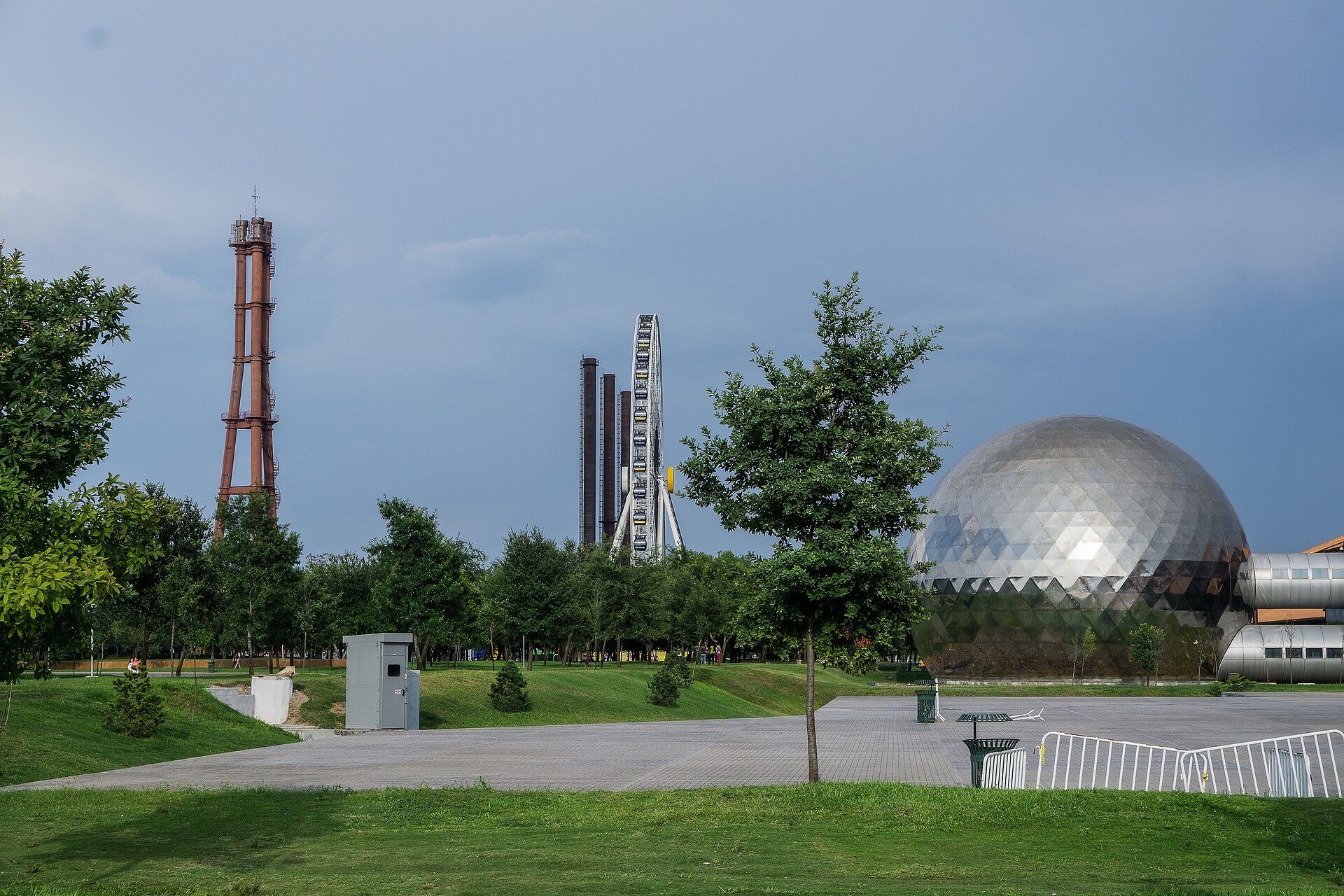
The art that anchors it: MARCO and Fundidora's foundry galleries
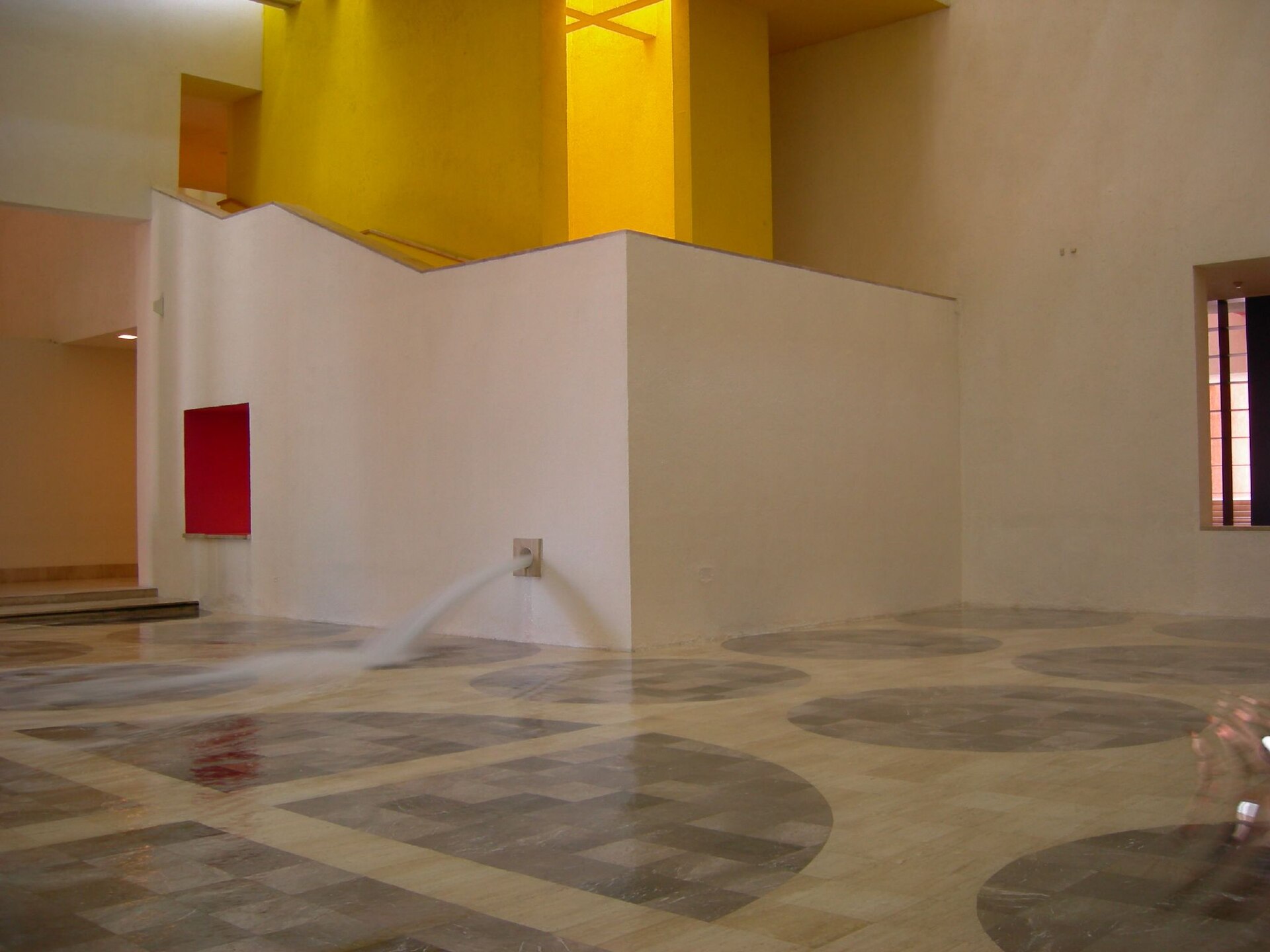
Nightlife here does not exist in a vacuum; it sits beside a serious art infrastructure, and the two share the same downtown. The institution to know is MARCO, the Museo de Arte Contemporáneo de Monterrey, designed by the great Mexican architect Ricardo Legorreta and opened in 1991, right on the Macroplaza next to the barrio. The building itself is the first exhibit, a minimalist post-modern block in Legorreta's saturated colors, with eleven galleries focused on contemporary Latin American art and, at the entrance, Juan Soriano's monumental dove La Paloma, one of the city's most recognizable sculptures.
Out at Parque Fundidora, the same red-brick foundry halls that host the festivals also house the Centro de las Artes, run by the state arts council CONARTE inside the old industrial buildings. It bundles a theater, the Cineteca and Fototeca of Nuevo León, a couple of galleries, and the Nave Generadores, an old generator hall that now mounts rotating contemporary shows by emerging artists. Admission is free, it runs Tuesday through Sunday into the evening, and the contrast of raw industrial bones against new art is the most Monterrey thing in the city.
The practical move is to treat these as the daytime half of the same itinerary. MARCO and the barrio are a short walk apart by the Macroplaza, so a museum afternoon flows straight into a barrio evening. Fundidora pairs differently: the Centro de las Artes and the Museo del Acero Horno3 fill a day in the park, and on festival weekends the park simply does not stop, day program rolling into night stages.