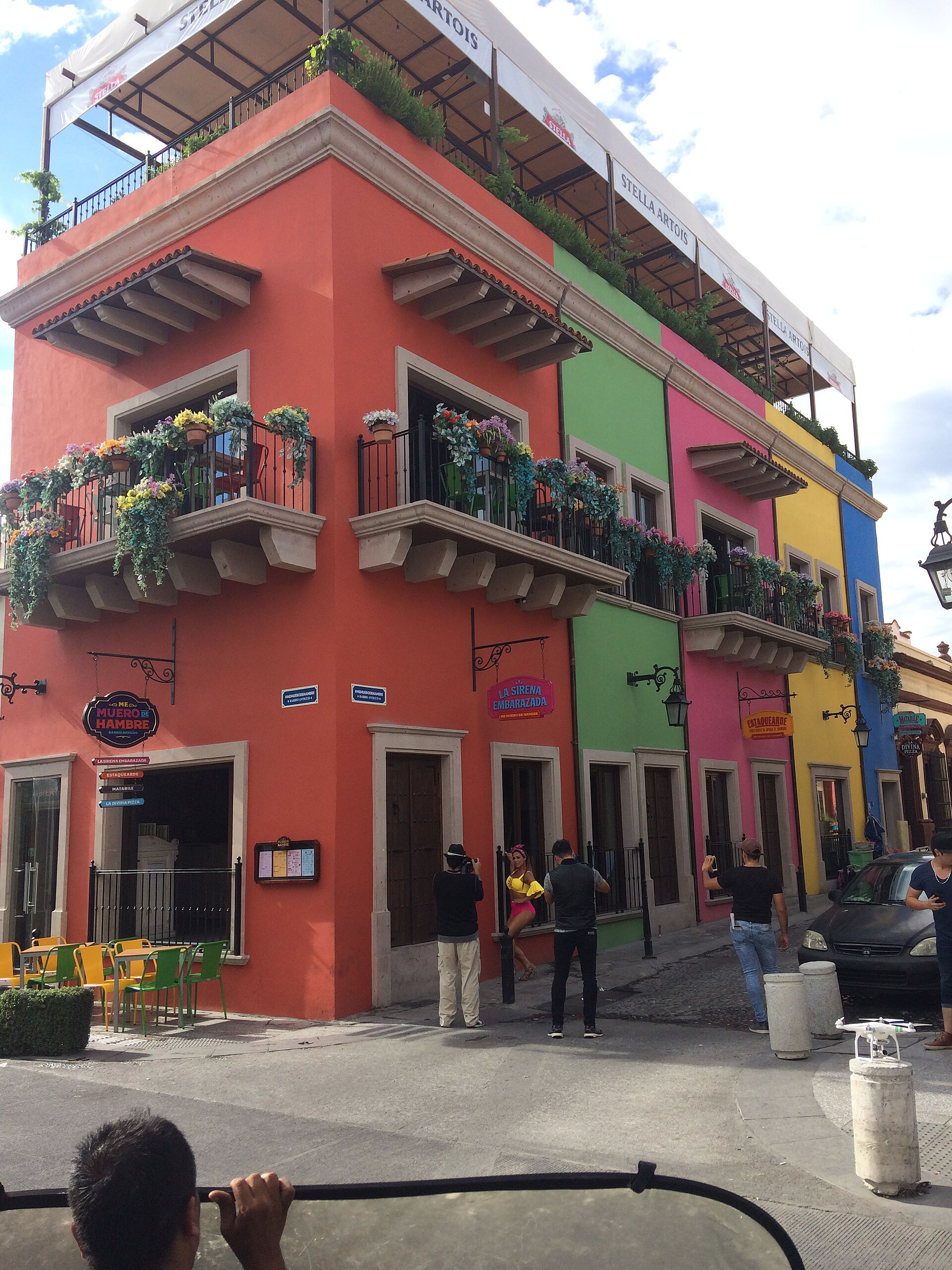
What Cabrito Actually Is
Cabrito is milk-fed kid goat, slaughtered young — usually at four to six weeks, before the animal has ever grazed or been weaned. That detail is the whole point. Because the kid has consumed nothing but its mother's milk, the meat stays pale, tender, and faintly sweet rather than the muscular, gamey thing most people mean when they say 'goat.' A grown goat is chivo, and regios will tell you, sometimes with real heat, that chivo is not cabrito and never will be. The distinction matters here the way the difference between veal and beef matters elsewhere, except locals police it more strictly.
The dish is so central to Nuevo León's identity that the scale is genuinely hard to picture: roughly a million goats are eaten in the state every year, and the overwhelming majority pass through the cabriterías and market stalls of greater Monterrey. Cabrito is not a regional curiosity you try once for the story. It is the thing a regio orders to celebrate a closed deal, a baptism, a Sunday with the whole family at the table. It is the dish the city is, in a real sense, built on.
A practical truth worth absorbing before you go: cabrito is expensive, it is rich, and it is best at midday. This is a lunch food, a weekend food, a celebration food — not a casual late dinner. The cooking itself takes hours, the good kids sell out, and the meat sits heavy. Plan it the way the city does and it rewards you. Treat it like a 10 p.m. impulse and you will overpay for something past its best.
The Herding History: Spain's Unwanted and a Mediterranean Taste
Cabrito did not appear in the desert by accident. It arrived with the people who founded this corner of Mexico, and that origin story is stranger and more specific than most local dishes can claim. When Luis de Carvajal y de la Cueva led the settlement of the Nuevo Reino de León in 1579, a notable share of the colonists were Sephardic Jewish conversos — families fleeing the Inquisition after the 1492 Alhambra Decree expelled Jews and Muslims who would not convert. The remote, scrubby northeast was attractive precisely because it was far from the eyes of the Holy Office in Mexico City.
Goats came with them, and goats turned out to be perfectly suited to this terrain in a way sheep never were — they thrive on the thorny, low-water mesquite scrub that defines the region. There is a quieter thread too, told and retold locally: that Sephardic shepherds, wary of drawing attention to the Paschal lamb of their tradition, substituted kid goat, and that the habit of roasting a whole young animal over open fire carried a Mediterranean memory into the Mexican north. How much of that is documented history versus cherished legend is genuinely debated, but the Spanish-and-Mediterranean root of the regio taste for goat is not in dispute.
What this means at the table is that cabrito is, underneath everything, an immigrant dish in a region that wears its frontier-rancher identity proudly. The austerity of the preparation — no marinade, no chile rub, no sauce on the meat — fits a cuisine shaped by people working hard land with little to spare. Fire, salt, and a young animal. The simplicity isn't a limitation. It's the inheritance.
How It's Cooked: Al Pastor on the Espada
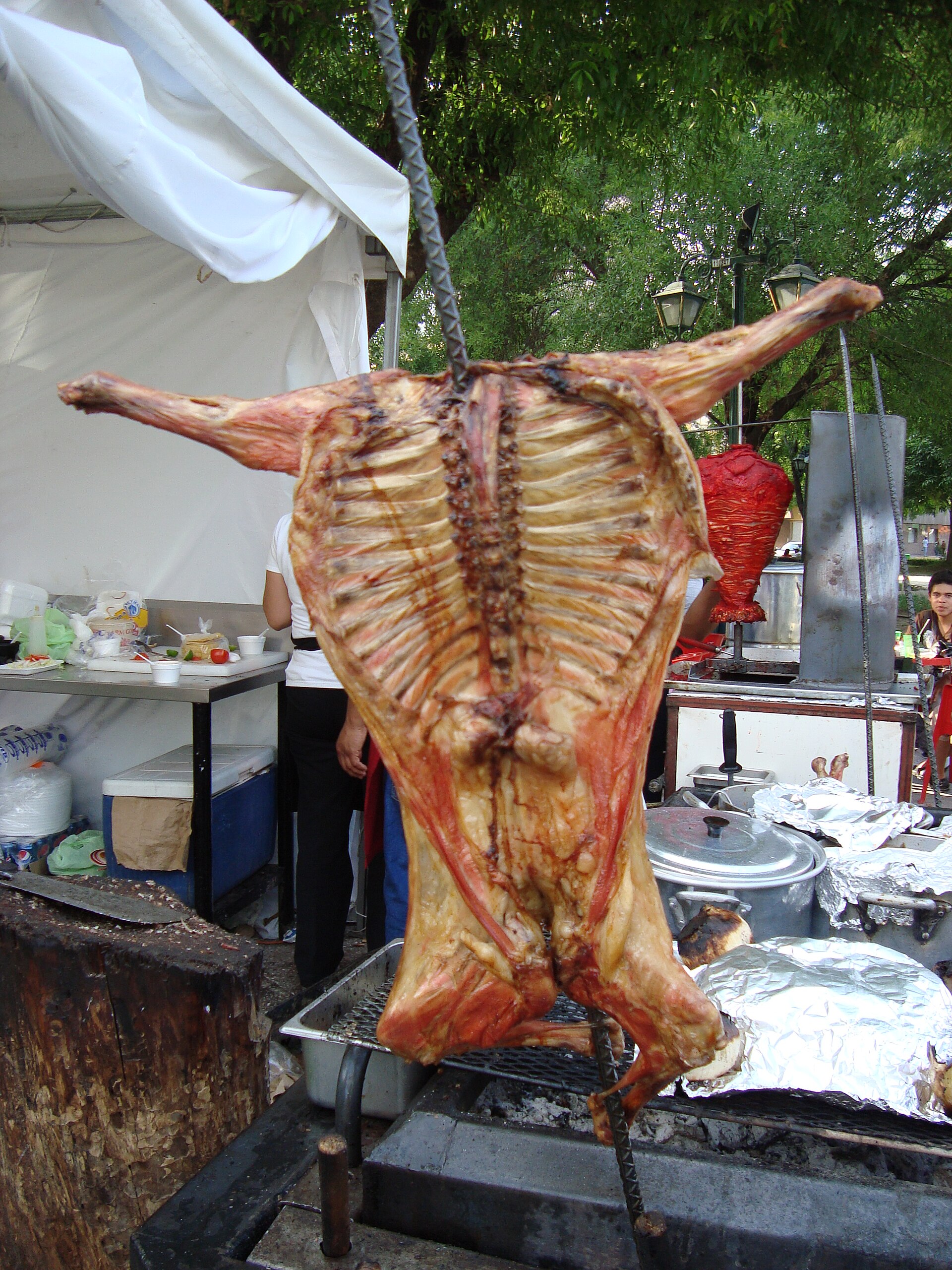
The real, defining version is cabrito al pastor, and the name is literal — 'in the shepherd's style.' The kid is split down the middle and stretched flat, then impaled lengthwise on a long iron stake called an espada, with the rod running parallel to the spine in a butterfly setup. The cook drives the espada into the ground at an angle so the splayed animal hovers beside — not directly over — a bed of glowing mesquite coals. It roasts in the radiant heat of the open air, the cook periodically turning the stake to render the fat evenly, crisp the skin, and keep any single section from scorching.
Mesquite (mezquite) is non-negotiable, and any regio will tell you the same with total confidence. It burns hot and clean and lends a specific sweet-smoky scent that charcoal briquettes and gas simply cannot fake. The cook works for roughly two to three hours depending on the size of the kid, sometimes basting with nothing more than lightly salted water. There is no marinade, no adobo, no secret spice blend. Salt, mesquite smoke, and patience. The skin should finish amber and crackling; the meat underneath should pull apart with a gentle tug.
This is why a good cabrito cannot be rushed and why the best places run their fires from early morning. When you see a cabritería with espadas fanned out around a glowing pit in the front window — El Rey del Cabrito made a theatrical centerpiece of exactly this — that visible, slow, open-air roast is the genuine article. A goat that arrives suspiciously fast, evenly cooked all over with no rendered crust, has likely seen an oven. Watch the fire if you can. It tells you most of what you need to know before the plate arrives.
How to Order: The Cuts and the Offal
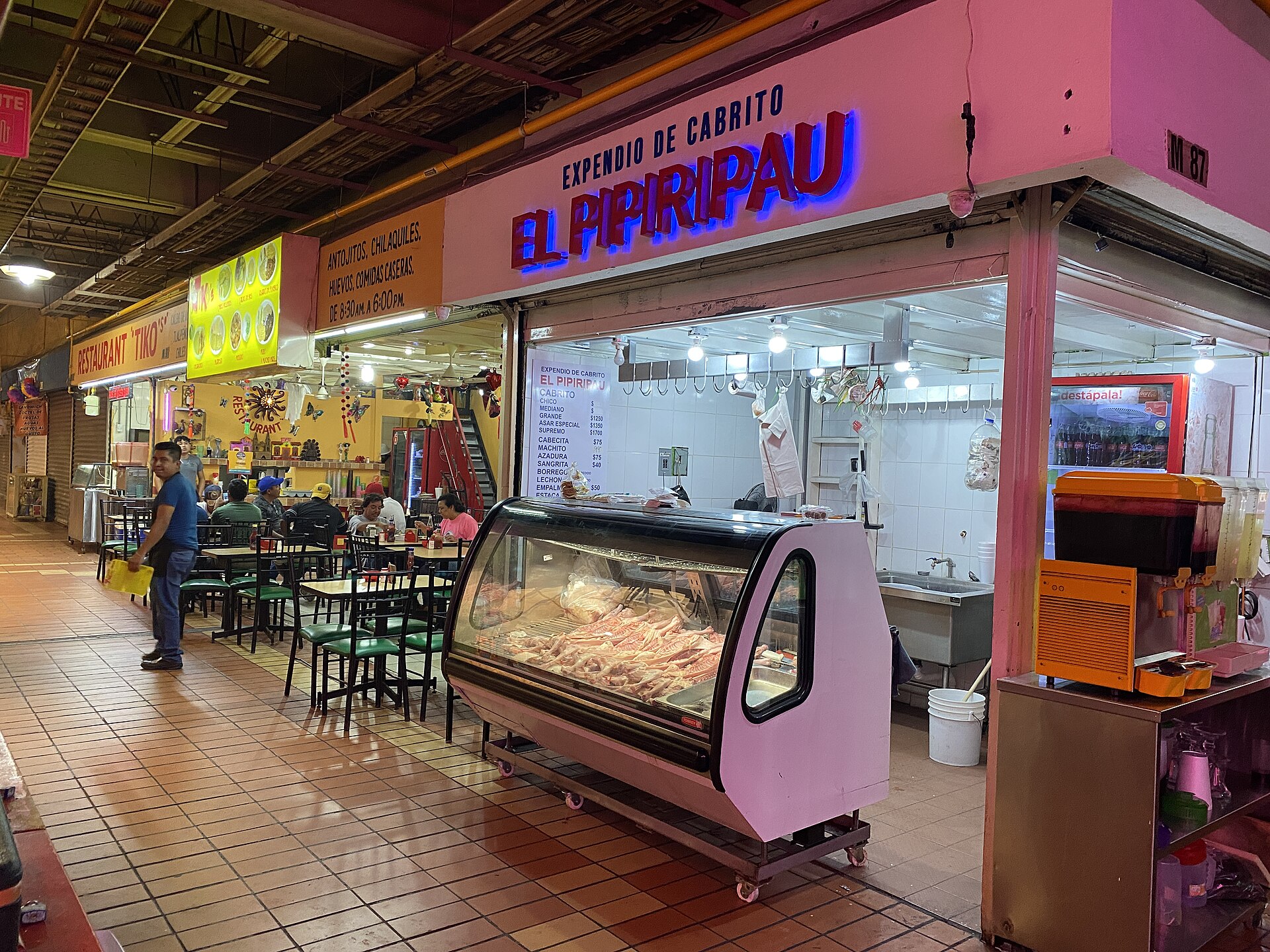
Ordering cabrito is its own small literacy, because a single kid yields very different things, and what you ask for marks you instantly as someone who knows or someone who doesn't. The animal divides into roughly four parts. The riñonada — the fatty stretch around the kidneys, including a bit of rib and hip — is the prize, the cut regios reach for first: rich, soft, almost buttery, with the kidney itself for those who want it. The pierna (leg) and paleta (shoulder) carry the most actual meat and are leaner; they're what most first-timers get served. The pecho (breast/ribs) is the crispiest, fattiest, and a favorite of people who came for the skin. If you have a preference, state it. They will ask.
Then come the preparations that separate the curious from the committed. Machitos are the offal — liver, lung (bofe), heart — wrapped in the caul membrane and intestine and grilled into something between a sausage and a tight little braid; chopped into tacos they are one of the great market snacks in the city. Fritada, also called cabrito en su sangre ('in its blood'), is the viscera and organ meat stewed with the animal's own blood, ancho chile, roasted tomato, and spices into a dark, deeply iron-rich stew. It is not subtle and it is not for everyone, but it is the dish that locals order when they want the whole animal honored, and trying it once will teach you more about this cuisine than any cabrito al pastor ever could.
Two ordering notes that save money and dignity. First, you don't have to commit to a whole animal — order by the cut, or get a media (half) or cuarto (quarter) for a small group, with the riñonada specified if it's available. Second, if you only want to taste it, many places and certainly the market stands will sell a single cut as a plate. Don't let a host upsell you a whole cabrito for two people. That's a tourist outcome, not a regio one.
Where the Institutions Are
There is a hierarchy and locals know it cold. El Rey del Cabrito on Avenida Constitución 817 in the Centro is the famous one — founded on November 20, 1986 by Jesús Alberto Martínez, a former waiter and would-be singer who earned the nickname that became the restaurant's name. It's a multi-floor operation with walls papered in photos of every politician, ranchera star, and visiting celebrity who ever passed through, and there are now branches in Cumbres and Obispado as well. It is unapologetically a landmark, and that doesn't make the cabrito bad — it makes it reliable, central, and priced for the spectacle. Go for the show and the location, not for a hidden-gem feeling.
El Gran Pastor on Avenida Gonzalitos Sur 702 in San Jerónimo is where a lot of regios actually take out-of-town guests. The lineage runs back to El Pastor in 1957; this Gonzalitos flagship opened in 1996, and the group leans hard on more than half a century of experience sourcing the region's best kids. It's less of a circus than El Rey, the room fills with families rather than tour groups, and the offal preparations — machitos, fritada — are taken seriously. Cabrito here is treated as the everyday lunch it genuinely is, not a performance.
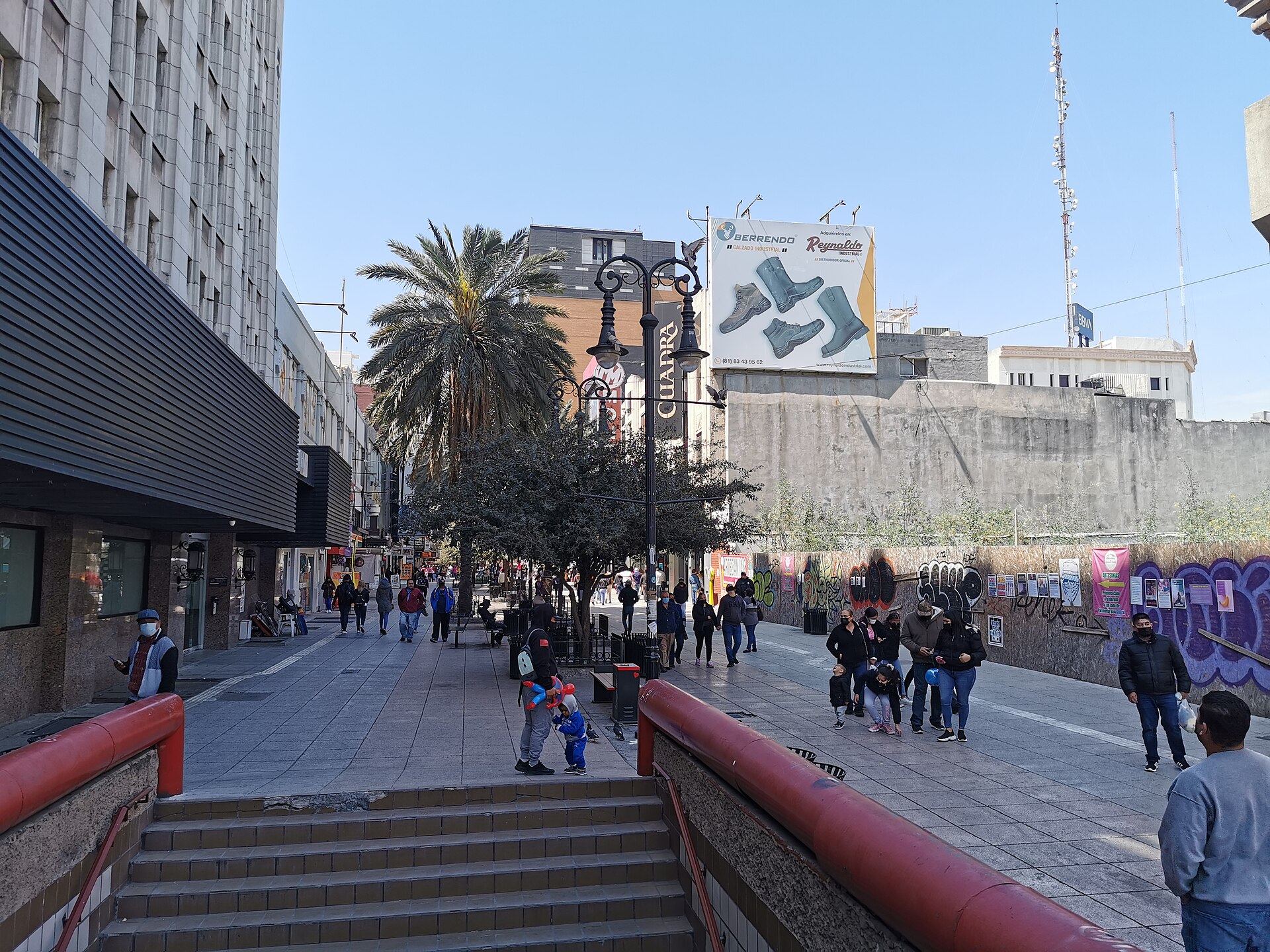
But the move most worth making is the least polished one: the cabrito stands upstairs in Mercado Juárez, the downtown market that opened in 1912. El Pipiripau, on Ruperto Martínez Oriente inside the market, is the long-running goat counter regios name — a fixture since the 1980s, serving cabrito, fritada, and machitos to market workers and in-the-know locals on plastic stools, elbow to elbow, for a fraction of the white-tablecloth price. It is loud, it is unglamorous, and it is as close to the original idea of the dish as a visitor will get. Come hungry, come at lunch, bring cash.
What a Fair Price and Portion Look Like
Cabrito is, by Mexican standards, a genuinely expensive meat, and there is a structural reason: you are paying for an animal slaughtered at four to six weeks, fed only milk, raised on land that supports few of them per acre. There is simply less cabrito in the world than there is beef, and the price reflects that scarcity honestly. Anywhere you eat it, a cabrito plate will cost a clear multiple of a comparable plate of carne asada. That's not a markup to resent. It's the cost of the thing itself.
Where the value diverges sharply is venue. The sit-down cabriterías in the Centro and San Pedro carry the full restaurant premium — service, ambiance, the photo wall, the location. The market stands at Mercado Juárez serve recognizably the same dish, often from the same regional supply, at a fraction of the cost, because you are paying for the goat and nothing else. A reasonable rule: if you want the experience and the spectacle, the famous houses are fair for what they are; if you want the most cabrito for your money and the most honest version of the room, the market wins decisively.
On portion: a whole cabrito feeds a real table of five or six. For two or three people, a media (half) or a single generous cut like the riñonada plus tortillas and beans is plenty and will leave you full. The single most common tourist mistake is letting a host steer a small party into a whole animal. Order by the cut, eat it in tacos on flour tortillas, and you'll spend sensibly and waste nothing.
What to Drink With It
The honest, overwhelmingly local answer is cold beer. Monterrey is a brewing city to its bones — the Cuauhtémoc brewery was founded here in 1890 and the industry it spawned shaped the modern city's wealth — and a cold northern lager, drunk in rounds, is simply how cabrito is washed down at the family table and the market stand alike. The richness of the rendered fat and crisped skin wants something clean, cold, and uncomplicated, and beer delivers exactly that. Order it by the bucket if you're a group; nobody will blink.
If you want to drink up to the occasion, cabrito takes red wine well — a medium-bodied tinto cuts the fat the way it does with any roast — and the proximity of Coahuila's wine country a few hours west means decent Mexican reds are easy to find on the better cabritería lists. There's a quieter case for a crisp white or even a Chardonnay too, since milk-fed kid is leaner and more delicate than people expect; it isn't strong meat. But none of this is required. A michelada or a cold beer with a wedge of lime is the regio default, and there's no version of this meal it doesn't suit.
What you don't need is anything elaborate. Cabrito is a fundamentally austere dish — salt, fire, a young animal — and it pairs best with drinks in the same spirit. Cold, simple, and plenty of it. Save the scommelier energy for the San Pedro tasting menus. Here, the glass is there to keep up with the fire, not to upstage it.
The Honest Take: Tourist Trap vs. the Real Thing
Here is the plain truth locals won't always say to a visitor's face. The famous downtown cabriterías are not scams — the cabrito is real and often very good — but you are paying a substantial premium for the name, the photo wall, and a room built for tour groups and out-of-town guests. That's a fair trade if what you want is the landmark experience and the convenience of a central, reliable, recognizable place. It becomes a trap only when you mistake the price for a guarantee of superiority, or let yourself be sold a whole animal you can't finish.
The real thing, in the sense regios mean it, lives at the market stands and the unfussy family cabriterías away from the tourist circuit — El Pipiripau and its neighbors inside Mercado Juárez above all. Same dish, same regional goats, a fraction of the price, and a room full of people who are there because it's lunch, not because it's on a list. The tell is always the same: watch where the fire is, watch whether the espadas are roasting in plain view, and watch who's eating. A counter packed with market workers at one in the afternoon is worth more than any award on the wall.
If you only have one cabrito meal in you, the smartest play is the contrast itself. Some travelers do the spectacle at a famous house once for the photos and the history, then have the better, cheaper, more honest plate at the market the next day and understand the difference in their own mouth. Cabrito rewards the person who treats it the way the city does — at midday, on the weekend, by the cut, with cold beer and flour tortillas, and without letting anyone convince them that the most expensive version is automatically the best one. Get that right and you've eaten the dish Monterrey is built on, the way Monterrey actually eats it.