A city of two colors, and you will be asked to choose
There is no fence-sitting here. Monterrey is one of the only metro areas in Mexico with two top-flight clubs, and the line between them runs through families, offices, and WhatsApp groups. On one side are the Rayados of Club de Fútbol Monterrey, in blue and white. On the other are Tigres UANL, in that unmistakable golden yellow. Both play in Liga MX, both are perennial title contenders, and on most weekends one of them is at home somewhere in the metro. Within your first day in the city someone will good-naturedly demand to know which side you are on, and the honest answer — that you just arrived — buys you maybe a week of neutrality before you are quietly adopted by whichever camp your hosts belong to.
The split is usually told in social shorthand, and like most shorthand it is half-true. Tigres are bound to the public Universidad Autónoma de Nuevo León, draw deeply from San Nicolás de los Garza and the working-class municipalities to the north, and lean into a populist, university identity. Rayados have long carried a more private-sector, corporate image — they were founded by the brewery that became FEMSA and were owned within that orbit for generations. Regios will tell you the rivalry is also class-coded, and there is something to it, but the cleaner truth is that both fan bases are genuinely massive and the all-time head-to-head has stayed close to even across decades. Neither side ever concedes the city, which is exactly why the temperature stays so high.
Rayados and the Gigante de Acero
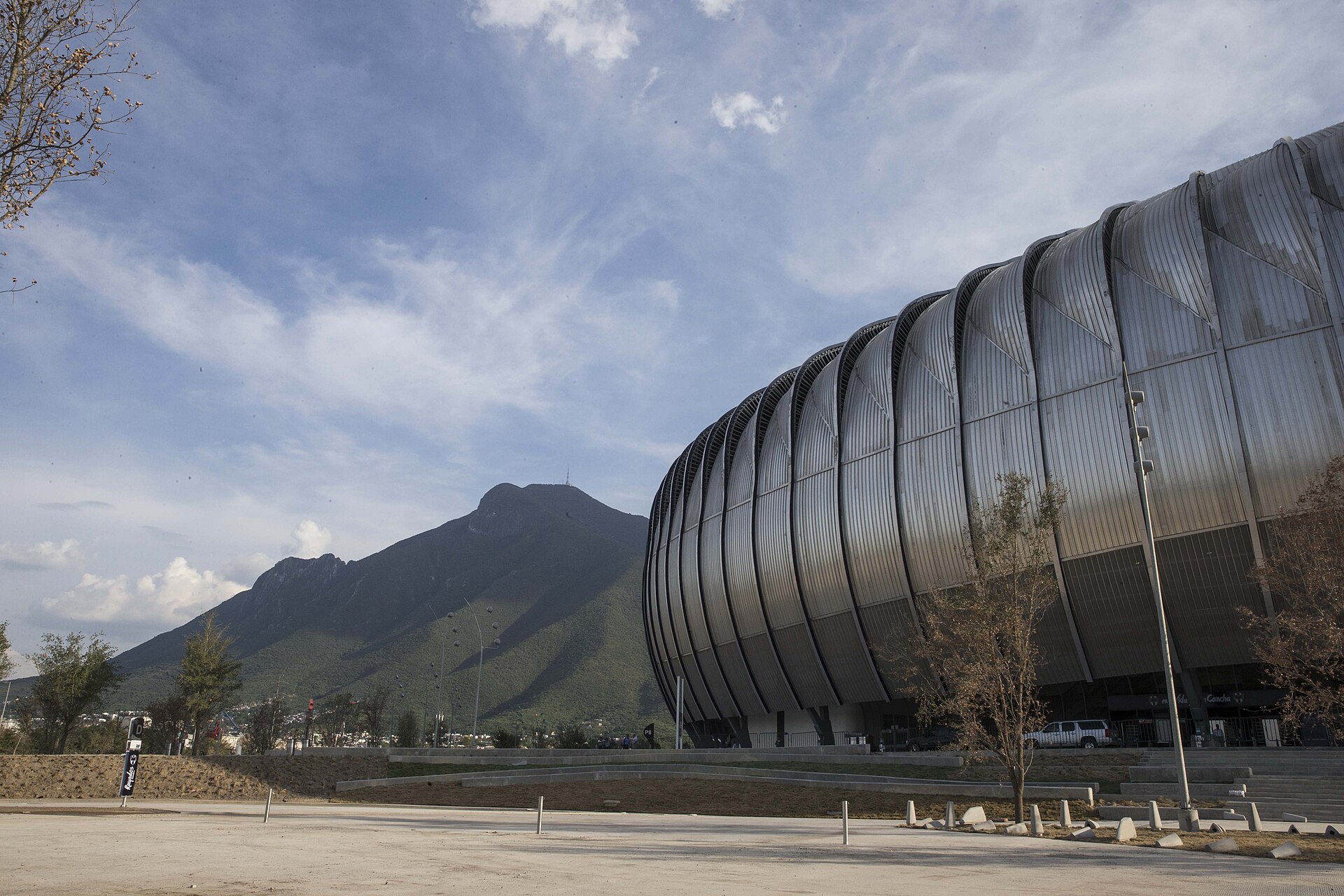
CF Monterrey play at Estadio BBVA, which opened in 2015 out in Guadalupe on the eastern edge of the metro, replacing the beloved old Tec. It seats roughly 53,500, and it is, flatly, one of the most beautiful stadiums in the Americas. The Populous design wraps the bowl in a jagged steel exoskeleton that rhymes with the peaks of the Sierra Madre, and from a huge share of seats the silhouette of Cerro de la Silla sits framed dead behind one goal. The metal earned it the nickname El Gigante de Acero, the Steel Giant — a nod that lands twice in a city that built its fortune on steel and cement.
It is worth your time even with no match on. The club runs the Tour Experiencia Rayada through the dressing room, the tunnel, pitch level, and the museum, lasting roughly an hour, and on a clear afternoon the mountain backdrop makes it one of the most photographed grounds in the country. If you do come for a game, know that the stadium sits a real distance from San Pedro and the Centro — budget extra time, because the access roads around Guadalupe choke badly before kickoff. The Rayados ultras, La Adicción, were born on 24 October 1998 in the stands of the old Estadio Tecnológico, when a handful of fans walked out during a bad night against América and reorganized their flags into something new. They anchor the loud end of the ground today.
Tigres and El Volcán
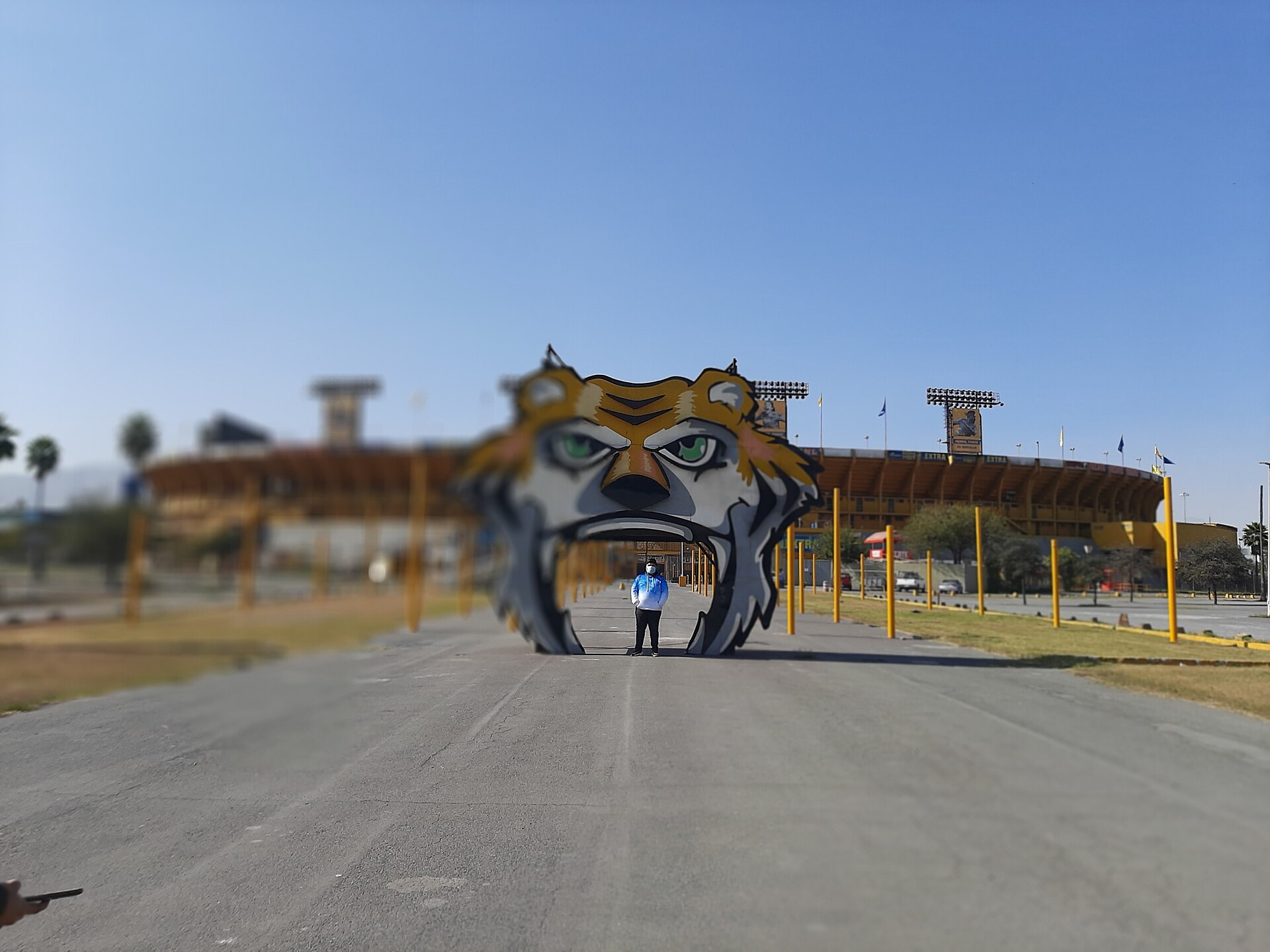
Tigres play at the Estadio Universitario, on the UANL campus in San Nicolás de los Garza just north of central Monterrey. It opened in 1967, seats around 42,000, and everyone calls it El Volcán — the Volcano — for the way the noise erupts when the steep, circular bowl fills and the lower tiers start moving. Of the two grounds it is the older, the tighter, and the meaner to visit; the crowd sits right on top of the pitch, and on a big night communication on the field becomes nearly impossible. It hosted matches at the 1986 World Cup and has been a genuine fortress for decades.
Tigres' supporters call themselves the Incomparables, and their ultra group, Libres y Lokos, emerged in mid-1998 during the tigremanía that followed the club's return to the first division. They are famous for traveling in absurd numbers — filling away ends, once taking a wall of fans to Buenos Aires for a Libertadores tie against River Plate — and for selling the Volcán out regardless of form. If your only window for a game is a Tigres home match, take it; the atmosphere is, on its day, the best in Mexican club football, and the tiger-head gate out front makes the obligatory photo easy.
The Clásico Regiomontano: how heated, and how to behave
When the two meet it is the Clásico Regiomontano — the Clásico Regio — and many regios will argue, with feeling, that it is the most important derby in Mexico, not just the most even. The case rests on exactly that evenness and on the absence of any neutral ground in the city: everyone is in, on one side or the other, so a Clásico shuts down conversation, fills the bars, and turns the whole metro into one extended argument for a week. The fixture lands at least twice a season — once in the Apertura in the fall, once in the Clausura in the spring — and again whenever the playoff bracket pairs them, which it often does at the business end.
The unglamorous reality of attending one: it is the hardest ticket of the year, resale runs two to three times face value, and lines historically formed days in advance. Buy through the clubs' official channels — Rayados and Tigres each sell through their own platforms and Ticketmaster Mexico — and buy early, because the gate is not an option on a Clásico. On behavior, the rule regios live by is simple and not negotiable: wear the home side's colors only if you are sitting in the home section, and never wander into the wrong end in the wrong shirt. Visiting fans are segregated for a reason. Keep your jersey in your bag until you are in the right block, stay sober enough to read the room, and you will have one of the great nights in world football. Get cute about it and you will not.
The 2026 World Cup comes to the Gigante
Monterrey is one of three Mexican host cities for the 2026 World Cup, the first edition shared by Mexico, the United States, and Canada. Estadio BBVA will stage four matches — three in the group stage across mid-to-late June and one Round of 32 knockout near the end of the month. Because FIFA scrubs commercial naming, for the tournament the ground is officially Estadio Monterrey, so do not be thrown when the signage and tickets drop the bank's name.
If you are building a trip around it, the practical advice is blunt: lock in lodging and transport months out, because June in Monterrey is already hot and the city will be slammed. Heat is the real story here — afternoon matches in a Nuevo León summer are punishing, so hydrate, shade up, and respect the sun. Buy only through FIFA's official ticketing platform and treat every other seller as a scam until proven otherwise. The metro's MetroRail reaches parts of the east side, but plan on it being crowded; for a knockout date especially, give yourself a wide margin to reach Guadalupe.
Summer is for baseball: the Sultanes
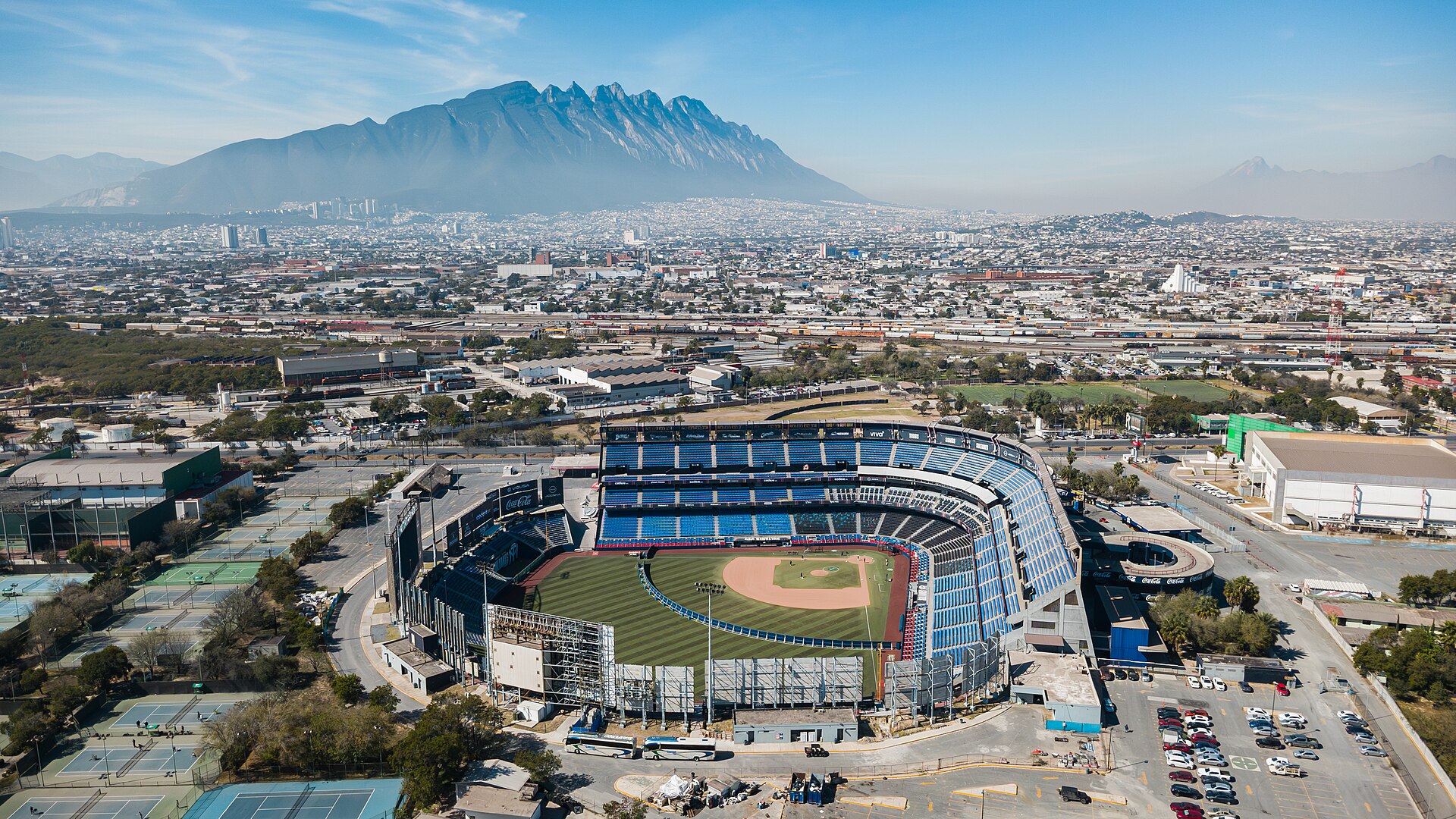
When the fútbol seasons take their breaks, the city's sporting heart moves to the ballpark. The Sultanes de Monterrey, founded in 1939, are among the oldest and most decorated franchises in the Liga Mexicana de Béisbol, and they play at the Estadio de Béisbol Monterrey — long known by its sponsor name, Estadio Mobil Super — on Avenida Manuel L. Barragán, up in the Niños Héroes district near the big sports complex on the north side. It is the largest baseball stadium in Mexico, and over the years it has hosted regular-season Major League games, drawing the Padres, Dodgers, and others down for series.
A Sultanes evening is the easy, family counterweight to the intensity of a Clásico: cheap-ish seats, michelada in hand, kids everywhere, and the LMB season running right through the hot months. Check the club's official schedule and ticketing before you go, arrive early enough to clear the entry lines, and treat it as the low-stress night out it is. If you have only ever experienced Monterrey sport through the lens of its two screaming fútbol stadiums, a summer ballgame shows you the gentler register the city also runs in.
The ghost of the Tec, and lucha libre downtown
Before BBVA there was the Estadio Tecnológico, the Tec, which opened in 1950, hosted four matches of the 1986 World Cup, and was the Rayados' home through their first two league titles and their 2013 CONCACAF crown. It was demolished starting in 2017 after 67 years and replaced by the smaller Estadio Borregos used by the Tec de Monterrey's American-football team. There is little left to see, but the name still carries weight in conversation; if an older regio gets misty about the Tec, that is the era they mean — and it is also where La Adicción was born in 1998.
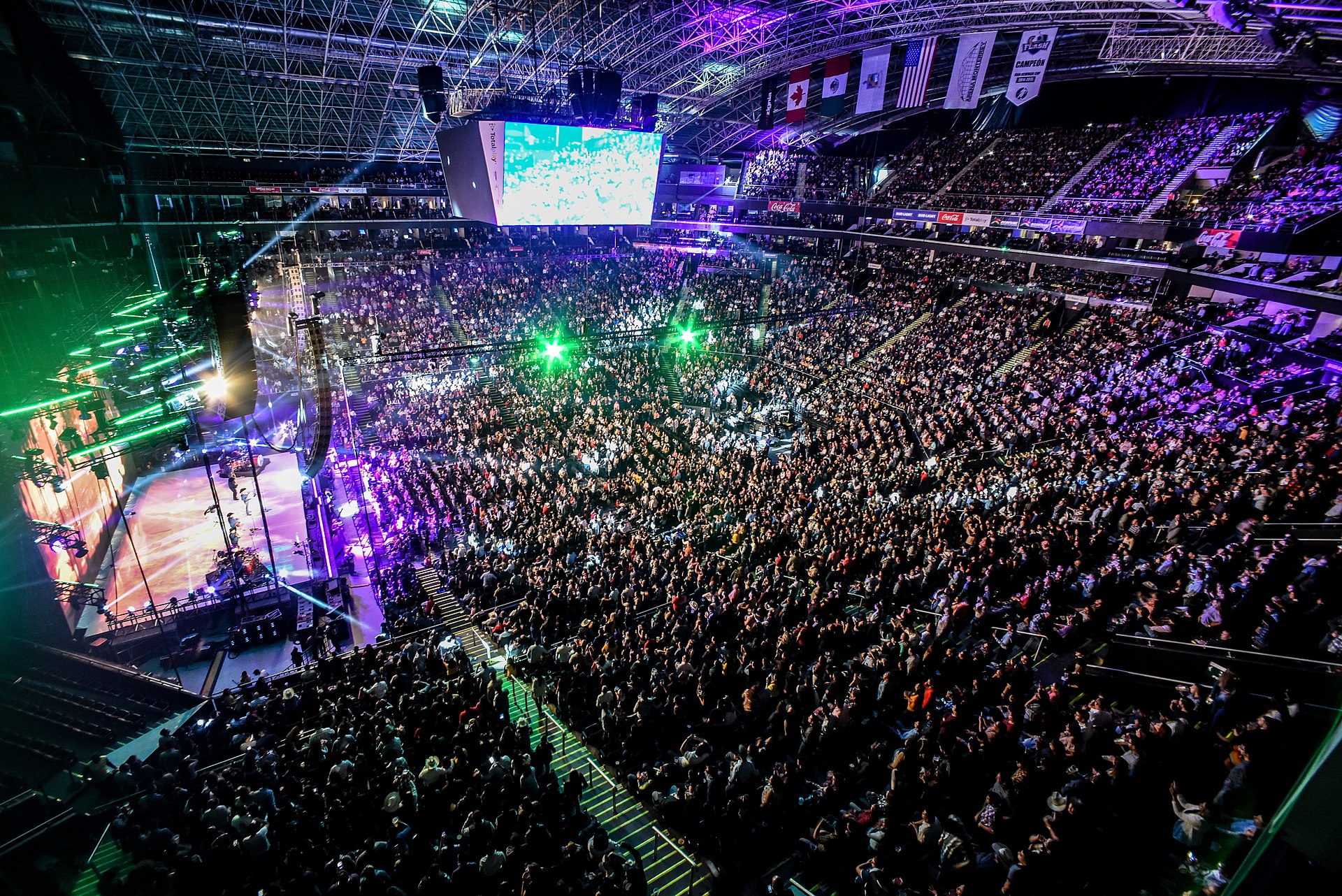
For a completely different night, lucha libre runs at the Arena Coliseo Monterrey, the intimate downtown hall that opened on 23 October 1955 with El Santo himself headlining against Black Shadow before a packed house of around 6,000. Owned today by the Multimedios network — its cards air as the televised Noches de Coliseo — it historically runs shows on Sundays, with the lineups and promoters shifting through the year, so confirm the current schedule before you commit. It is small, loud, deeply local, and a fraction of the price of a fútbol ticket. Sit close, learn which masked man is the rudo, and lean into the theater of it.
 Macroplaza." loading="lazy">
How a visitor actually experiences a matchday
Start with logistics, because both fútbol grounds sit well outside the walkable core and traffic is the whole ballgame. For Rayados, the Estadio BBVA is east in Guadalupe; for Tigres, the Volcán is north in San Nicolás. Neither is a quick taxi from San Pedro on a match afternoon, so leave early, expect the access roads to clog, and weigh a ride-hail with a generous surge against the MetroRail, which gets you part of the way but packs out. Buy tickets in advance through the official club platforms or Ticketmaster Mexico; the gate is unreliable for anything but a quiet midweek fixture and impossible for a Clásico.
Inside, the rhythm rewards arriving early. Get in before the ultras finish setting their banners so you catch the pregame build, eat at the stadium or from the stalls outside rather than counting on a quick exit, and carry cash for vendors even where cards work. The single rule that keeps tourists out of trouble bears repeating: colors match your section. In a neutral or mixed seat, stay neutral; in a home block, you are home; and you never, ever drift into rival territory in the rival's shirt. Do that, keep your wits about you, and a regio matchday — the steel and the mountain at BBVA, or the wall of sound in the Volcán — will be the thing you remember longest about the city.