The Number Everyone Quotes, and the One That Matters
Visitors fixate on the headline figure: Monterrey hits 40°C, sometimes more. On June 21, 2023, Conagua's instruments in the metropolitan area registered 44.8°C, a record, and the kind of number that makes the national news. But the headline misses how the heat actually works here. July's average high is a deceptively mild 31.5°C; the cruelest stretch is usually late April through June, before the summer rains arrive to break the back of it. What flattens you is not a single record day but the relentlessness of it: weeks where the asphalt never fully cools overnight, where stepping outside at 9 a.m. already feels like opening an oven door.
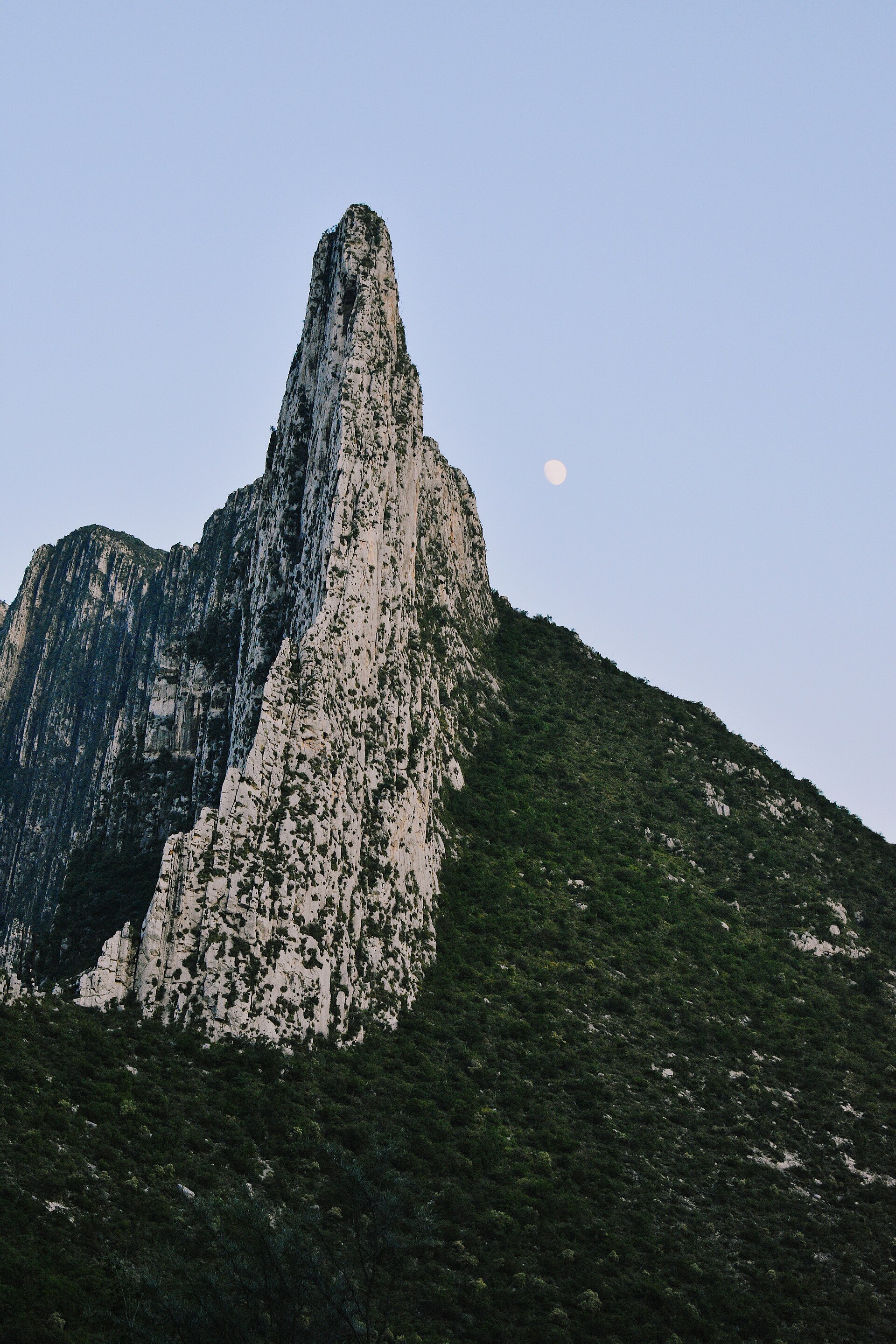
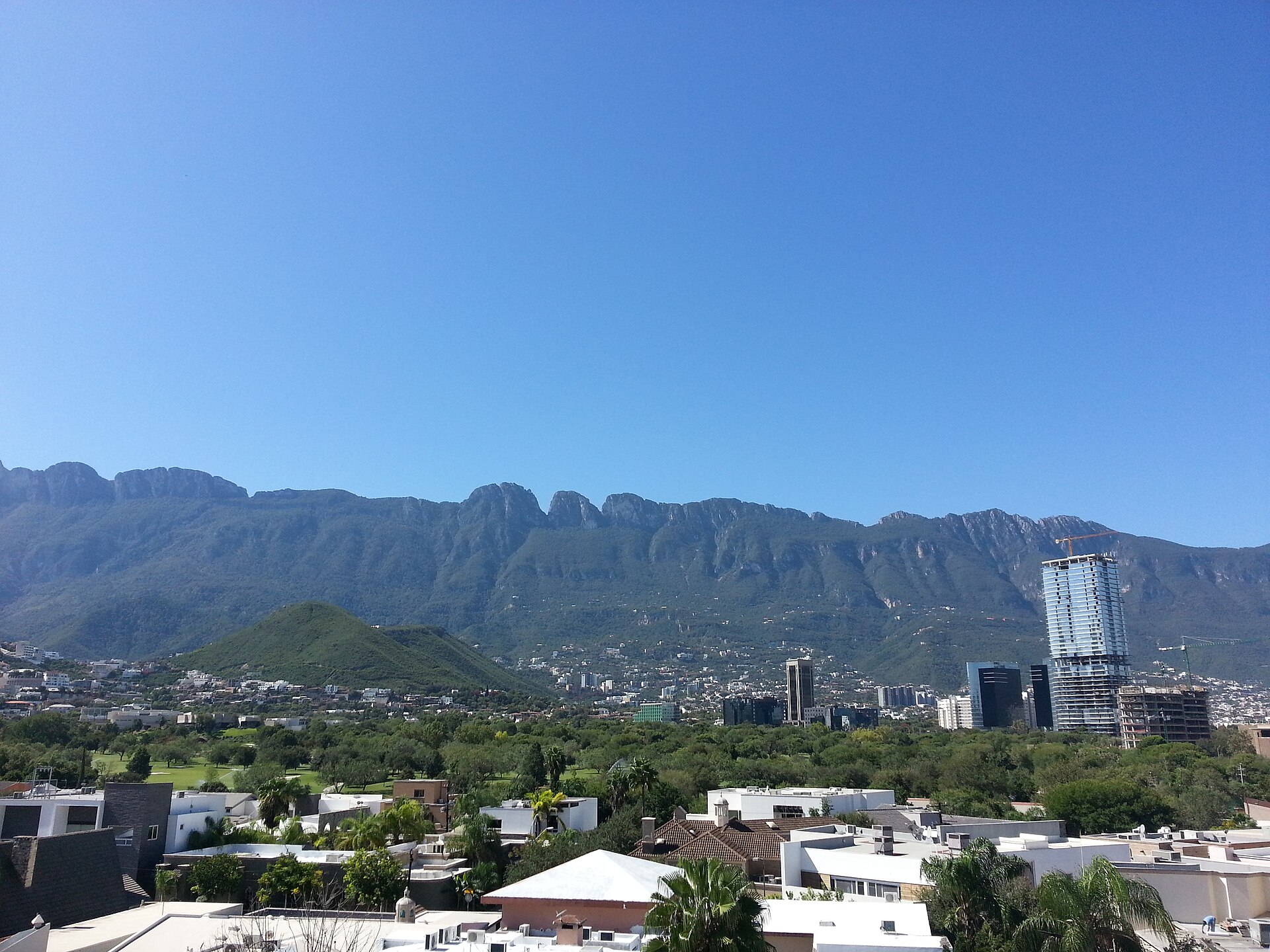
The geography is part of the problem. Monterrey sits in a bowl, ringed by the limestone walls of the Sierra Madre Oriental, and that basin traps heat and exhaust the way a parked car traps an afternoon. The Cerro de la Silla and the sheer face of the Huasteca are gorgeous; they also hold the warm air in place. Combine that with concrete sprawl, near-zero summer rainfall in the bad months, and an industrial economy that runs hard regardless of the thermometer, and you get a city that has had to invent an entire way of living around the sun.
So the useful question is not how hot it gets. It is where to be, and when. Regios have answers to both, refined over generations, and most of them are free or close to it.
The Daily Rhythm Locals Actually Keep
The shape of a Monterrey summer day is older than air conditioning, and it survives because it works. The morning belongs to anything that has to happen outdoors. Runners and dog-walkers are out by six; the serious hikers are on the trail before seven. By eleven the city has effectively conceded the streets to the heat. The state health authority is explicit about this window, advising people to stay out of direct sun between 11:00 and 17:00, and that is precisely when the city goes quiet and interior.
The middle of the day is not a literal siesta, but it functions like one. Offices run cold with AC, lunch is the day's main meal and it stretches long, and nobody with a choice runs errands on foot at two in the afternoon. The energy returns with the light. Plazas that were ghostly at three fill up by eight; families eat dinner at nine or ten; kids are still on the playground well past what looks reasonable to anyone from a cooler country. The evening is when Monterrey is most itself in summer, and the worst mistake a newcomer makes is fighting that schedule instead of joining it.
If you adopt one habit, make it the early start. The same trail, the same park, the same paseo is a completely different experience at 7 a.m. than at noon, and the difference is not subtle. It is the difference between a pleasant outing and a medical risk.
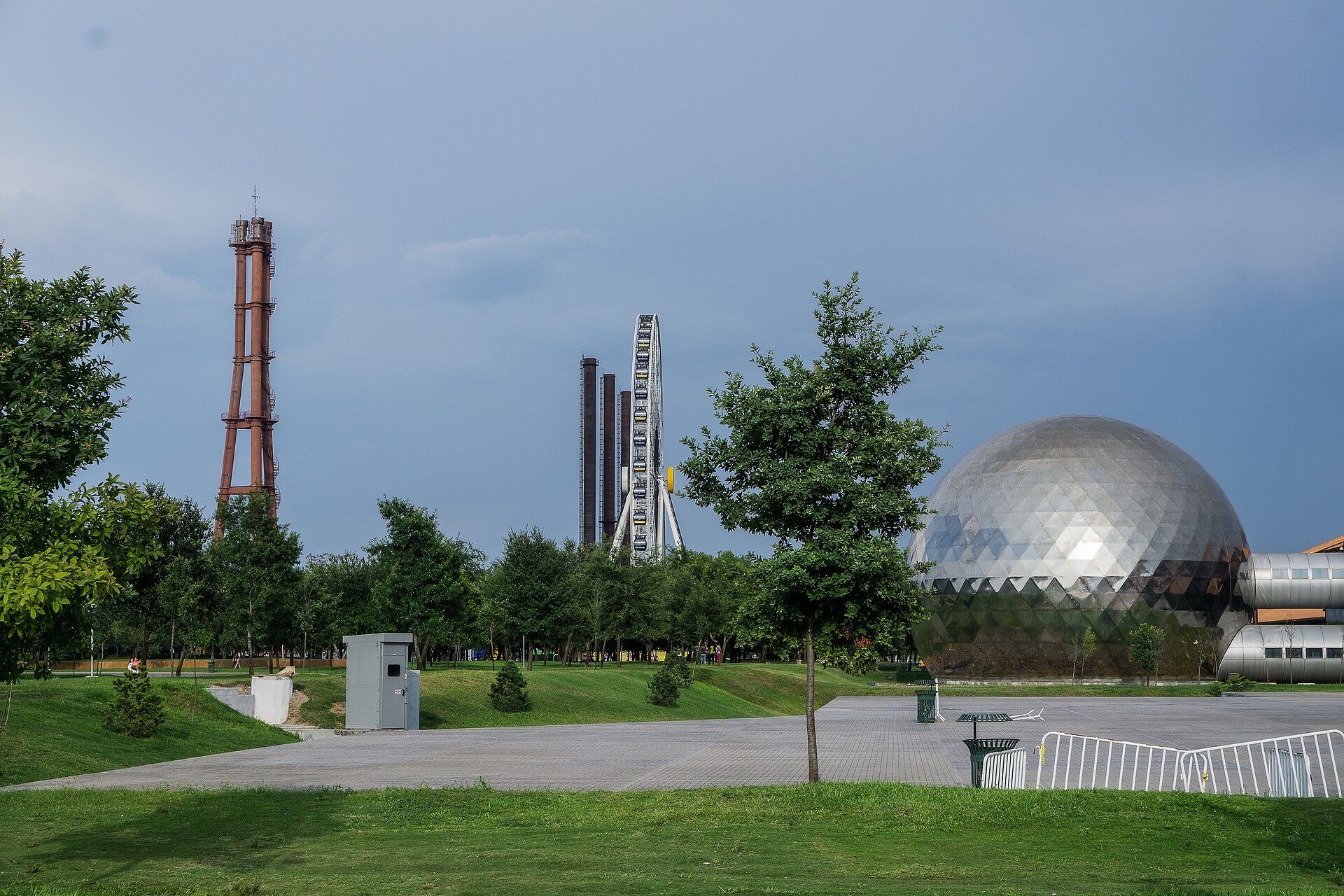 Parque Fundidora opens at 6 a.m.; the 3.4-kilometer loop belongs to runners and walkers before the heat takes the day." loading="lazy">
Going Up: Chipinque and the Cooler High Ground
The fastest way to escape the heat in Monterrey is to gain altitude, and the closest place to do it is Chipinque. The ecological park climbs from about 800 meters at its gate to over 2,200 at the summit, all of it inside Cumbres de Monterrey National Park, and it sits barely twelve kilometers from downtown. The payoff is immediate: where the valley bakes, Chipinque's pine-and-oak forest averages around 20°C. On a brutal city afternoon, that gap is the whole point. The famous 'M' rock formation, a beginner-friendly landmark, sits at 2,030 meters; the serious trails run far higher and longer.
Chipinque is not a secret, and on summer weekends the meseta lot fills early, so the early-start rule applies with double force. Go on a weekday morning if you can. Worth knowing: the trails are genuine mountain terrain, well-marked but real, with coatis and the occasional white-tailed deer, and you should carry more water than feels necessary because the cool air masks how hard you are working.
For a deeper retreat, point the car toward Laguna de Sánchez, a tiny apple-and-peach-growing village of under 300 people tucked at 1,650 meters in the Santiago municipality. It runs roughly ten degrees cooler than the city, the drive in crosses canyons and streams, and it is under two and a half hours each way. It is overbuilt by no one and trades entirely on the climate and the quiet. That is exactly why it works.
Water: The Falls, the Reservoir, and the Canyon
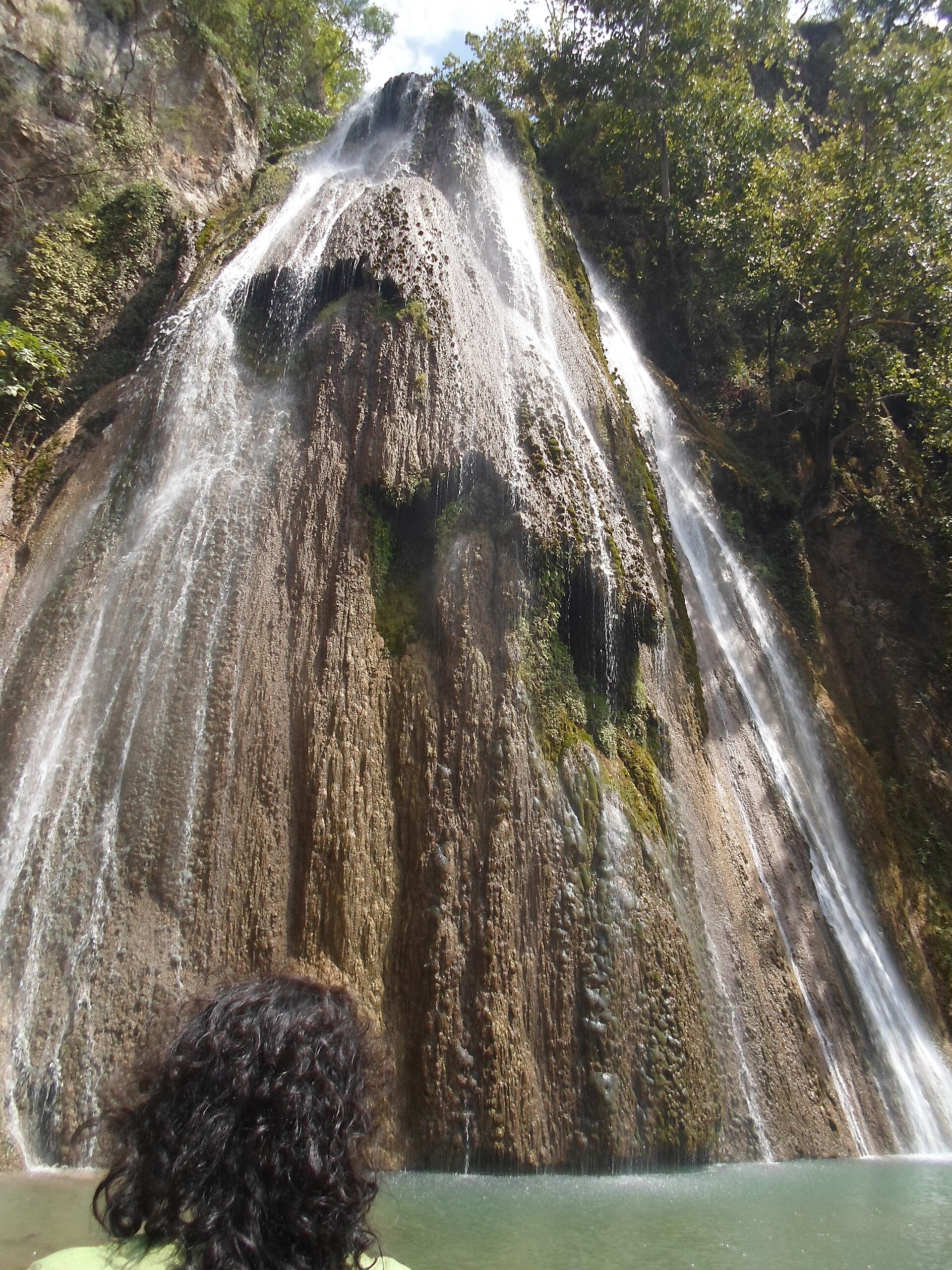
When the heat is total, regios go to water, and the canyon country south of the city around Santiago is where they go. The classic, almost obligatory first trip is Cascada Cola de Caballo, the 27-meter 'horsetail' waterfall in Villa de Santiago, roughly forty kilometers from town. Honest assessment: it is touristy, the path up is short and crowded, and the souvenir-and-snack gauntlet at the bottom is what it is. But it is also genuinely cool in the spray, the surrounding Sierra is spectacular, and as a half-day with kids it earns its reputation. The park runs 9 a.m. to 6 p.m. with cheap parking; go early before the buses.
For something calmer and more swimmable, Presa La Boca, the reservoir shared by Santiago and Allende, is about thirty minutes out and runs kayak and paddleboard outings year-round against a wall of mountains. It is the easy, low-commitment water day, good for a family or a slow morning.
The serious answer is Cañón Matacanes. This is a full-day canyoneering route down the encañonado Río Lagunillas, sixteen kilometers of turquoise pools, two rappels of roughly 27 and 15 meters, underground river passages, and somewhere around 27 cliff jumps. It is not a casual outing; you go with a licensed guide, it can run five to ten hours, and the season is tightly weather-dependent, running from about March 21 to late August or early September depending on the rains. Operators suspend it when the river runs high, and they are right to. It is also, on a 40-degree day, the single best way to be wet, cold, and exhilarated within a couple of hours of the city.
The Air-Conditioned Refuges
Some days the only sane move is indoors and cold, and Monterrey has built a culture around that too. The malls are the obvious refuge, and the city's regios make no apology for treating them as climate shelters as much as shopping. Galerías Valle Oriente, open since 2003 on the San Pedro line, is the default: a Cinépolis with an IMAX screen, a vast food court, and AC kept aggressively low. A matinee on a 42-degree afternoon is not a guilty pleasure here; it is standard practice.
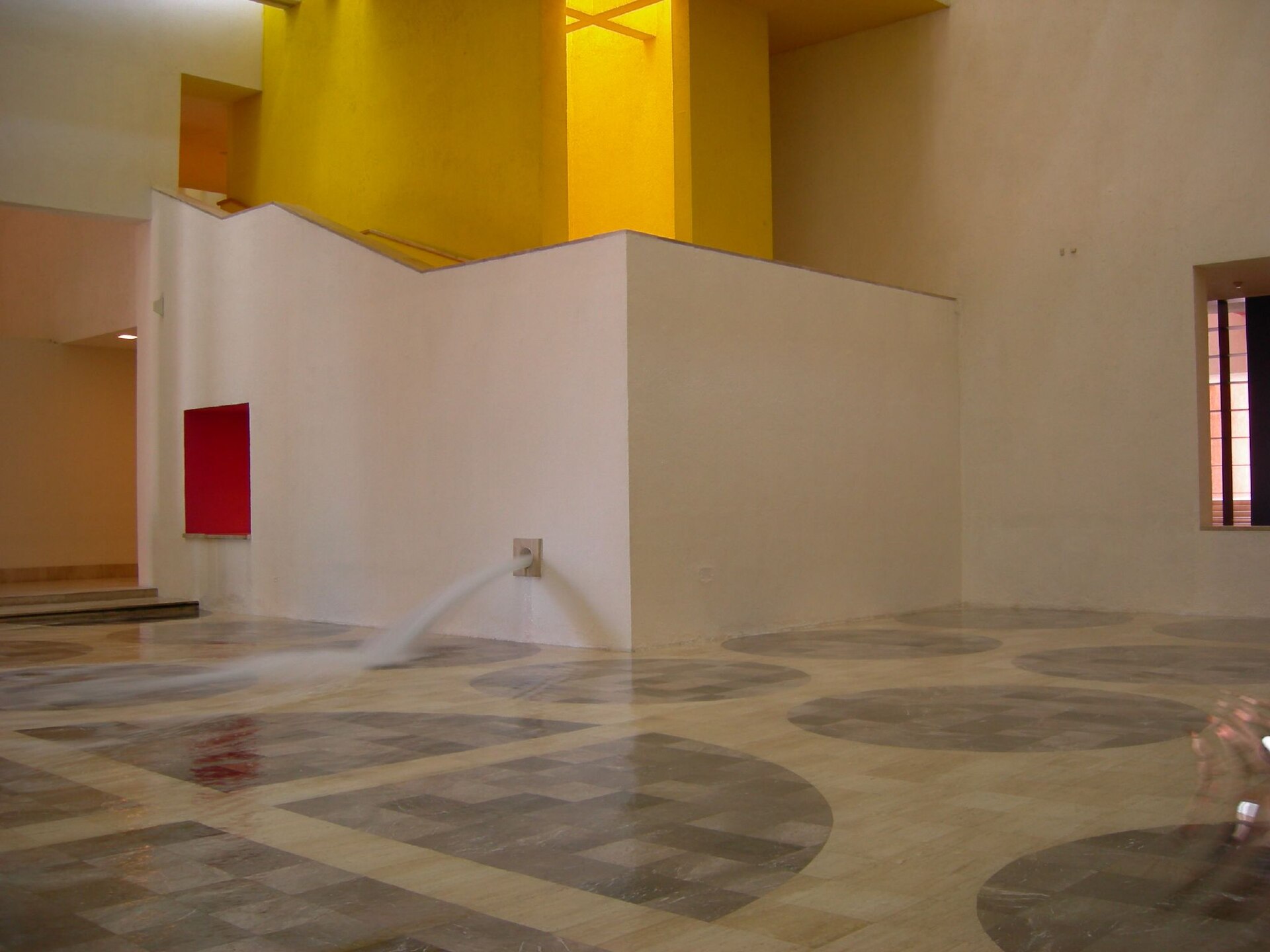
The smarter refuge is the museums, which give you the same cold air with something to think about. MARCO, the Museo de Arte Contemporáneo downtown, is the city's flagship contemporary art space, free-standing beside the cathedral, open Tuesday through Sunday from 10 to 18 (Wednesdays to 20:00) and closed Mondays. Its rotating shows are genuinely strong and the building itself, by Ricardo Legorreta, is worth the visit. Over in Fundidora, the Museo del Acero Horno3 turns a 1960s blast furnace into an interactive science museum; it is dark, cool, and one of the few places where the city's industrial history is told well. The Museo de Historia Mexicana anchors the other end of the Santa Lucía canal.
None of this is a workaround so much as the real fabric of summer life. A regio's July weekend is plausibly a morning run, a long air-conditioned lunch, a museum or a movie through the worst hours, and then back outside once the sun drops.
The Evening City: Santa Lucía and the Plazas After Dark
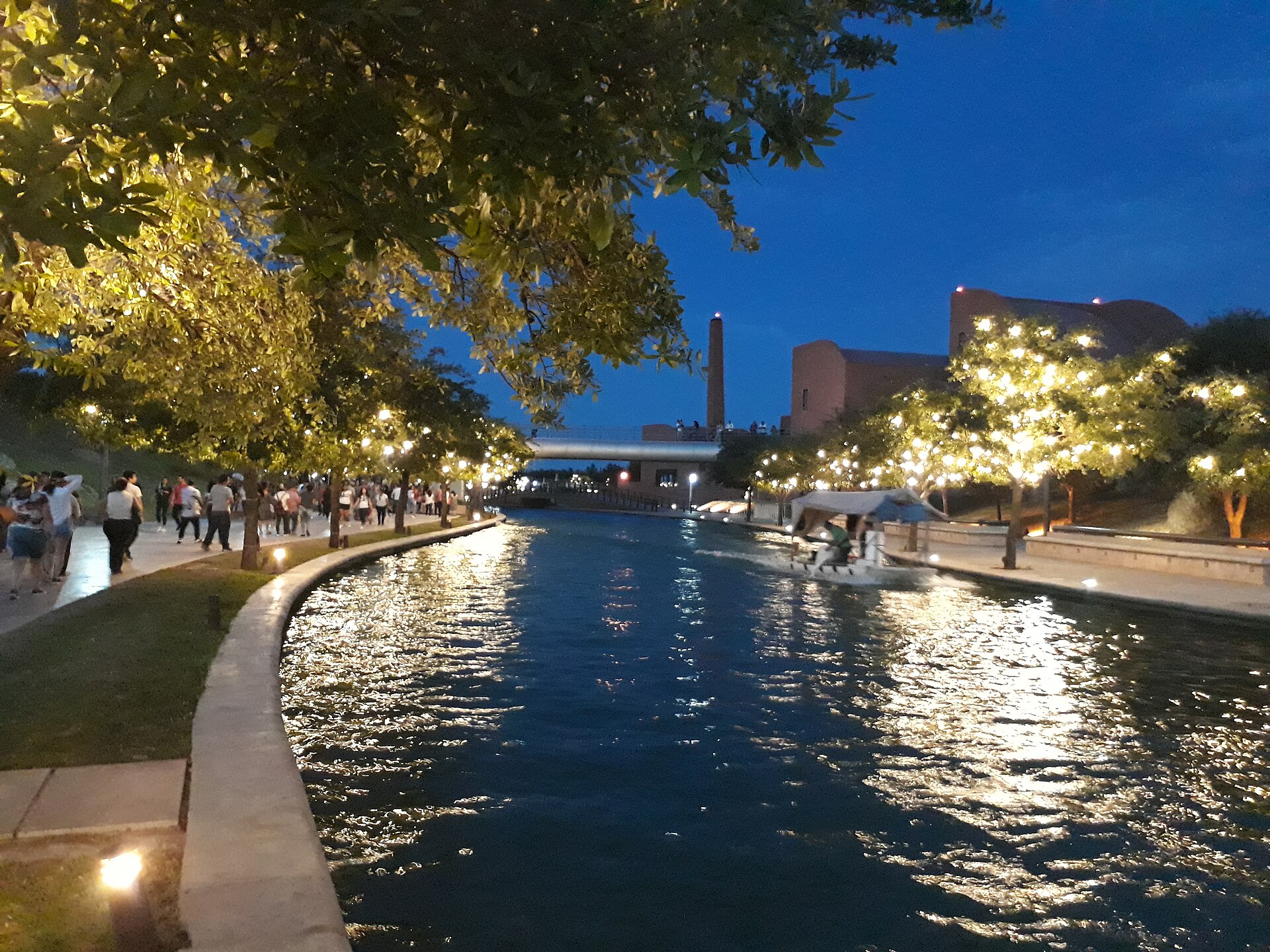
Monterrey saves its best self for after sundown, and the place that proves it is Paseo Santa Lucía. The 2.5-kilometer artificial canal, opened in 2007 and running from the Macroplaza down to Parque Fundidora, is pleasant enough by day and genuinely lovely at night, when its two dozen fountains and the strung lights come on and the temperature finally becomes negotiable. You can walk the full length or take one of the boats; either way it is the evening promenade the city was missing for a century, and locals use it as one.
Fundidora itself flips the same way. The park that belongs to runners at six in the morning becomes a family space at night, with the old steelworks lit up and the paths cool enough to enjoy. The Barrio Antiguo comes alive only after dark in summer; nobody sane wanders its stone streets at three in the afternoon, but by ten they are full.
The through-line is simple. In a Monterrey summer, the calendar does not change but the clock does. Plan the outdoor half of your life into the cool hours at either end of the day, surrender the middle to shade and AC, and the city stops feeling like an endurance test and starts feeling like a place people actually choose to live.
The Heat Is a Health Issue, Not a Vibe
It is easy to treat the heat as atmosphere. The numbers argue otherwise. In 2024 Nuevo León recorded 438 cases of heat stroke and 14 deaths, and in bad years the state stands up hydration points in the most vulnerable colonias and the downtown core. Heat illness builds quietly: intense thirst, fatigue, headache, dry tongue, skin that loses its snap. By the time you feel genuinely unwell on a 42-degree day, you are already behind.
The local advice is unglamorous and correct. Drink water and unsweetened electrolytes constantly, not just when you are thirsty; skip alcohol in the worst hours, because it dehydrates exactly when you cannot afford it. Wear light clothing and a hat, use real sunscreen, and treat the 11-to-5 window as off-limits for serious exertion. None of this is fussy. It is the difference between enjoying the summer and ending it on a clinic gurney.
Take the heat seriously and it becomes manageable, even pleasant in the right hours. Treat it casually and it does not care who you are.
Día Cero: The Summer the Taps Ran Dry
Any honest guide to a Monterrey summer has to end here, because 2022 reset how the whole city thinks about heat. After two years of deepening drought, the Cerro Prieto reservoir, one of the metro area's key sources, fell to roughly 0.5 percent of its 393-million-cubic-meter capacity by that July. The lake dropped so low that water could no longer physically be drawn from it. The crisis was severe enough that federal officials framed it as a matter of national security.
What that meant on the ground was Día Cero, day zero, the point at which the taps simply stopped for much of the city. Some neighborhoods went as long as 75 days with little or no running water; schools let out early; families queued for trucked-in water and learned to ration. The contrast was stark and uncomfortable: a city whose heavy industry and golf-course suburbs consume enormous volumes of water, in which ordinary households were the ones told to do without. The reservoir's collapse was documented from orbit by NASA, a lake that had largely vanished in seven years.
The drought eased, but the lesson did not. Day zero made it unmistakable that this is a desert-edge city of more than five million people whose water margin is thin and getting thinner as the climate warms. So when you fill a water bottle for Chipinque, or feel the spray at Cola de Caballo, or watch the Santa Lucía fountains run at night, it is worth holding both facts at once: the water is what makes a Monterrey summer survivable, and there is no guarantee of how much of it the next one will have.